Teradyne stock returns 35.4% annually over decade

scanx
Reviewed by
Radhika SScanX News Team
Key Highlights

Teradyne has outperformed the market over the past 10 years with an average annual return of 35.4%. A $1000 investment made a decade ago would be worth $20,941.06 today. The company currently holds a market capitalization of $65.70 billion.

powered bylight_fuzz_icon
43285914

*this image is generated using AI for illustrative purposes only.

Teradyne has outperformed the market over the past 10 years by 21.88% on an annualized basis, generating an average annual return of 35.4%. This performance highlights the impact of compounded returns on long-term cash growth. Currently, Teradyne has a market capitalization of $65.70 billion.

Investment Growth Analysis

An investor who purchased $1000 worth of Teradyne stock 10 years ago would see significant growth today. Based on a current price of $419.65, that initial investment has appreciated to $20,941.06.

Key Performance Metrics

Metric Value
Average Annual Return 35.4%
Market Outperformance 21.88%
Current Market Capitalization $65.70 billion
Current Share Price $419.65
Value of $1000 Investment (10 Years) $20,941.06

The data underscores the substantial difference compounded returns can make to investment value over an extended period.

Disclaimer: This article is AI-generated using data from ViewTrade. ScanX is not liable for any inaccuracies.

Can Teradyne sustain its 35.4% average annual return given its current $65.70 billion market capitalization?

What are the primary growth drivers expected to fuel Teradyne's performance over the next decade?

How might increasing competition in the semiconductor testing industry impact Teradyne's future margins?

like18
dislike

Teradyne integrates test cell for AI and data center devices

scanx
Reviewed by
Suketu GScanX News Team
Key Highlights

Teradyne, Inc. and Tokyo Electron have collaborated to launch an integrated test cell solution for AI and data center devices. The solution combines Teradyne's UltraFLEXplus platform with Tokyo Electron's Prexa SDP to enable known good device screening. This offering supports fabless designers, foundries, and OSATs in managing advanced packaging flows.

powered bylight_fuzz_icon
42484917

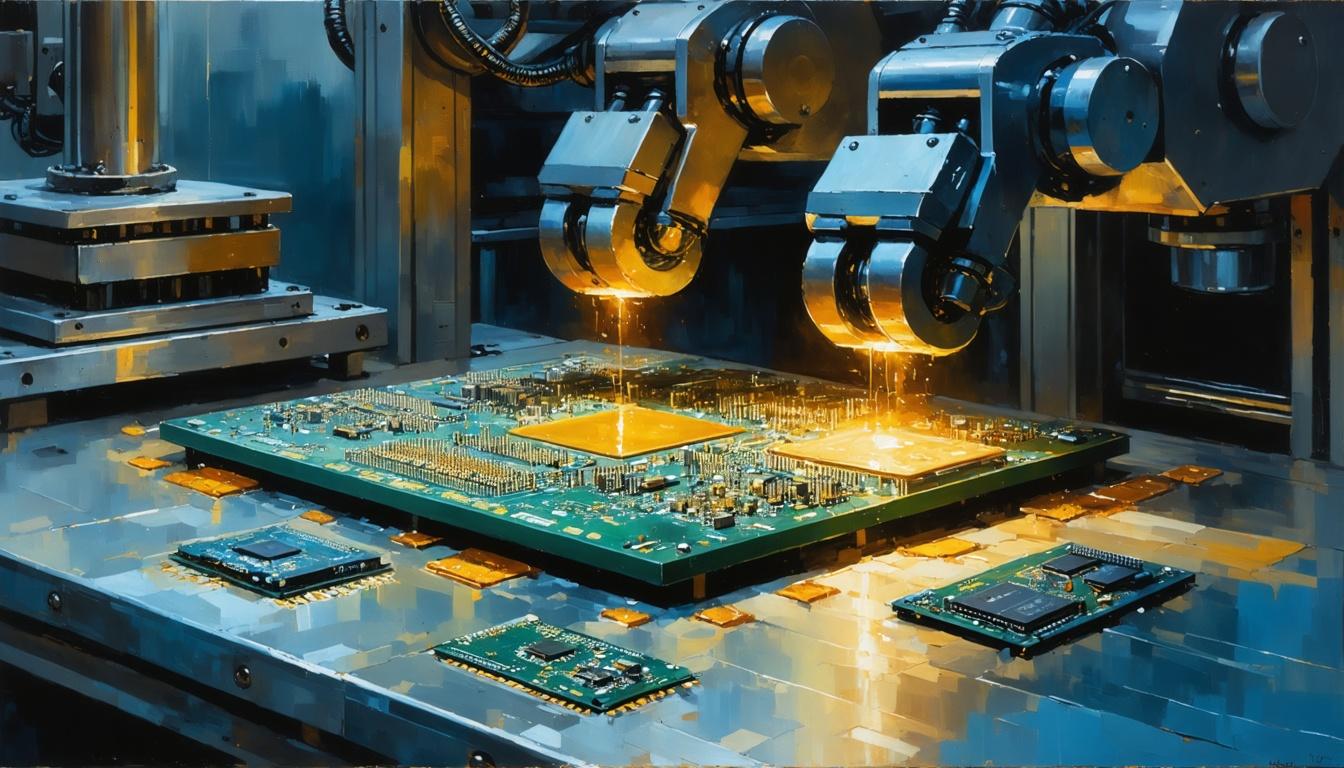
*this image is generated using AI for illustrative purposes only.

Teradyne, Inc. has launched an integrated test cell solution designed to support known good device (KGD) screening for devices utilized in AI and data center applications. Developed in collaboration with Tokyo Electron (TEL™), the solution addresses the need for high-quality screening at multiple stages of the advanced packaging flow. This integration provides a production-ready path for fabless designers, foundries, and OSATs to ensure device reliability in complex 2.5D/3D packages.

The new solution pairs Teradyne's UltraFLEXplus platform with Tokyo Electron's Prexa™ SDP (Singulated Device Prober). By combining these technologies, the companies aim to deliver efficient screening capabilities specifically tailored for the rigorous demands of advanced semiconductor packaging. The UltraFLEXplus platform serves as the test engine, while the Prexa SDP handles the physical probing of singulated devices.

Technical Integration

The collaboration leverages the strengths of both companies' core technologies to create a seamless testing environment. The integrated test cell is intended to streamline the screening process, reducing the risk of defective devices progressing further in the supply chain.

Component Provider Function
UltraFLEXplus Teradyne, Inc. Automated test equipment platform
Prexa SDP Tokyo Electron Singulated Device Prober

This joint effort targets the growing complexity of AI hardware and data center infrastructure, where ensuring the integrity of individual components before final assembly is critical.

Disclaimer: This article is AI-generated using data from ViewTrade. ScanX is not liable for any inaccuracies.

How will this integrated solution impact the overall cost structure of advanced packaging for AI chip manufacturers?

What are the potential adoption rates among major OSATs and foundries over the next 12 to 18 months?

Could this collaboration signal a broader trend of deeper integration between test equipment and packaging tool providers?

like20
dislike