

Jindal Steel Q4FY26 Earnings: Revenue Surges 28%, FY27 Volume Guidance Set at 11–11.5 MT


Jindal Steel Limited reported a 28% sequential revenue surge to ₹19,399 cr in Q4FY26, driven by volume ramp-up and higher realizations, with FY26 PAT growing 18% to ₹3,361 cr. The company expanded steelmaking capacity to 15.6 MTPA, guided FY27 production at 11–11.5 mt, and announced the closure of its Australian mining asset, resulting in an impairment charge.

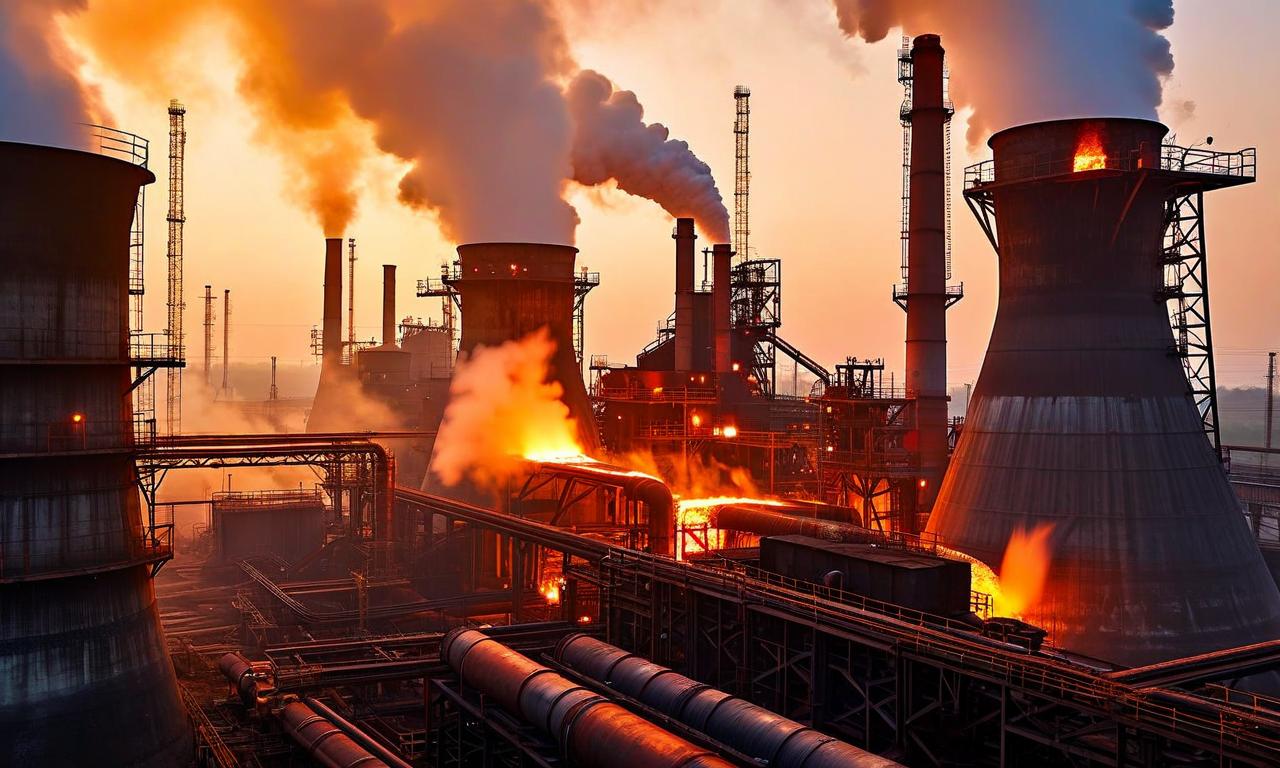

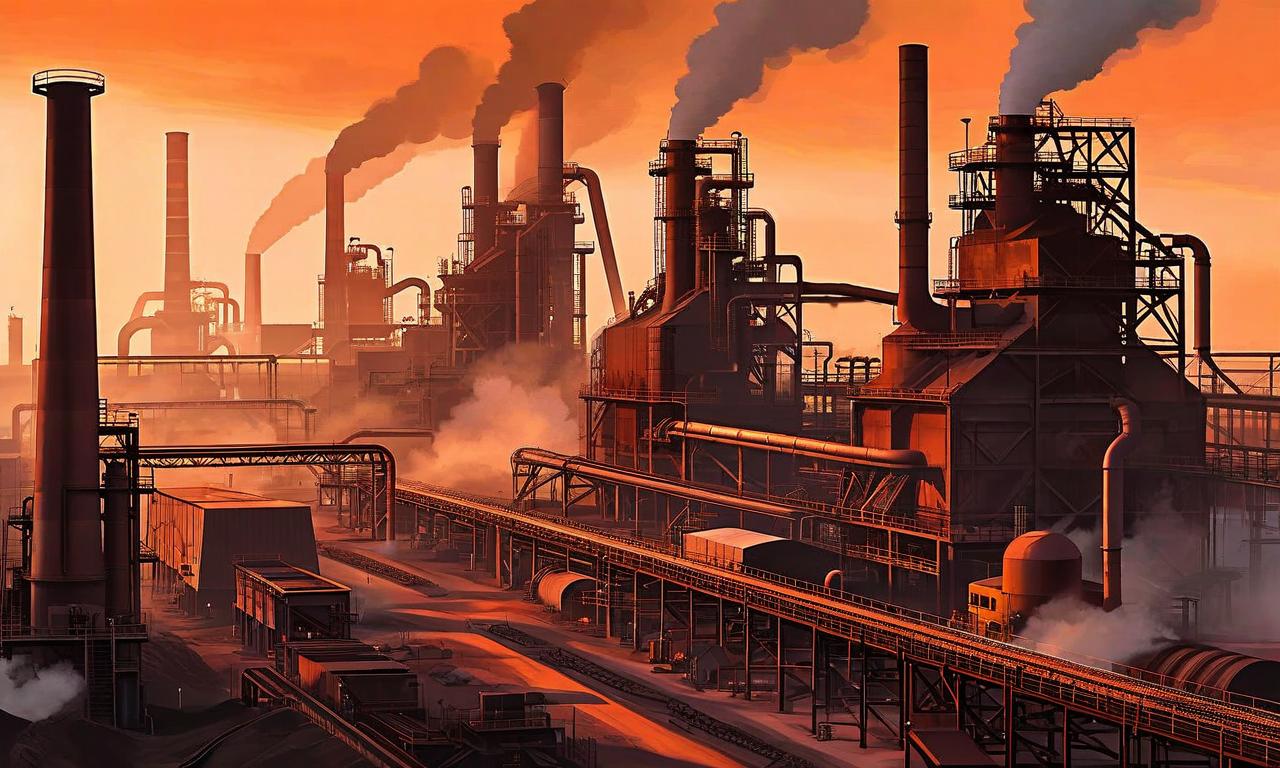
*this image is generated using AI for illustrative purposes only.
Jindal Steel Limited (formerly known as Jindal Steel & Power Limited) has reported a strong set of results for Q4FY26 and the full year FY26, marked by a significant capacity expansion, volume ramp-up at its Angul facility, and a sharp sequential jump in revenues. The results have drawn divergent brokerage assessments, with analysts split on the stock's near-term prospects even as the EBITDA beat and volume momentum were broadly acknowledged.
Q4FY26 and FY26 Financial Performance
The company delivered robust financial results for both the quarter and the full year. The following table captures the key financial metrics:
| Metric: | Q4FY26 | Q3FY26 | FY26 | FY25 |
|---|---|---|---|---|
| Gross Revenue: | ₹19,399 cr | ₹15,172 cr | ₹62,412 cr | — |
| Revenue Growth (QoQ/YoY): | +28% (QoQ) | — | +8% (YoY) | — |
| Adjusted EBITDA: | ₹2,647 cr | — | ₹9,099 cr | — |
| EBITDA per Tonne: | ₹10,093 | — | ₹10,482 | ₹11,712 |
| Profit After Tax: | ₹1,041 cr | — | ₹3,361 cr | — |
| PAT Growth (YoY): | — | — | +18% | — |
| Earnings Per Share: | — | — | ₹33 | — |
| Blended ASP Increase (QoQ): | +₹4,743/tonne | — | — | — |
Consolidated gross revenue for Q4FY26 stood at ₹19,399 crores, compared with ₹15,172 crores in Q3FY26, representing a sequential growth of 28%. The blended average selling price (ASP) increased by ₹4,743 per tonne on a sequential basis, driven by a strong recovery in HRC and TMT rebar prices during the quarter. For the full year FY26, consolidated gross revenue was ₹62,412 crores, an increase of 8% compared to FY25. Profit after tax for FY26 was ₹3,361 crores, a growth of 18% over the previous year, with earnings per share of ₹33. The Board of Directors has recommended a final dividend of ₹2 per share.
Volume Growth and Capacity Expansion
FY26 was described by management as a defining milestone year for capacity expansion, with the company's total steelmaking capacity increasing from 9.6 million tonnes per annum (MTPA) to 15.6 MTPA. The following table summarizes production and sales volumes:
| Metric: | Q4FY26 | Q3FY26 | YoY Change | FY26 | YoY Change |
|---|---|---|---|---|---|
| Production Volume: | 2.65 mt | — | +26% | 9.25 mt | +14% |
| Production Growth (QoQ): | +6% | — | — | — | — |
| Sales Volume: | 2.62 mt | — | +23% | 8.68 mt | +9% |
| Sales Growth (QoQ): | +15% | — | — | — | — |
Key expansion milestones during FY26 included the commissioning of BF2 (4.6 MTPA iron-making capacity at Angul), BOF2 and BOF3 (each at 3 million tonnes of steelmaking capacity), a cold rolling complex of 1.2 MTPA, and the 1,050 MW Shree Bhoomi Power Plant comprising two modules of 525 MW each. The coal pipe conveyor belt between the Utkal C thermal coal mine and Angul is now operational. The slurry pipeline from Barbil to Angul is close to completion and is expected to be commissioned in Q1FY27, with management indicating savings of approximately ₹700 per tonne of iron ore, translating to roughly ₹750–₹1,000 per tonne at the steel level as volumes ramp up. DRI2 (2 MTPA) and PP2 remain under construction and are expected towards the end of FY27.
Balance Sheet and Capital Expenditure
As of March 31, 2026, consolidated net debt stood at ₹16,019 crores, with a net debt-to-EBITDA of 1.66x and debt-to-equity of 0.43x. Management noted that leverage metrics are expected to normalize by Q2FY27 as new capacities ramp up and operating cash flows improve. The following table outlines the capex program status:
| Capex Parameter: | Details |
|---|---|
| Total Planned Capex: | ₹47,043 cr |
| Invested up to FY25: | ₹25,924 cr |
| Invested in FY26: | ₹9,574 cr |
| Remaining Capex: | ₹11,545 cr |
| Net Debt (Mar 31, 2026): | ₹16,019 cr |
| Net Debt/EBITDA: | 1.66x |
| Debt/Equity: | 0.43x |
Management highlighted that from FY22 to FY26, net debt increased by ₹7,143 crores (from ₹8,876 crores to ₹16,019 crores), while ₹35,498 crores was invested in the current capex program during the same period, reflecting strong internal accrual allocation. Going forward, sustenance and future growth capex is guided at ₹7,500–₹10,000 crores. An impairment charge of ₹834 crores (equivalent to USD 93 million) was recognized in the consolidated results following the closure of the Australian mining asset (Wollongong Coal), with the standalone impairment amounting to ₹1,433 crores (USD 159 million). Management confirmed no further write-downs are expected.
FY27 Guidance and Operational Outlook
Management provided the following guidance for FY27:
| FY27 Guidance Parameter: | Details |
|---|---|
| Production Volume: | 11 mt – 11.5 mt |
| Sales Volume: | 10.5 mt – 11 mt |
| Coking Coal Cost (Q1FY27): | +$20–$25/tonne sequentially |
| Sustenance/Growth Capex: | ₹7,500 cr – ₹10,000 cr |
For Q1FY27, coking coal prices are expected to increase by $20–$25 per tonne sequentially. Management noted that the product mix in Q4FY26 was 52% flat and 48% longs, while for the full year FY26, it was 49% flat and 51% longs, with flat steel exposure expected to increase towards 70% over time. The iron ore sourcing mix is approximately 40% captive and 60% market purchases. On raw material security, the company has been declared the preferred bidder for the Thakurani-A1 iron ore block in Odisha and was awarded the Saradhapur Jalatap East coal block. India's domestic steel demand is projected to expand by 7.4% in 2026 and 9.2% in 2027, supported by infrastructure, automotive, and construction activity.
Analyst Ratings and Target Prices
The Q4FY26 results have drawn sharply divergent brokerage assessments. The following table summarizes the current stances of three key brokerages:
| Parameter: | CLSA | Morgan Stanley | Citi |
|---|---|---|---|
| Rating: | Outperform | Overweight | Sell |
| Target Price: | ₹1,420 | ₹1,250 | ₹980 |
| EBITDA Beat: | Strong | ~25% | Strong |
| Volume Growth: | +23% | Better volumes | +23% |
CLSA has assigned an Outperform rating with a target price of ₹1,420, citing the strong Q4 EBITDA beat, 23% volume growth, and the Angul ramp-up as key growth levers, along with the company's FY27 volume guidance of 10.5–11 mt and a ~40% EBITDA CAGR outlook. Morgan Stanley maintains an Overweight rating with a target price of ₹1,250, acknowledging a ~25% EBITDA beat driven by better volumes, realizations, and cost performance, while noting manageable leverage at approximately 1.66x. Citi takes a contrarian Sell stance with a target price of ₹980, flagging high valuations at approximately 8.6x FY28 EV/EBITDA, flat realizations, rising costs, and risks from China capacity dynamics and potential steel price declines as limiting factors for margin expansion. The spread between the highest and lowest target prices — ₹1,420 from CLSA and ₹980 from Citi — reflects the degree of uncertainty surrounding execution on volume ramp-up and the broader steel price environment.

How might the anticipated $20–$25 per tonne sequential rise in coking coal costs in Q1FY27, combined with the stepped-down safeguard duty on flat steel imports, impact Jindal Steel's ability to sustain EBITDA per tonne above ₹10,000 through FY27?
With China's steel overcapacity posing a persistent export risk and India's net steel export position still marginal at 0.1 mt in FY26, could a surge in Chinese flat steel exports undermine Jindal's strategy to shift its product mix toward 70% flat steel?
Once the Barbil-to-Angul slurry pipeline is commissioned in Q1FY27 and captive iron ore sourcing scales up through the newly awarded Thakurani-A1 block, what realistic timeline and volume threshold would allow the company to meaningfully reduce its 60% market iron ore dependency?
 16
16





 Access Market Heat-map & Insights
  Create, Save & Share your Screener
  Use 200+ Screening Filters





