US May Lift Additional Venezuela Oil Sanctions Next Week, Treasury Secretary Says

1 min read     Updated on 11 Jan 2026, 08:18 AM
scanx
Reviewed by
Anirudha BScanX News Team
Overview

Treasury Secretary Scott Bessent announced that the US may lift additional Venezuela oil sanctions as early as next week to facilitate oil sales, though specific sanctions to be removed were not identified. The Trump administration is pursuing control of Venezuela's oil industry and has called for $100 billion in combined investment from major companies including Chevron, Exxon Mobil, and ConocoPhillips to revive oil infrastructure. Bessent also noted that nearly $5 billion in Venezuela's IMF special drawing rights could support economic rebuilding, with planned meetings next week between the Treasury Secretary and heads of the IMF and World Bank to discuss re-engagement.
29645333

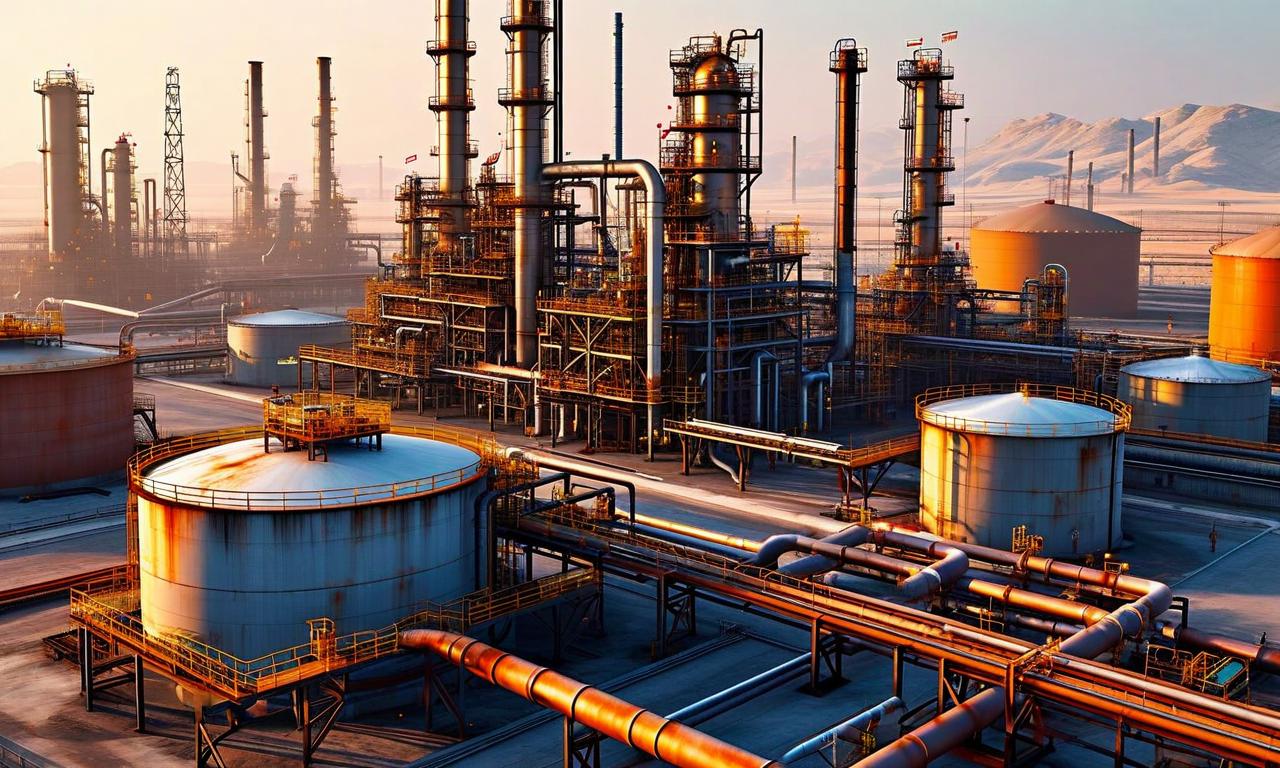
*this image is generated using AI for illustrative purposes only.

The United States may lift additional sanctions on Venezuela as early as next week to facilitate oil sales, Treasury Secretary Scott Bessent told Reuters in a recent interview. The move represents a significant shift in US policy toward the South American nation's energy sector.

Sanctions Relief for Oil Sales

"We're de-sanctioning the oil that's going to be sold," Bessent was quoted as telling the news agency. However, he did not specify which particular sanctions may be removed from Venezuela's oil sector. The potential sanctions relief comes as the Trump administration seeks to take greater control of Venezuela's oil industry.

Major Investment Push for Oil Infrastructure

The administration has called for substantial private sector investment to revive Venezuela's oil infrastructure. Trump has urged major energy companies to commit significant capital to the country's energy sector.

Company Investment Target
Chevron Corp. Part of $100 billion combined
Exxon Mobil Corp. Part of $100 billion combined
ConocoPhillips Part of $100 billion combined
Total Target $100 billion

IMF Assets and Economic Reconstruction

Bessent also highlighted the potential use of Venezuela's monetary assets held at international institutions. Nearly $5 billion in Venezuela's special drawing rights at the International Monetary Fund could be utilized to help rebuild the nation's economy, according to the Treasury Secretary.

Upcoming International Meetings

The Treasury Secretary plans to engage with key international financial institutions next week to discuss Venezuela's re-integration into the global economy. Bessent indicated he will meet with the heads of both the IMF and the World Bank to discuss re-engaging with Venezuela, signaling a coordinated approach to the country's economic recovery.

like16
dislike

US-Venezuela Oil Strategy Reshapes Global Energy Dynamics

1 min read     Updated on 11 Jan 2026, 07:26 AM
scanx
Reviewed by
Shriram SScanX News Team
Overview

US control over Venezuelan oil flows creates strategic leverage against China's energy-dependent economy. Venezuelan heavy crude's unique properties make it essential for industrial fuels and difficult to substitute. This development signals oil's return as a strategic asset, potentially reshaping US-China negotiations across multiple sectors through energy-based bargaining power.

29642183

*this image is generated using AI for illustrative purposes only.

Recent developments in US-Venezuela oil relations signal a significant shift in global energy geopolitics, moving beyond traditional supply-demand dynamics to strategic leverage considerations. The United States' assertion of control over Venezuela's oil flows represents more than market intervention—it constitutes a calculated move in the broader US-China strategic competition.

Strategic Importance of Venezuelan Heavy Crude

Venezuela's heavy crude reserves carry unique strategic value due to their chemical composition. These oil grades are rich in long-chain hydrocarbons essential for producing diesel, jet fuel, and asphalt—materials critical for industrial logistics and infrastructure development.

China's refining system, particularly its teapot refiners, has developed structural dependence on this specific grade of crude oil. The heavy crude's thermodynamic efficiency in producing industrial fuels makes it difficult to substitute with alternatives like light shale oil without accepting higher costs or inferior yields.

Geopolitical Leverage Through Energy Control

The US strategy extends beyond simple supply disruption to leverage re-pricing. By controlling access to Venezuelan heavy crude, the United States has positioned itself to influence China's energy costs and supply chain efficiency. This approach recognizes that oil functions not as a fungible commodity but as a spectrum of molecular chains serving different economic roles.

China's energy vulnerability remains pronounced, with the country importing over 70% of its crude oil. Heavy grades flow through narrow maritime chokepoints, creating additional strategic exposure. The combination of Venezuelan supply constraints and potential influence over Strait of Hormuz flows could significantly compress China's energy optionality.

Market and Investment Implications

This development suggests crude oil's return to strategic asset status rather than purely cyclical commodity trading. Historical patterns indicate that extended periods of price compression often precede sharp re-pricing when geopolitical factors intersect with supply structures.

The leverage asymmetry created through energy control may prove more influential than traditional diplomatic channels in shaping US-China negotiations across trade, technology transfer, and other strategic areas.

Strategic Bargaining Dynamics

The effectiveness of this leverage lies not necessarily in aggressive exercise but in credible threat capability. The potential for constraining heavy-oil access raises China's marginal costs across infrastructure, logistics, and strategic readiness—areas where efficiency and timing carry premium importance.

This energy-based leverage complements other strategic considerations while targeting what may be China's most exposed strategic flank, despite its strengths in rare earth processing, semiconductor packaging, and manufacturing scale.

like15
dislike
Explore Other Articles