Trump renames Lake Ontario 'Lake America' amid escalating US-Canada trade war

scanx
Reviewed by
Shriram SScanX News Team
Key Highlights
  • President Trump signed an executive order renaming Lake Ontario "Lake America" effective immediately
  • The move follows the collapse of trade talks and new 50% U.S. tariffs on $20 billion of Canadian goods
  • Canada announced matching retaliatory tariffs up to 50%, set to take effect September 8
  • Prime Minister Mark Carney criticized the renaming, citing the lake's 400-year Indigenous name origin
  • Trump previously renamed the Gulf of Mexico "Gulf of America" in January 2025
powered bylight_fuzz_icon
49435913

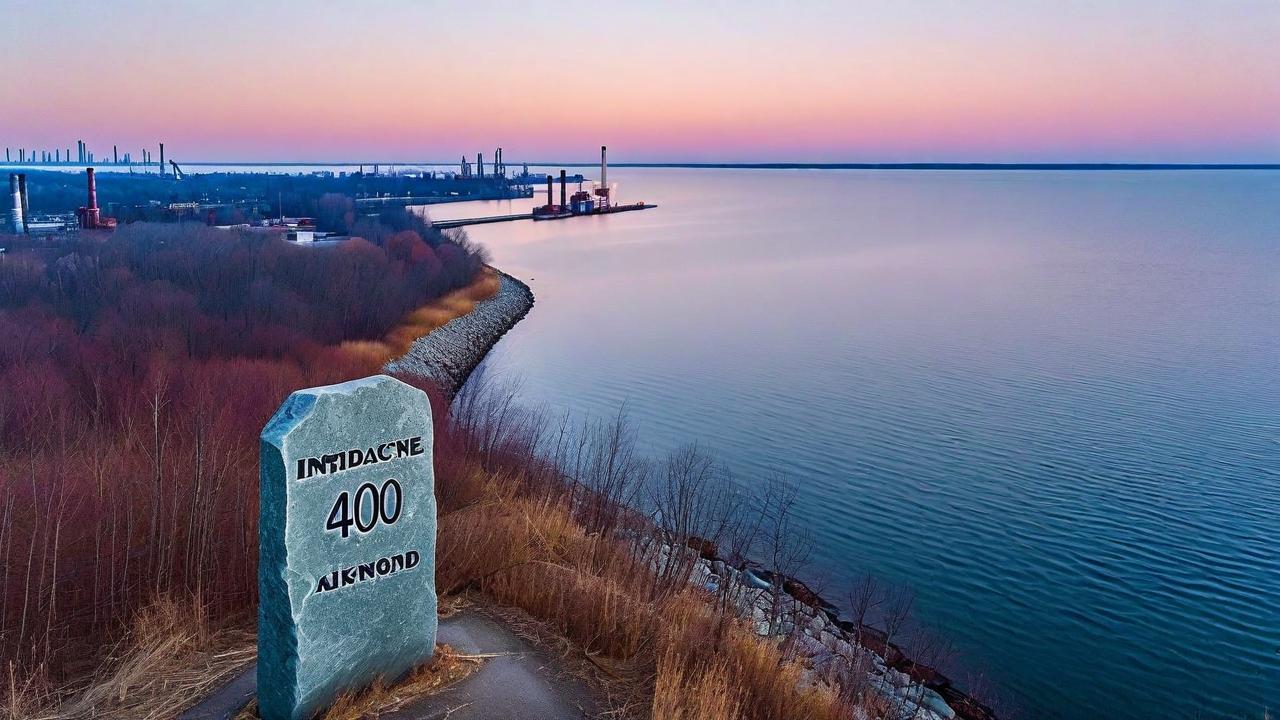
*this image is generated using AI for illustrative purposes only.

President Donald Trump signed an executive order on Thursday renaming Lake Ontario "Lake America," a move that coincides with intensifying trade tensions between the United States and Canada. The order, described as effective immediately, directs Interior Secretary Doug Burgum to update the Geographic Names Information System within 30 days.

U.S. Geological Survey Director Ned Mamula confirmed that the name change is already reflected in official USGS electronic documents, with printed materials to follow. This action follows the collapse of U.S.-Canada trade talks last Friday, which triggered 50% U.S. tariffs on roughly $20 billion of Canadian goods.

Tariff Standoff Poses Cross-Border Risk

The renaming occurs against a backdrop of significant economic friction. Canada has announced matching "dollar for dollar" retaliatory tariffs of up to 50%, set to take effect on September 8. On Wednesday, Canada trimmed tariffs on seafood and fish products, citing efforts to limit broader economic harm.

Canadian Prime Minister Mark Carney responded to the executive order on X, noting that Lake Ontario's Indigenous-origin name predates both nations by more than 400 years. The name derives from the Wendat word Ontari’io, meaning "the lake is beautiful, the lake is big."

"We know America is changing," Carney wrote. "Their trading relationships, their foreign policies, their national monuments, their hydronyms."

A Broader Pattern of Renaming

This executive order aligns with previous administrative actions by Trump regarding geographic and institutional names:

  • In January 2025, Trump renamed the Gulf of Mexico "Gulf of America."
  • He previously sought to rename the John F. Kennedy Center for the Performing Arts after himself.
  • Reports suggest the Navy may strip Black WWII hero Doris Miller's name from aircraft carrier CVN-81, built by Huntington Ingalls Industries Inc. (NYSE: HII), replacing it with Trump's name.

What the Numbers Show

The simultaneous timing of the geographic renaming and the imposition of 50% tariffs on $20 billion in Canadian goods suggests a coordinated escalation in diplomatic and economic pressure. While the tariff volume represents a specific trade target, the symbolic act of renaming a shared border feature underscores a broader shift in bilateral relations beyond purely financial metrics.

How might the renaming of Lake Ontario impact cross-border water rights treaties and environmental cooperation agreements between the U.S. and Canada?

What is the projected economic fallout for Canadian exporters in the $20 billion sector targeted by the new 50% tariffs, and how might this influence supply chain restructuring?

Will the U.S. Department of Defense proceed with renaming the USS Doris Miller, and what could be the market reaction for Huntington Ingalls Industries (HII) if the change is implemented?

like16
dislike

Lutnick says Carney walked trade talks for political reasons

scanx
Reviewed by
Ritika DScanX News Team
Key Highlights
  • Commerce Secretary Lutnick claims Carney walked talks for political reasons
  • U.S. imposes 50% tariffs on $20 billion of Canadian goods after breakdown
  • Canada pledges dollar-for-dollar retaliation against U.S. duties
  • Canadian dollar weakens as markets price in escalation risk
powered bylight_fuzz_icon
48948083

*this image is generated using AI for illustrative purposes only.

U.S. Commerce Secretary Howard Lutnick has claimed that Canadian Prime Minister Mark Carney walked away from trade negotiations for political reasons, adding that he expects Canada to want to talk after separatist votes.

Conflicting Accounts of Breakdown

President Donald Trump and Prime Minister Mark Carney had reached an agreement in principle earlier in the week, with Trump pausing new tariffs until 12:01 a.m. Saturday.

Carney stated that Washington subsequently tried to alter the terms, prompting him to break off talks. He blamed the U.S., calling the changes "unfair, uneconomic, and called into question the reliability of any deal."

U.S. Trade Representative Jamieson Greer offered a contrasting account in an interview with CBC News. He told reporters it was Canada that caused the collapse by seeking additional concessions and walking back other commitments, upending the balance reached in previous days. This directly counters Carney’s narrative that the U.S. altered terms at the eleventh hour.

Internal Pressure and Intervention

Reports indicate that Commerce Secretary Howard Lutnick played a significant role in the collapse. According to Bloomberg, citing unnamed sources, Lutnick viewed the proposed deal as too generous for Canada. He reportedly aligned with U.S.-based metal producers who sought to slow down concessions impacting their profit margins.

Lutnick was in direct contact with Canadian Prime Minister Mark Carney, despite Greer being the official point person. The report notes that Lutnick focused on preserving tariffs, particularly arguing against reductions for medium- and heavy-duty trucks, even as both parties had previously agreed to lower auto sector tariffs from 25% to 15% for light vehicles.

A White House official denied Lutnick derailed the talks, instead blaming Canada for making last-minute demands not previously discussed. The Department of Commerce did not immediately respond to requests for comment.

Retaliation and Political Fallout

Carney pledged that Ottawa would match the new U.S. duties "dollar for dollar" to protect workers and businesses. It remains unclear which U.S. sectors Canada intends to target. A senior Trump administration official said Washington had no new talks scheduled and was preparing additional options to escalate if Ottawa follows through.

Ontario Premier Doug Ford threw his support behind Carney, calling for a united front. The new duties were imposed under Section 338 of the Tariff Act of 1930. They hit a range of goods including hockey equipment, cement, dairy products, plywood, liquor and electrical equipment.

The Trump administration has faced widespread criticism from Democratic leaders. Michigan Governor Gretchen Whitmer said the tariffs would result in more taxation for residents. Economist Peter Schiff warned the move would intensify the cost-of-living crisis.

Market Reaction

The Canadian dollar had been trading near $1.39 per U.S. dollar in the run-up to the deadline. Strategists at Monex Europe flagged the deadline as a binary catalyst. They noted a durable agreement could push the loonie toward $1.37, while escalation risked sending the pair back above 1.40.

Analysts at Commerzbank cautioned that markets remained skeptical a deal would hold even if one were reached, pointing to Trump’s criticism of the broader USMCA framework. With Friday’s collapse landing on the escalation side, currency desks are likely to reset positioning toward the weaker end of that range.

What the Numbers Show

The scope of the immediate tariff impact is narrow relative to total bilateral trade volume. The $20 billion in goods facing 50% duties represents approximately 2.3% of the roughly $880 billion in total goods and services traded between the two nations last year. This divergence suggests the primary economic risk lies not in the direct revenue loss from these specific sectors, but in the potential for escalation into larger categories like autos, steel, and aluminum.

Which specific U.S. export sectors are most vulnerable to Canada's 'dollar-for-dollar' retaliatory tariffs, and how might this impact American agricultural or manufacturing revenues?

How will the internal disagreement between the White House and the Department of Commerce influence future U.S. trade negotiation strategies and administrative cohesion?

Could the collapse of these talks trigger a broader renegotiation of the USMCA framework, particularly regarding auto sector supply chains and rules of origin?

like15
dislike