

Graham warns Iran of obliteration if diplomacy fails


Senator Lindsey Graham warned that the U.S. would 'obliterate' Iran and seize the Strait of Hormuz if diplomacy fails, linking attacks by Hezbollah to direct retaliation. While talks in Switzerland have progressed, with the U.S. lifting the naval blockade and easing oil export restrictions, skepticism remains from officials like John Bolton regarding Iran's reliability. The situation is complicated by Trump's threats of military action and concerns that political pressures in Israel could undermine the peace deal.

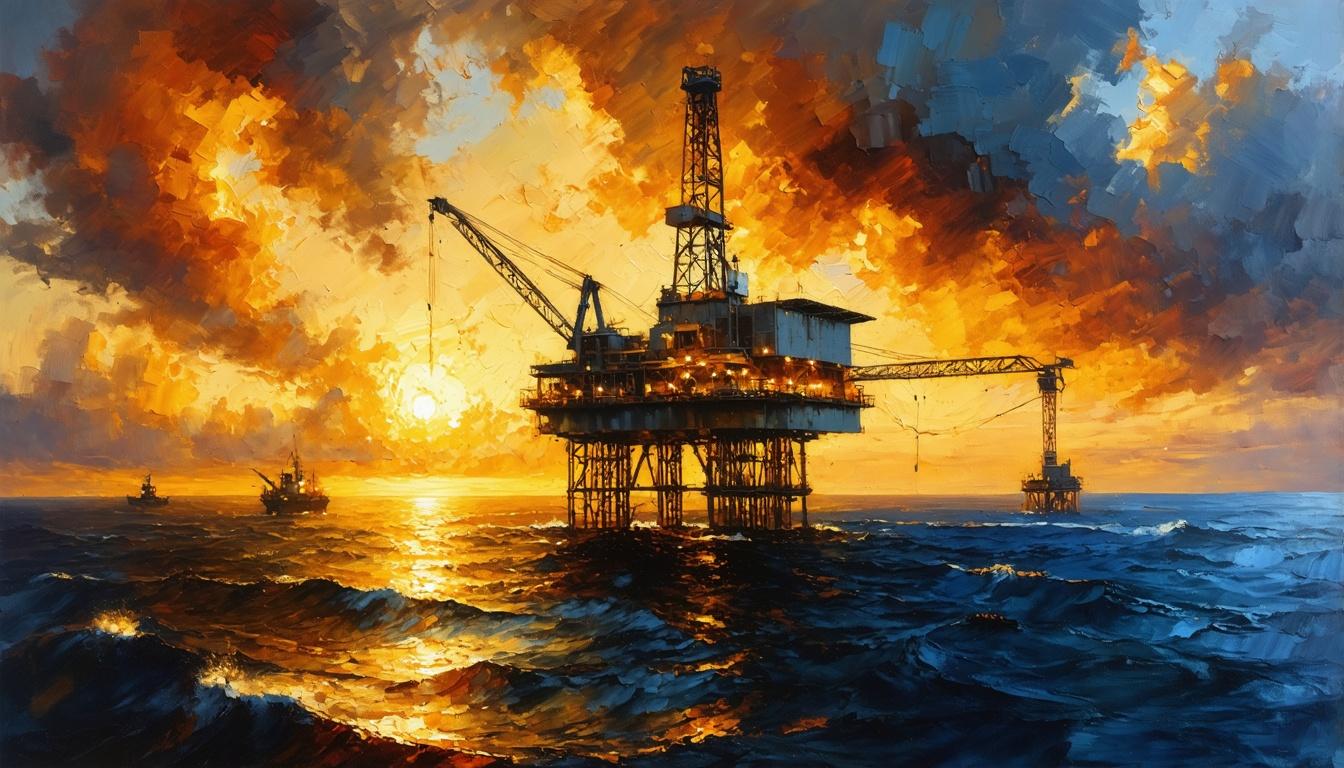

*this image is generated using AI for illustrative purposes only.
Senator Lindsey Graham (R-S.C.) warned that the United States would seize control of the Strait of Hormuz and "obliterate" Iran if a tentative diplomatic agreement fails, raising the stakes for global energy markets. His comments underscore the fragility of ongoing peace talks in Switzerland, where U.S. and Iranian officials are negotiating a memorandum of understanding (MOU) to de-escalate regional tensions. The potential for conflict over the strategic waterway, a critical chokepoint for global oil shipments, remains a central concern for investors and policymakers alike.
Graham articulated a hardline stance on potential Iranian aggression, specifically linking attacks by Hezbollah to direct retaliation against Iran. "When you use Hezbollah to attack Israel, I think the new policy will be, ‘We will attack Iran,’” he said in an interview on Face the Nation. He further stated that if the deal collapses, President Trump might take control of the Strait of Hormuz by force. In a post on X, Graham reiterated this position: "We want diplomacy to succeed. But if Iran tries to test us, we will obliterate them."
Despite the aggressive rhetoric, diplomatic channels have yielded some progress. Iran’s Foreign Minister Seyed Abbas Araghchi announced that the U.S. agreed to lift its naval blockade of the Strait of Hormuz following early talks in Switzerland. As part of the broader framework, restrictions on Iranian oil and petrochemical exports were eased, and some frozen assets were released. Energy Secretary Chris Wright confirmed that oil and gas flows through the strait have returned to normal, suggesting a stabilization in energy markets.
| Key Details of the Iran Ceasefire MOU |
|---|
| Signed on: Wednesday |
| Conflict duration: Nearly four months |
| Sanctions: Lifted on Iran’s energy sector |
| Strait of Hormuz: Reopened |
| Reconstruction fund: $300 billion |
| Ships transited Hormuz: 55 |
| Oil transited: More than 17 million barrels |
Former national security adviser John Bolton expressed skepticism regarding the reliability of the Iranian regime in honoring international agreements. Citing recent violence against civilians, Bolton argued that the leadership's history makes trust difficult. "In Iran, we are dealing with a regime that as recently as January, slaughtered tens of thousands of its own civilians in the streets. That’s not the kind of regime that honors international agreements," he wrote on X.
Negotiations face significant hurdles, including President Trump’s threats to seize the strait and launch fresh strikes if Iran’s proxies do not cease activities in Lebanon. Graham also predicted the potential expansion of the Abraham Accords, with Saudi Arabia possibly joining in 2026, contingent on regional stability. U.S. intelligence has previously warned that Israeli Prime Minister Benjamin Netanyahu might undermine the deal due to political pressures, adding another layer of complexity to the peace process.

How will global oil prices react if diplomatic channels break down and military action is taken against Iran?
What specific mechanisms are in place to monitor and enforce Iran's compliance with the terms of the MOU?
Could Saudi Arabia's potential entry into the Abraham Accords in 2026 be derailed if the current ceasefire collapses?
 18
18





 Access 50+ Readymade Screeners
  Use 200+ Custom Filters
  Get Full Market Insights





