
 NewsTrump Announces 25% Tariff on Iran's Trade Partners, India Among Countries Potentially Affected
Trump Announces 25% Tariff on Iran's Trade Partners, India Among Countries Potentially Affected


US President Trump has announced a 25% tariff on countries doing business with Iran, targeting major trading partners including India. India's bilateral trade with Iran reached $2.33 billion in FY23, up 21.76% year-on-year, with the strategic Chabahar Port partnership remaining a key element of relations. The tariff threat differs from traditional sanctions by linking Iran trade directly to US market access, potentially complicating India's balancing act between strategic partnerships.

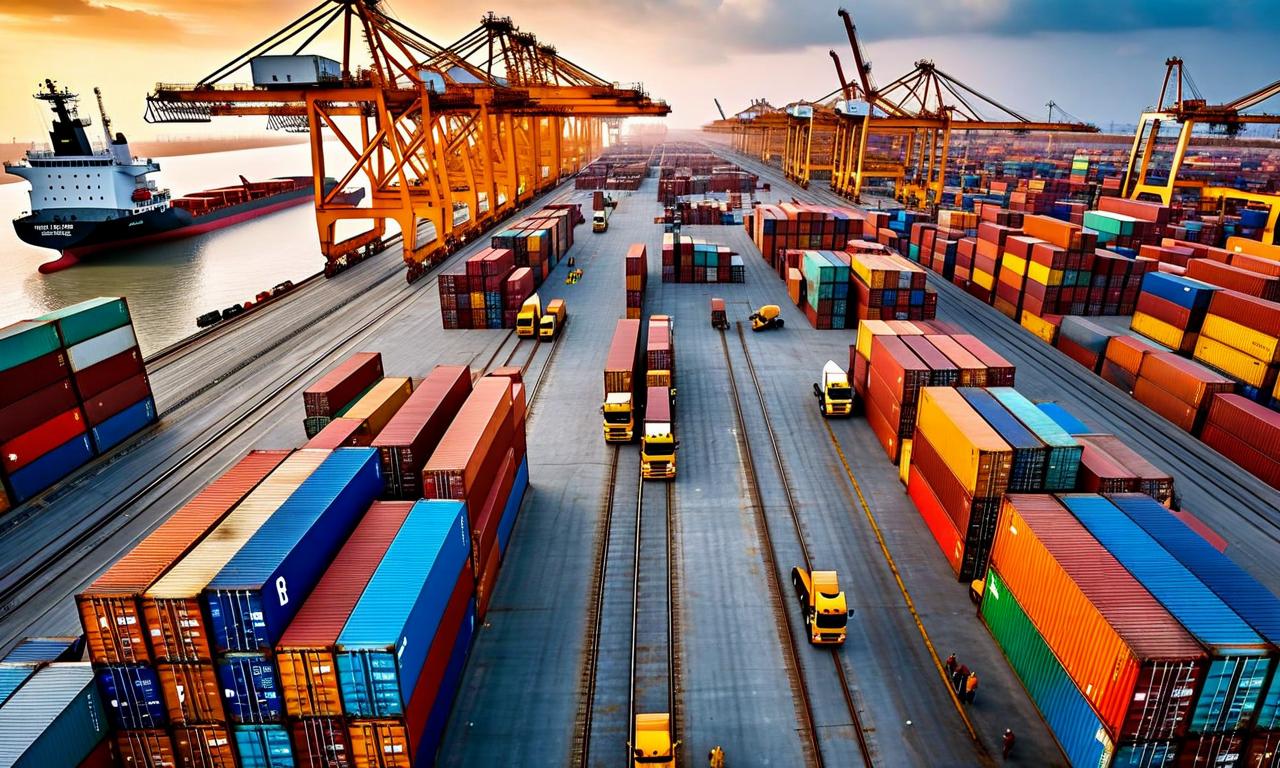

*this image is generated using AI for illustrative purposes only.
US President Donald Trump has announced a sweeping 25% tariff on any country that continues to do business with Iran, marking a significant escalation in pressure on Tehran amid ongoing violent crackdowns on protests. The declaration, posted on Truth Social and described as 'final and conclusive,' states that countries maintaining business ties with Iran will face a 25% tariff on all business conducted with the United States.
Iran's major trading partners include China, Turkey, the United Arab Emirates, Iraq, and India. This blanket tariff threat, tied not to specific goods but to any US-facing business, could act as a powerful deterrent, forcing countries to reassess even limited commercial engagement with Tehran.
Strategic Implications of the Tariff Policy
Unlike traditional sanctions that target specific sectors or entities, Trump's order raises the stakes by linking Iran trade directly to access to the US market — still the world's largest consumer economy. The move comes as Trump openly weighs military options against Iran, even as the White House maintains that diplomatic channels remain open through special envoy Steve Witkoff.
Rights groups have reported hundreds of deaths in Iran over the past weeks, keeping the situation firmly in the global spotlight. The tariff threat represents a departure from conventional sanctions approaches, potentially affecting broader economic relationships.
India's Economic Ties with Iran
India and Iran share deep-rooted civilisational, political and economic ties. Diplomatic relations formally began with a friendship treaty in 1950, and cooperation has since expanded across trade, connectivity, culture and high-level political engagement. In recent years, ties have been reinforced through multiple prime ministerial meetings, BRICS and SCO sidelines, and joint commissions.
Trade-wise, India has remained among Iran's top five partners. The bilateral trade relationship shows significant economic engagement:
| Trade Component | FY23 Value | Growth Rate |
|---|---|---|
| Total Bilateral Trade | $2.33 billion | +21.76% YoY |
| Indian Exports | $1.66 billion | - |
| Indian Imports | $672 million | - |
Indian exports are led by rice, tea, sugar and pharmaceuticals, while imports include methanol, petroleum bitumen, dry fruits and chemicals. However, early FY24 data showed moderation, with trade between April and July 2023 down 23.30% year-on-year.
The Strategic Chabahar Port Partnership
One of the most strategic pillars of India-Iran ties is the Chabahar Port. Jointly developed with India, the port is viewed as a crucial gateway for humanitarian aid and regional connectivity, offering India access to Afghanistan and Central Asia while bypassing Pakistan. New Delhi has consistently argued that Chabahar serves regional stability and development, not geopolitical confrontation.
| Strategic Element | Details |
|---|---|
| Port Development | Joint India-Iran project |
| Regional Access | Gateway to Afghanistan and Central Asia |
| Strategic Benefit | Bypasses Pakistan route |
| Policy Position | Serves regional stability and development |
Potential Impact on India's Position
In the near term, India is unlikely to make abrupt policy shifts. Its Iran trade volumes are modest relative to total US-India commerce, and many transactions already operate under tight compliance frameworks. However, Trump's threat complicates the balancing act — especially if tariffs are enforced aggressively rather than used as leverage.
The announcement puts India in a challenging position, requiring careful navigation between maintaining strategic partnerships with Iran and preserving crucial economic ties with the United States. The enforcement mechanism and timeline for these tariffs remain unclear, adding uncertainty to the economic implications for affected countries.
 19
19






 Create Custom Screeners
  Access 200+ Pre-built Filters
  Use 50+ Readymade Screener





