News Global Trump Administration Threatens Criminal Charges Against Fed Chair Powell Over $700 Million Renovation Cost Overruns
Trump Administration Threatens Criminal Charges Against Fed Chair Powell Over $700 Million Renovation Cost Overruns


Trump administration threatens criminal charges against Fed Chair Powell over $700.00 million cost overruns in Federal Reserve headquarters renovation. Project costs rose from $1.88 billion in 2024 to $2.46 billion, involving historic Eccles Building and 1951 Constitution Avenue Building. Overruns stem from higher labor/materials costs, historic preservation requirements, and unforeseen issues like lead contamination and asbestos. This escalates Trump-Powell tensions over interest rate policies.
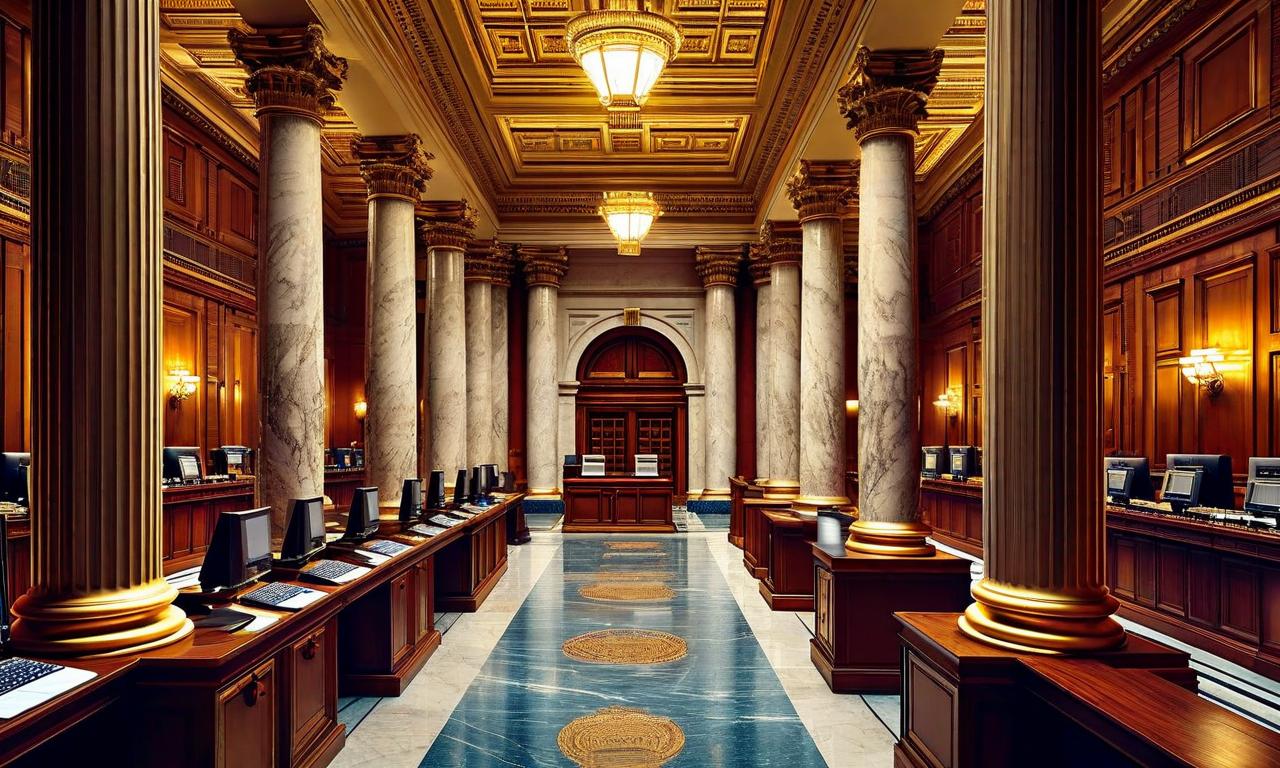

*this image is generated using AI for illustrative purposes only.
The Trump administration has escalated its conflict with Federal Reserve Chair Jerome Powell by threatening criminal charges over massive cost overruns in the central bank's headquarters renovation project. The dispute centers on a $700.00 million cost escalation that has become a new pressure point in Trump's broader campaign against Powell and his interest rate policies.
Project Overview and Buildings
The renovation involves two historically significant buildings in Washington D.C. The primary structure is the Eccles Building, which has served as the Federal Reserve's headquarters since its construction between 1935 and 1937. The second building is the 1951 Constitution Avenue Building, originally completed in 1932 for the U.S. Public Health Service.
| Building Details: | Information |
|---|---|
| Eccles Building: | Fed headquarters, built 1935-1937 |
| Constitution Avenue Building: | Built 1932, transferred to Fed in 2018 |
| Historic Status: | Constitution Avenue Building listed on National Register |
| Original Purpose: | Consolidate leases, productive use of vacant building |
The Constitution Avenue Building has served various purposes throughout its history, including housing the Combined Chiefs of Staff during World War II. The first Trump administration transferred this building to the Fed in 2018, with the stated goal of putting "a vacant building back in productive use, allow the Federal Reserve Board to consolidate several leases and result in savings for taxpayers."
Cost Overrun Analysis
The financial escalation has been substantial and continues to grow. Russell Vought, director of the Office of Management and Budget, reported the cost overrun at "$700.00 million and counting" as of mid-2025. The Fed's own budget documentation shows the project's estimated cost increased from $1.88 billion in 2024 to $2.46 billion, representing a difference of approximately $580.00 million.
| Cost Breakdown: | Amount |
|---|---|
| 2024 Estimated Cost: | $1.88 billion |
| Current Estimated Cost: | $2.46 billion |
| Budget Increase: | $580.00 million |
| OMB Reported Overrun: | $700.00 million |
| Cost Savings from Eliminated Building: | $510.00 million |
To manage expenses, the Fed eliminated the planned renovation of a third building, cutting approximately $510.00 million in costs. However, this reduction has not offset the overall project escalation.
Factors Driving Cost Increases
Three primary factors have contributed to the budget overruns. Higher-than-estimated labor and materials costs have significantly impacted the project timeline and expenses. Design changes required to preserve the historic buildings and maintain their original appearance have added complexity and cost. Additionally, unforeseen problems have emerged during construction, including lead contamination in the ground and higher-than-anticipated amounts of asbestos requiring specialized remediation.
Project Scope and Oversight
The renovation addresses nearly a century of deferred maintenance on buildings that have never undergone major updates. The scope includes complete infrastructure replacement covering plumbing, electrical, heating, and water systems. Accessibility improvements for people with disabilities are being implemented throughout both structures. One building is receiving a new basement while the other is getting an addition to accommodate existing staff currently occupying leased offices.
The Fed maintains that the project avoids lavish elements, stating there is no Governors-only elevator or VIP dining room. A planned water feature for the 1951 Constitution renovation was eliminated from the original plans. Contrary to some assertions, there are no "rooftop terrace gardens," though one building features a ground-level front lawn that serves as the roof of an underground parking structure, referred to in planning documents as a "garden terrace."
Regulatory Framework and Reviews
The Federal Reserve operates under legal authority to determine its spending on capital projects. The Fed's Office of Inspector General receives monthly project reports and conducted a review in 2021, with a fresh review now underway. Multiple planning bodies have been consulted throughout the process, including the Fine Arts Commission and the National Capital Planning Commission, regarding design and development decisions. While the Fed has made some modifications to original plans for cost savings, these changes have not been substantial enough to significantly impact the overall budget trajectory.
 19
19