

Taiwan mulls curbs on AI chip exports to China to align with US


Taiwan is considering restrictions on AI chip exports to China to align with US policies, marking a potential shift in its trade stance amidst global semiconductor supply chain scrutiny.

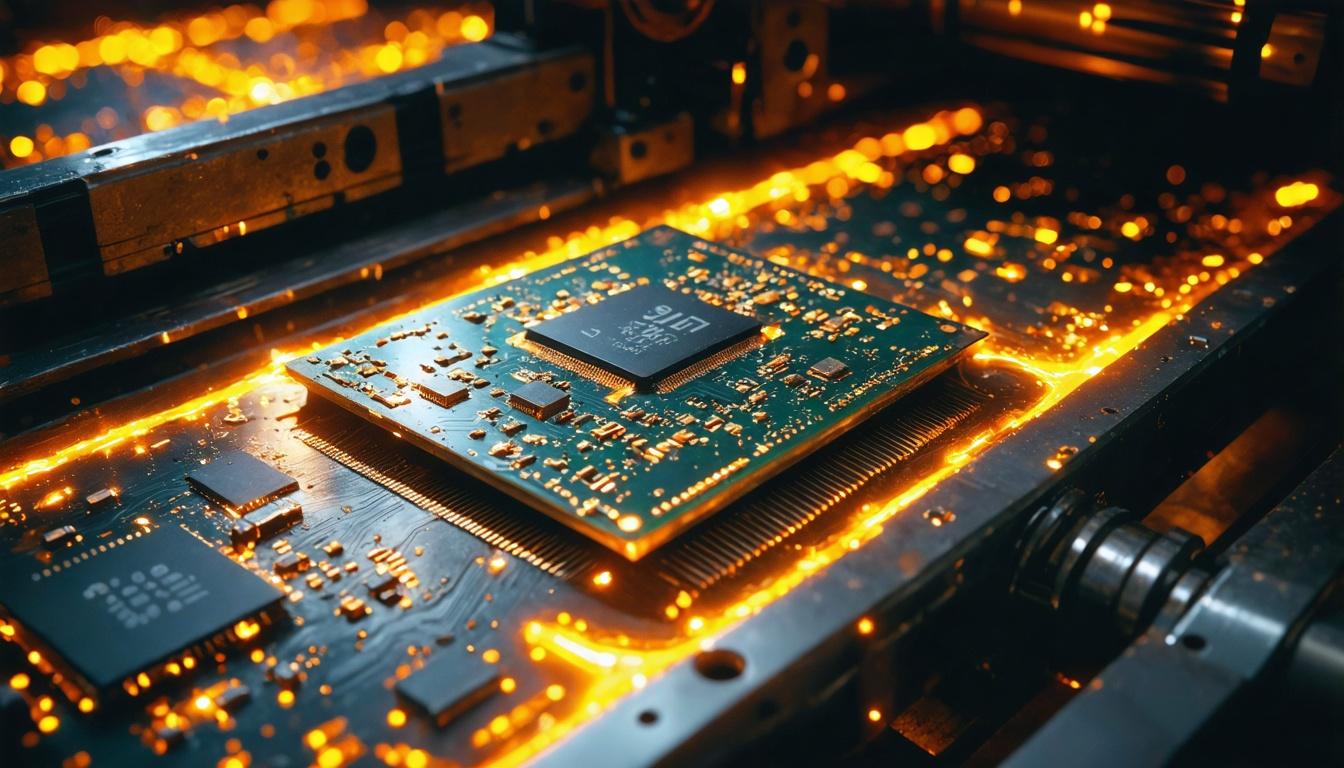

*this image is generated using AI for illustrative purposes only.
Taiwan is considering imposing restrictions on exports of artificial intelligence chips to China, a move that would bring its trade policies in closer alignment with those of the United States. The development highlights the growing intersection of semiconductor trade and geopolitical considerations in the Asia-Pacific region.
Policy Alignment With the United States
The potential curbs reflect Taiwan's intent to coordinate its export control framework with Washington's approach toward advanced technology shipments to China. The move, if implemented, would mark a notable shift in Taiwan's stance on regulating the flow of AI-related semiconductor products across its borders.
Broader Context
Artificial intelligence chips have become a focal point of international trade policy, with multiple governments reassessing export regulations governing advanced semiconductor technologies. Taiwan, home to some of the world's leading chip manufacturers, occupies a strategically significant position in the global semiconductor supply chain. Any regulatory changes in this space are closely watched by industry participants and policymakers alike.
No additional details regarding specific chip categories, regulatory mechanisms, timelines, or affected companies were available in the source data at this time.

How might China respond to Taiwan's potential export restrictions on AI chips?
What impact could these restrictions have on Taiwan's semiconductor manufacturers and their revenue streams?
Will other countries in the Asia-Pacific region follow Taiwan's lead in aligning with U.S. export policies?
 15
15





 Access 50+ Readymade Screeners
  Use 200+ Custom Filters
  Get Full Market Insights





