

SpaceX Targets 100x Cost Reduction in Satellite Launches Through Full Rocket Reusability


SpaceX aims to reduce satellite launch costs by 100x through full Falcon 9 reusability, building on success of landing booster stage over 500 times. Company has already cut launch costs to $1,500 per kg by 2021, making it cheapest provider compared to ISRO's $4,500-5,000 per kg and other competitors. Goldman Sachs projects satellite market growth from $15 billion to $108 billion by 2035, with 70,000 LEO satellites expected to launch in next five years.

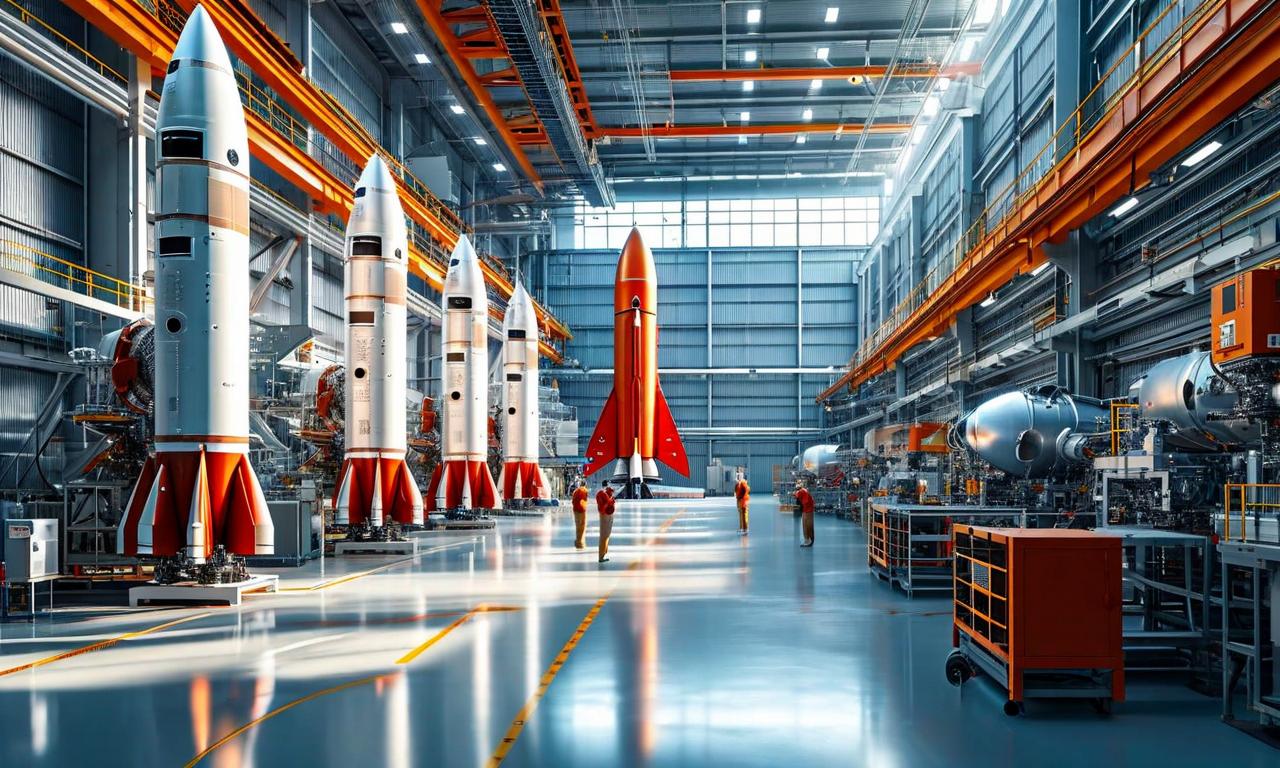

*this image is generated using AI for illustrative purposes only.
SpaceX is working toward making its Falcon 9 rockets fully reusable, which could dramatically reduce satellite launch costs by a factor of 100, according to Elon Musk. Speaking at The World Economic Forum's annual gathering in Davos, Switzerland, the SpaceX founder outlined the company's progress and future ambitions for cost reduction in space launches.
Current Reusability Achievements
SpaceX has made significant strides in rocket reusability since launching the Falcon 9 in 2010. The launch vehicle made its maiden commercial crewed flight to low earth orbit in 2020. The company's most notable breakthrough has been developing reusable boosters, which reduced launch costs to $62 million in 2018 - a twentieth of NASA's previous costs.
| Milestone | Details |
|---|---|
| Booster Landings | Over 500 successful landings |
| Launch Cost (2018) | $62 million |
| Cost Reduction | 1/20th of previous NASA costs |
| Maiden Crewed Flight | 2020 |
Musk explained that while SpaceX has successfully landed the booster stage over 500 times, the company still discards the upper stage. "The upper stage burns up on reentry and the cost of that is equivalent to a small to medium sized jet," he noted during his Davos presentation.
Market Position and Cost Comparison
SpaceX has established itself as the most cost-effective option in the satellite launch market. The price of heavy launches to low-Earth orbit has fallen dramatically from $65,000 per kilogram to $1,500 per kilogram by 2021, according to McKinsey estimates.
| Provider | Cost per kg | Details |
|---|---|---|
| SpaceX Falcon 9 | $1,500 | Cheapest among major providers |
| ISRO PSLV | $4,500-5,000 | Indian Space Research Organisation |
| CAS Space | $6,900 | Guangzhou-based provider |
| Indian Private Sector | $65,000+ | Skyroot and Agnikul for 300kg payload |
The Indian Space Research Organisation, recognized as a significant competitor, estimates launching costs for its polar satellite launch vehicle at approximately $4,500-5,000 per kilogram. China-based CAS Space's launches cost about $6,900 per kilogram, as reported by Yicai Global in October 2025.
Industry Growth Projections
The declining cost of satellite launches is expected to fuel substantial growth in the space economy. Goldman Sachs projects the satellite market will expand significantly from current levels to $108 billion by 2035, representing growth from the existing $15 billion market.
The same Goldman Sachs report estimates that approximately 70,000 LEO satellites are expected to launch over the next five years, indicating robust demand for cost-effective launch services. This projected satellite deployment surge underscores the importance of SpaceX's continued cost reduction efforts and the potential impact of achieving full rocket reusability.
 17
17






 Access Market Heat-map & Insights
  Create, Save & Share your Screener
  Use 200+ Screening Filters





