

Russia's Shadow Fleet Generates $9.4 Billion Extra Revenue Despite Western Sanctions


Russia's shadow fleet system, comprising 900-1500 tankers by early 2026, successfully circumvented Western oil sanctions and price caps, generating $9.40 billion in additional revenue during 2024. The $10.00 billion investment in old tankers, many sourced from European owners, enabled Russia to maintain oil exports through alternative logistics and financial networks. India became the second-largest buyer with $155-160 billion in purchases, dramatically increasing its Russian oil imports from negligible pre-2022 levels to one-third of total flows by 2024-25.

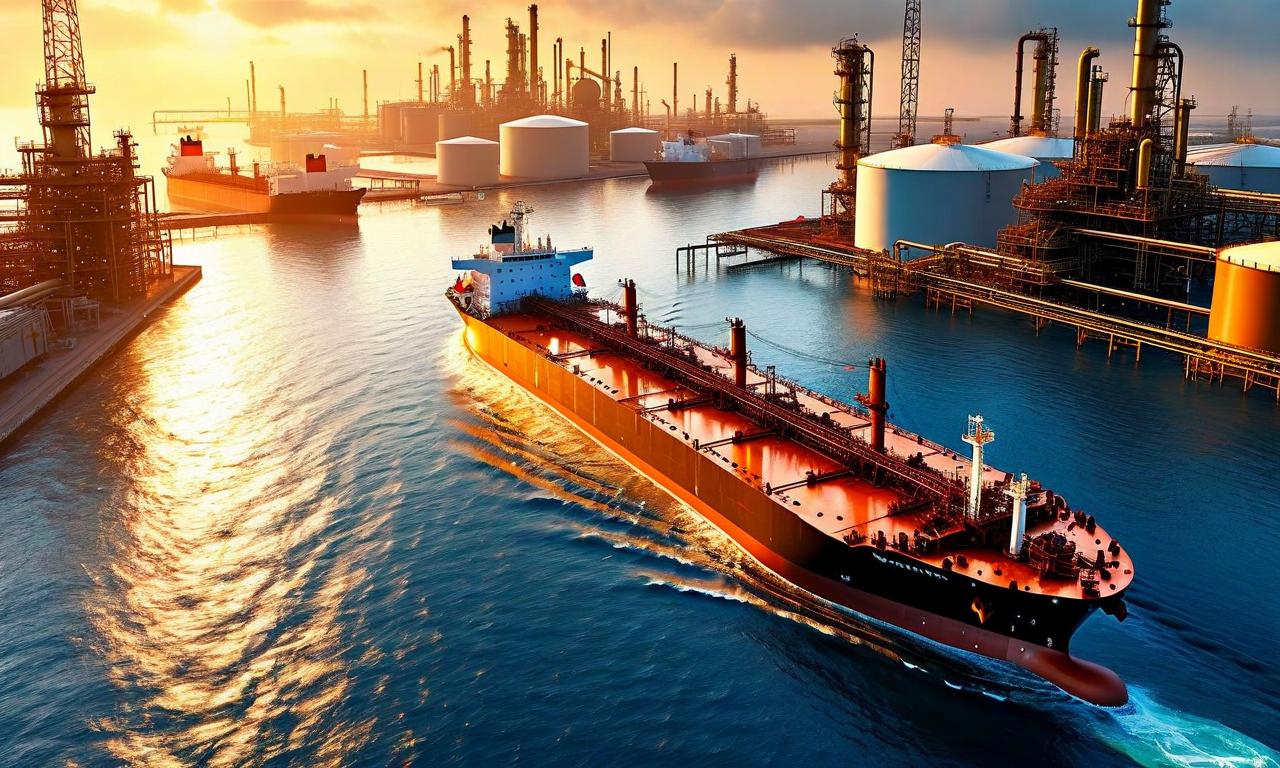

*this image is generated using AI for illustrative purposes only.
Following the Russia-Ukraine conflict, Western nations faced a complex challenge in sanctioning Russia while maintaining global energy stability. Rather than implementing outright oil bans, the G7 established a $60-per-barrel price cap system, recognizing Russia's significant role as a producer of 11 million barrels daily and exporter of nearly 10% of global oil supply.
Russia's Strategic Response: The Shadow Fleet System
Rather than accepting discounted oil sales, Russia developed an elaborate workaround through what became known as the shadow fleet. This system involved purchasing old tankers, concealing ownership through shell companies, and establishing alternative networks for logistics, insurance, and financial transactions outside Western control.
The shadow fleet operates through deceptive practices including falsified documents, flags, and location data. Vessels often conduct ship-to-ship transfers at sea and frequently change names to avoid detection. By early 2026, this network comprised approximately 900-1500 vessels, representing roughly one-fifth of global tanker capacity.
Financial Impact and Investment Scale
Russia's shadow fleet strategy required substantial upfront investment but delivered significant returns:
| Investment Category: | Amount | Period |
|---|---|---|
| Tanker Purchases: | $10.00 billion | 2022-2024 |
| Additional Revenue Generated: | $9.40 billion | 2024 |
| Global Tanker Capacity Share: | 20% | By early 2026 |
The Kyiv School of Economics data reveals that Moscow's $10.00 billion investment in acquiring old tankers from 2022 to 2024 enabled the country to generate $9.40 billion in additional oil revenue during 2024 alone by selling above the imposed price cap.
European Involvement and Legal Complexities
Bloomberg research uncovered that nearly 60% of shadow fleet tankers originated from Western European owners, predominantly Greek companies. This transfer remained legal under existing regulations, which monitored but did not prohibit tanker sales to non-Russian entities.
European shipowners capitalized on this regulatory gap by selling aging vessels at premium prices to buyers operating through shell companies in locations such as Dubai and Hong Kong. This arrangement allowed Russia to acquire necessary tanker capacity while maintaining plausible deniability regarding actual ownership structures.
India's Strategic Energy Positioning
India emerged as a major beneficiary and participant in this reconfigured energy trade system:
| Trade Metrics: | Details |
|---|---|
| Total Russian Oil Purchases: | $155-160 billion |
| Global Ranking: | Second-largest buyer after China |
| Import Share (2024-25): | Approximately one-third of total oil flows |
| Pre-2022 Russian Oil Share: | Negligible levels |
India's pragmatic approach prioritized energy security and cost advantages, maintaining Russian oil purchases despite US pressure and tariff threats. The country's imports from Russia increased dramatically from virtually zero before 2022 to representing about one-third of total oil flows by 2024-25.
Current Challenges and System Resilience
Despite intensifying international pressure, the shadow fleet system demonstrates remarkable adaptability. The US, EU, and UK have sanctioned over 150 vessels, and coordinated enforcement actions have reportedly reduced shadow fleet activity by 90% in some instances.
However, the system continues operating through increasingly sophisticated methods, including military protection for some shipments and continued LNG imports by China. While profit margins have decreased and operational risks have increased, the fundamental structure remains intact, highlighting the limitations of sanctions in completely halting determined trade flows.
Historical Stock Returns for Polycab
| 1 Day | 5 Days | 1 Month | 6 Months | 1 Year | 5 Years |
|---|---|---|---|---|---|
| -0.19% | +11.77% | +19.28% | +20.20% | +57.25% | +507.59% |
 18
18






 Create Custom Screeners
  Access 200+ Pre-built Filters
  Use 50+ Readymade Screener





