

Pentagon accused of secretly seeking billions in NIH research funds


- Rosa DeLauro accuses Pentagon of secretly seeking billions in NIH funds via interagency agreement
- Funds targeted are from National Institute of Allergy and Infectious Diseases for HIV and flu research
- White House previously sought $87.6 billion in supplemental funding including $67.1 billion for Defense
- Defense Secretary Hegseth stated Iran conflict cost an estimated $37.5 billion as of July
- HHS defends partnership as necessary for collaborative response to public health emergencies

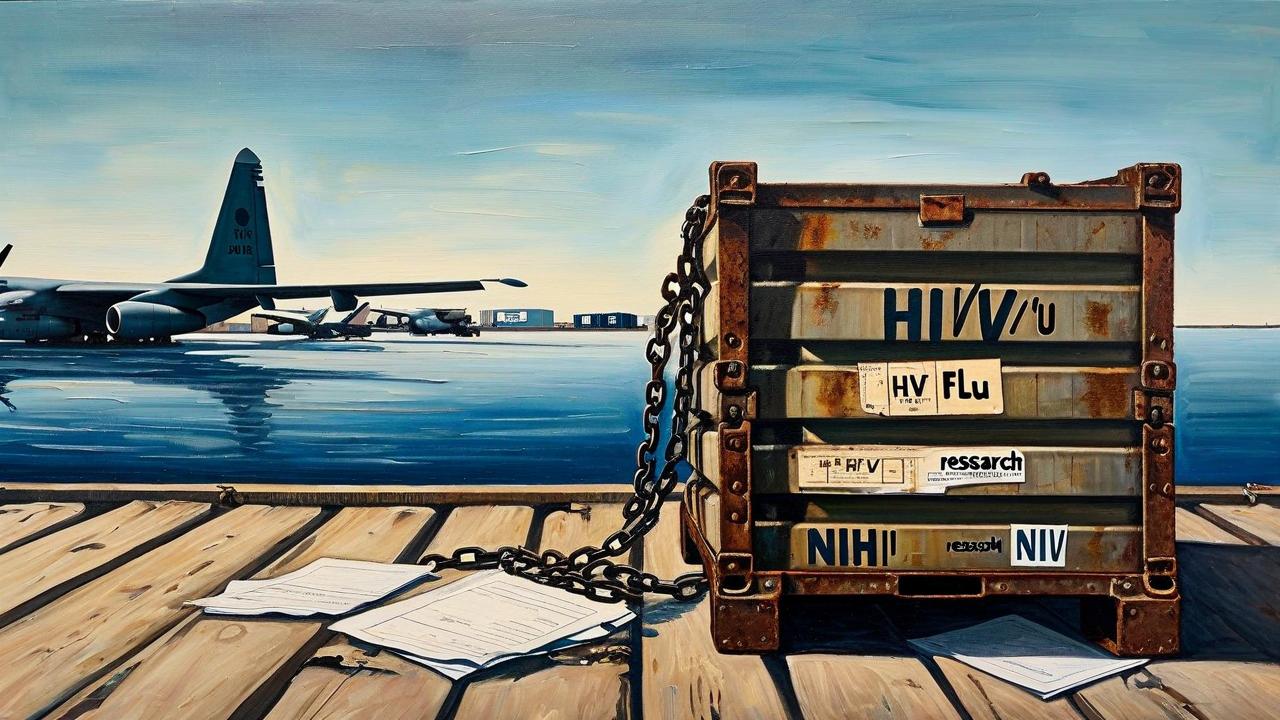

*this image is generated using AI for illustrative purposes only.
House Appropriations Committee ranking Democrat Rosa DeLauro accused the Pentagon of attempting to access billions of dollars in National Institutes of Health research funds without notifying Congress. The allegation centers on an interagency agreement that could allow the Defense Department to draw from the National Institute of Allergy and Infectious Diseases.
DeLauro described the move as a secretive attempt to siphon research funds away from critical medical studies. She stated that circumventing Congress to divert money intended for Americans exposed to HIV, influenza, tuberculosis, and other deadly diseases is beyond the pale. The agreement would direct these funds to the Department of Defense instead.
Congressional Reaction and HHS Defense
Senate Appropriations Committee Vice Chair Patty Murray criticized the administration for trying to rob the NIH of billions provided by Congress to pad the Pentagon’s budget. Murray argued that Pentagon priorities should proceed through the annual appropriations process rather than through such diversions. She noted that this follows mass firings of cancer researchers and cancellations of clinical trials.
A spokesperson for the Department of Health and Human Services defended the potential partnership. They stated that the NIH and Pentagon explored avenues of collaboration on therapeutics, diagnostics, and protective equipment for infectious diseases. The spokesperson claimed such a partnership would enable nimble multi-agency resources to respond to public health emergencies like the recent Ebola outbreak.
Iran War Costs and Funding Pressure
DeLauro linked the funding dispute to financial pressure on the Defense Department stemming from President Trump’s conflict with Iran. In June, the White House sought $87.6 billion in supplemental funding. This request included $67.1 billion for the Defense Department, with $21 billion earmarked specifically to replenish munitions.
Defense Secretary Pete Hegseth told senators in July that the conflict had cost an estimated $37.5 billion. The exact amount sought under the interagency agreement remains unclear, and DeLauro did not confirm whether the NIH had signed the agreement. Neither the Department of Defense nor the NIH responded to requests for comment.
What the Numbers Show
The source data reveals a significant gap between the estimated cost of the Iran conflict and the supplemental funding requested. While Hegseth cited an estimated $37.5 billion in costs incurred, the White House sought $67.1 billion for the Defense Department alone. This suggests the supplemental request covers costs beyond just the immediate conflict expenditure or includes other budgetary pressures.

How might the finalization or rejection of this interagency agreement impact the timeline and funding stability of ongoing NIH clinical trials for infectious diseases?
What legislative measures could Congress enact to prevent future executive branch diversions of appropriated research funds without explicit congressional approval?
To what extent will the $21 billion munitions replenishment request influence the Pentagon's long-term strategic procurement priorities beyond the immediate Iran conflict?
 16
16







 Access 50+ Readymade Screeners
  Use 200+ Custom Filters
  Get Full Market Insights





