
 NewsNvidia CEO Jensen Huang Pitches Self-Driving Technology at CES, Sparks Exchange with Tesla's Elon Musk
Nvidia CEO Jensen Huang Pitches Self-Driving Technology at CES, Sparks Exchange with Tesla's Elon Musk


Nvidia CEO Jensen Huang presented the company's Alpamayo AI model for Level 4 autonomous vehicles at CES, prompting a social media exchange with Tesla CEO Elon Musk. The interaction highlighted different strategic approaches, with Nvidia positioning itself as a technology supplier to automakers while Tesla pursues end-to-end development. Despite competition, the companies maintain significant business relationships, with Tesla spending approximately $10.00 billion on Nvidia hardware for AI training. Both executives acknowledged that fully autonomous driving at scale remains years away, focusing on supervised systems as near-term stepping stones.

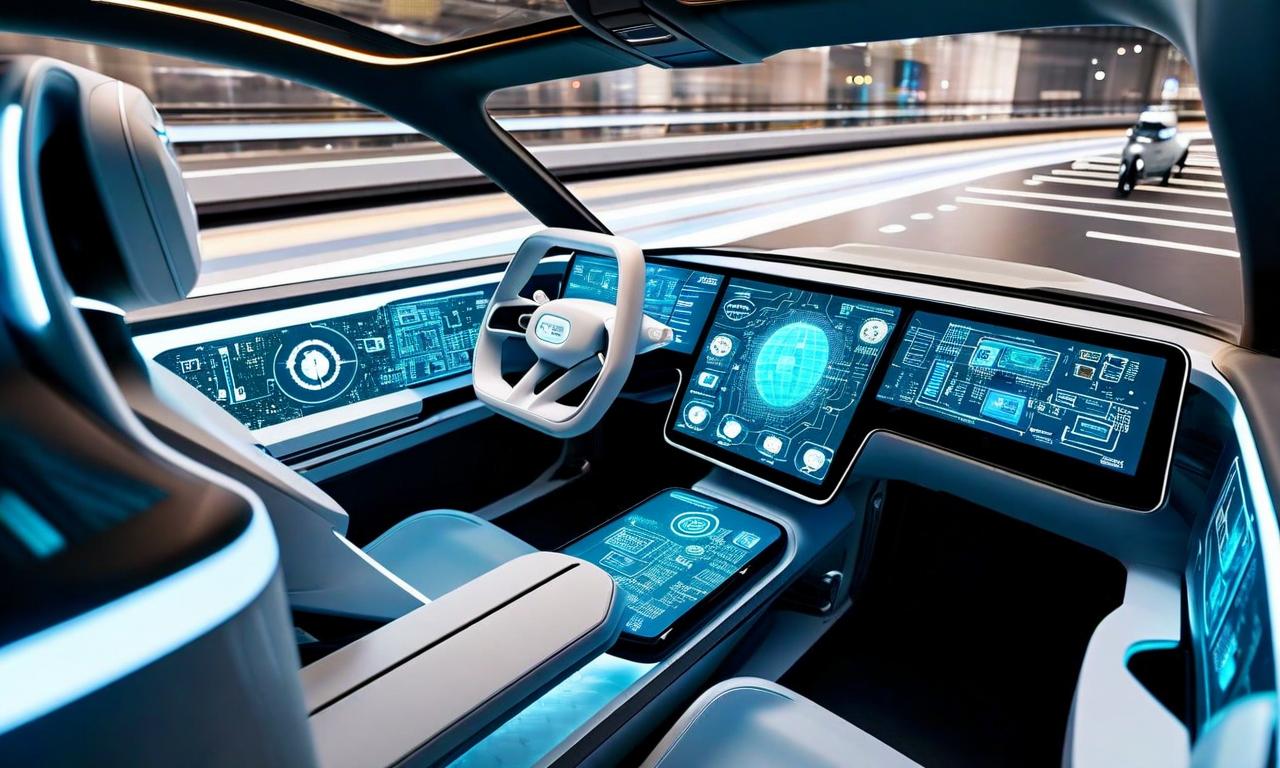

*this image is generated using AI for illustrative purposes only.
Nvidia CEO Jensen Huang delivered a comprehensive pitch for the company's autonomous driving technology at the CES trade show in Las Vegas, unveiling new AI capabilities that caught the attention of Tesla CEO Elon Musk. The presentation highlighted the competitive dynamics in the self-driving vehicle market and sparked a widely watched exchange between two influential technology leaders.
Nvidia Unveils Alpamayo AI Model
Huang used his CES keynote to introduce Nvidia's Alpamayo, an open-source AI model designed to accelerate development of Level 4 self-driving cars. These vehicles can operate without human supervision within defined geographic areas, representing a significant advancement in autonomous driving capabilities.
| Technology Component | Description |
|---|---|
| Alpamayo AI Model | Open-source system for Level 4 autonomous vehicles |
| Data Center Chips | GPUs for training self-driving software |
| Vehicle Chips | In-car processors serving as the vehicle's "brain" |
| Simulation Software | Virtual driving data generation platform |
The CEO described the technology as "the world's first thinking, reasoning, autonomous vehicle AI," positioning Nvidia as a comprehensive supplier to automakers without building vehicles directly.
Tesla CEO Responds on Social Media
Musk responded to Huang's announcement on X after a user shared transcript excerpts from the presentation. "Well that's just exactly what Tesla is doing," Musk wrote, emphasizing that while basic functionality is achievable, solving unpredictable edge cases presents greater challenges.
The Tesla CEO has long claimed his company's system will develop reasoning capabilities through future software updates. Ashok Elluswamy, Tesla's chief AI lieutenant, indicated a further update would arrive in the current quarter.
Different Strategic Approaches
The exchange highlighted fundamental differences between the companies' strategies and technologies:
Tesla's Approach:
- End-to-end vehicle and system development
- Vision-only technology using camera sensors
- Full Self-Driving (Supervised) system requiring driver attention
- Direct consumer sales model
Nvidia's Strategy:
- Technology supplier to multiple automakers
- Comprehensive toolkit including chips and software
- Support for various sensor types including lidar and radar
- Partnership-based market approach
Complex Business Relationship
Despite their competition, Tesla and Nvidia maintain significant business ties. Tesla relies heavily on Nvidia's graphics processing units for training autonomous driving software, with Musk stating the company will spend approximately $10.00 billion cumulatively on Nvidia hardware by year-end. Additionally, Musk's AI startup xAI serves as a major Nvidia customer, while Nvidia holds an investment position in xAI.
Market Timeline and Competition
Both leaders acknowledged that fully autonomous driving remains years away. Musk suggested meaningful competition for Tesla could be five to six years distant, stating "the actual time from when FSD sort of works to where it is much safer than a human is several years."
Huang announced that the Mercedes-Benz CLA will be the first vehicle using Nvidia's technology stack, offering capabilities similar to Tesla's Full Self-Driving system. Deliveries begin in the United States in early 2026, expanding to Europe and Asia later that year.
Industry Implications
The exchange underscored the unsettled nature of the autonomous vehicle market, where Tesla depends on Nvidia for training infrastructure while Nvidia develops tools that could help Tesla's competitors. Market analysts view robotaxis as the ultimate goal, with Alphabet's Waymo currently leading commercial deployments and Tesla arguing for scalability advantages. Both companies see supervised self-driving systems in consumer vehicles as stepping stones toward broader robotaxi adoption, with Nvidia targeting fleet deployments as early as 2027.
 17
17






 Create Custom Screeners
  Access 200+ Pre-built Filters
  Use 50+ Readymade Screener





