

Nuclear Power Poised to Triple Global Capacity by 2050, Led by China and India


The World Nuclear Association projects global nuclear capacity will triple to over 1,400 GW by 2050, with China, India, US, France, and Russia contributing nearly 1,000 GW. Nuclear generation hit record levels in 2024, currently providing 10% of global electricity. India targets 100 GW by 2047 with private sector participation, while technology companies like Google, Meta, Microsoft, and Amazon are forming nuclear partnerships for reliable 24/7 power.

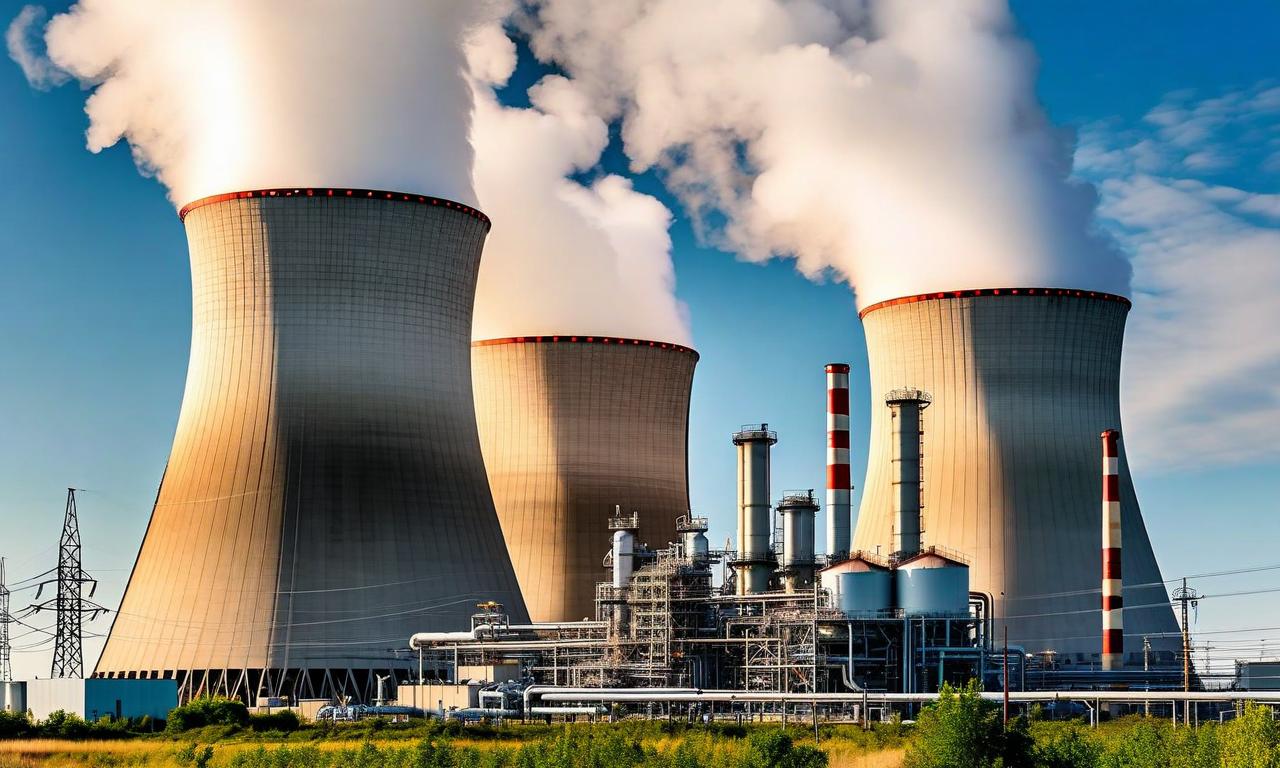

*this image is generated using AI for illustrative purposes only.
Global nuclear energy is experiencing unprecedented momentum, with the World Nuclear Association (WNA) projecting that worldwide nuclear capacity will more than triple by 2050. The World Nuclear Outlook 2026 report, released at the World Economic Forum in Davos, indicates that nuclear generation reached record levels in 2024, reinforcing the sector's critical role in the global energy transition.
Record-Breaking Nuclear Performance
Nuclear energy currently provides approximately 10% of global electricity supply and stands as the second-largest source of clean, carbon-free electricity worldwide. According to Sama Bilbao y Leon, Director General of the WNA, 2024 marked the largest year for nuclear generation in history, demonstrating the sector's continued expansion and reliability.
With over 70 reactors currently under construction globally, the nuclear industry is positioned to significantly exceed previous capacity projections through current projects, government targets, and planned reactor developments.
Five Nations Leading Global Expansion
The projected growth to over 1,400 gigawatts of global nuclear capacity by 2050 will be predominantly driven by five major nations, as outlined in the following breakdown:
| Country | Contribution to Global Expansion | Current Status |
|---|---|---|
| China | Leading global build-out | Ambitious scaling plans for industrial and residential needs |
| India | 100 GW target by 2047 | Private sector participation enabled through recent reforms |
| United States | Significant expansion planned | Maintaining energy security and reducing emissions |
| France | Continued fleet growth | Expanding existing nuclear infrastructure |
| Russia | Major capacity increases | Supporting energy security objectives |
These five countries are expected to contribute nearly 1,000 gigawatts of the total projected 1,400 gigawatts, leveraging their existing nuclear infrastructure and expertise to meet rising electricity demand and climate commitments.
Technology Partnerships Drive Demand
The nuclear sector is witnessing increased interest from major technology companies requiring reliable, high-capacity power sources. Several prominent partnerships have emerged:
- Technology Giants: Google, Meta, Microsoft, and Amazon are actively pursuing nuclear energy partnerships
- Industrial Sectors: Chemical companies like Dow Chemical and metallurgical companies are exploring nuclear applications
- AI Applications: Emerging technologies requiring 24/7 reliable power are driving additional nuclear demand
These partnerships extend beyond electricity generation, with companies seeking high-temperature steam from nuclear sources to support industrial decarbonization efforts.
Strategic Advantages of Nuclear Energy
Nuclear power offers distinct advantages over intermittent renewable sources, providing consistent 24/7 electricity generation and supporting industrial processes requiring high-temperature heat. This reliability makes nuclear energy particularly valuable for:
- Continuous industrial operations
- AI and data center applications
- Base-load electricity supply
- Carbon-free energy production
The WNA emphasizes that nuclear energy represents a reliable solution for meeting the world's growing energy demands while supporting global decarbonization efforts and energy security objectives.
Future Outlook
The next three decades are expected to redefine the nuclear landscape, with the sector playing an increasingly central role in the global energy transition. The combination of government targets, private sector investment, and technological partnerships positions nuclear energy as a key pillar of a carbon-neutral energy future, supporting both traditional electricity needs and emerging high-demand applications.
 18
18


 Create Custom Screeners
  Access 200+ Pre-built Filters
  Use 50+ Readymade Screener





