

Iran says Hormuz closure central to negotiations, not nuclear issue


- Iran states Strait of Hormuz is now central to negotiations
- Nuclear issue no longer the primary focus of talks
- United States must accept Iran's conditions before dialogue begins
- Earlier warnings included threat of second front at Bab El-Mandeb

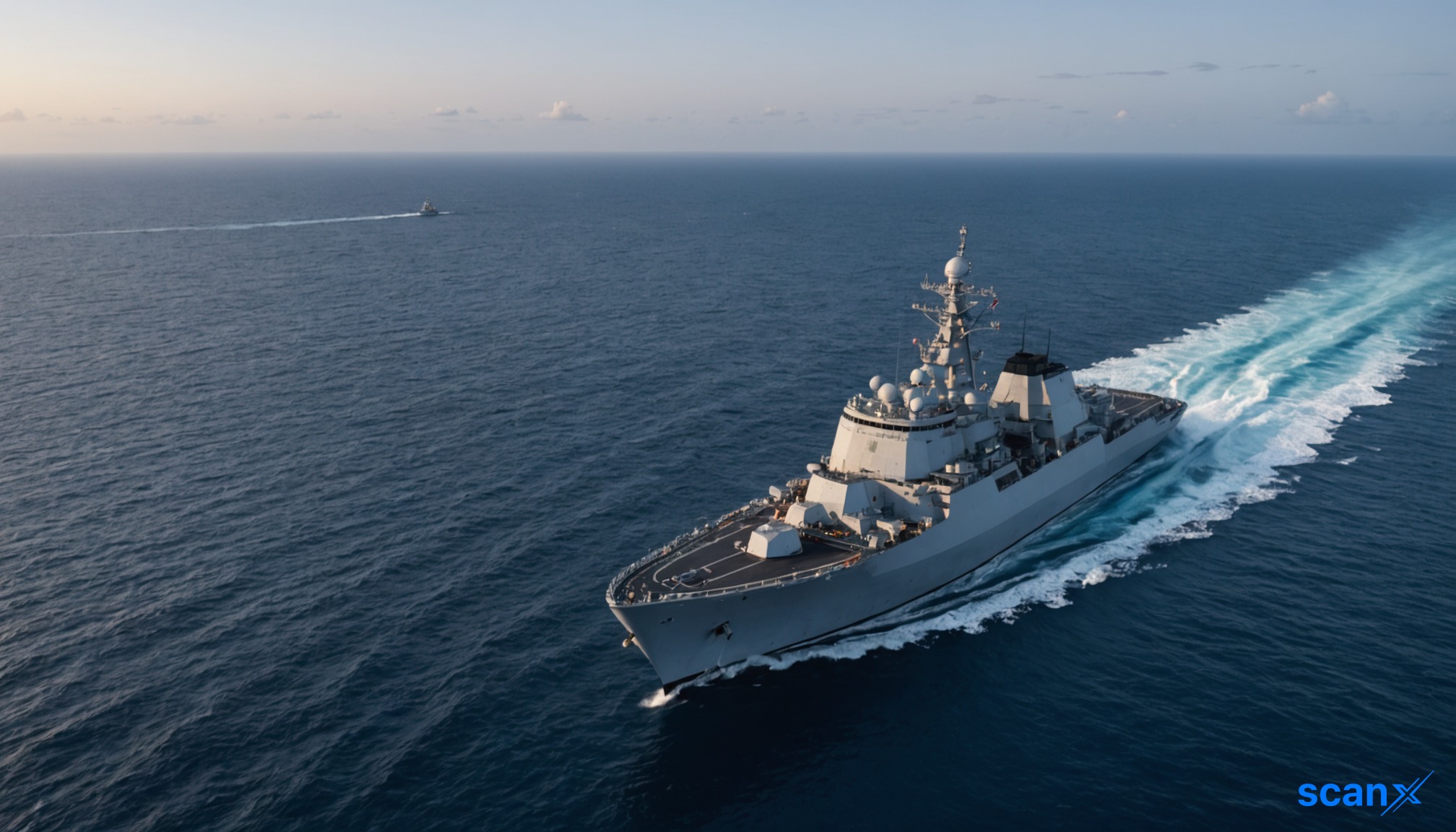

*this image is generated using AI for illustrative purposes only.
Iran's Deputy Chairman of the National Security Committee stated that the Strait of Hormuz is now at the center of negotiations, displacing the nuclear issue as the primary focus. The official declared that before any negotiations can occur, the United States must accept Iran's conditions.
This development follows earlier warnings from Iran Security Council Secretary Rezaei, who cautioned that a new US escalation could open a second military front at Bab El-Mandeb alongside the Strait of Hormuz. The confirmation of the Strait of Hormuz closure underscores the high stakes involved in recent US-Iran interactions. By explicitly naming Bab El-Mandeb in previous warnings, officials highlighted strategic maritime chokepoints critical for global trade and naval security. The current stance eliminates the possibility of immediate de-escalation through dialogue.
Strategic implications
The shift in diplomatic framing signals a hardening stance in Tehran's strategic posture. The combination of physical blockade via Hormuz closure and diplomatic rigidity presents a complex challenge for international stakeholders. The threat to extend operations to Bab El-Mandeb suggests a shift in Iran's defensive posture. Such a move would impact international shipping lanes and draw broader global attention to Middle East tensions.
| Statement | Source/Context | Implication |
|---|---|---|
| Hormuz is center of negotiations | Deputy Chairman, National Security Committee | Nuclear issue deprioritized |
| US must accept conditions first | Deputy Chairman, National Security Committee | Pre-conditions for dialogue set |
| Strait of Hormuz closed | Senior Iranian official | Disruption to global oil transit |
| No nuclear concessions | Senior Iranian official | Hardline policy maintained |
| Second front threat | Rezaei (Security Council) | Regional conflict expansion risk |
What the numbers show
The data indicates a significant pivot in Iran's negotiation strategy. Previously, the narrative centered on nuclear concessions and talks. The new statement explicitly repositions the Strait of Hormuz as the central focus, suggesting that maritime control is now the primary leverage point rather than nuclear capabilities. This reframing complicates traditional diplomatic channels that focused on non-proliferation treaties.

How might global energy markets and oil prices react to the sustained closure of the Strait of Hormuz?
What specific economic or military concessions is Iran likely demanding as pre-conditions for reopening the strait?
Will the threat of a second front at Bab El-Mandeb prompt NATO or other international naval alliances to increase their presence in the Red Sea?
 15
15







 Access 50+ Readymade Screeners
  Use 200+ Custom Filters
  Get Full Market Insights





