

India-US Trade Deal Timeline Uncertain as Fund Managers Expect Limited Market Impact


Fund managers signal weakened expectations for near-term India-US trade deal as Supreme Court delays ruling on Trump's tariff regime legality. Proposed US legislation includes punitive tariffs up to 500% that could severely impact Indian exports. Industry experts at CFA Society conference emphasize limited market impact expected from trade tensions, noting US exports represent less than 2% of India's GDP. Managers advise focusing on long-term fundamentals and company-specific analysis rather than reacting to trade headlines amid broader global shift away from globalization.


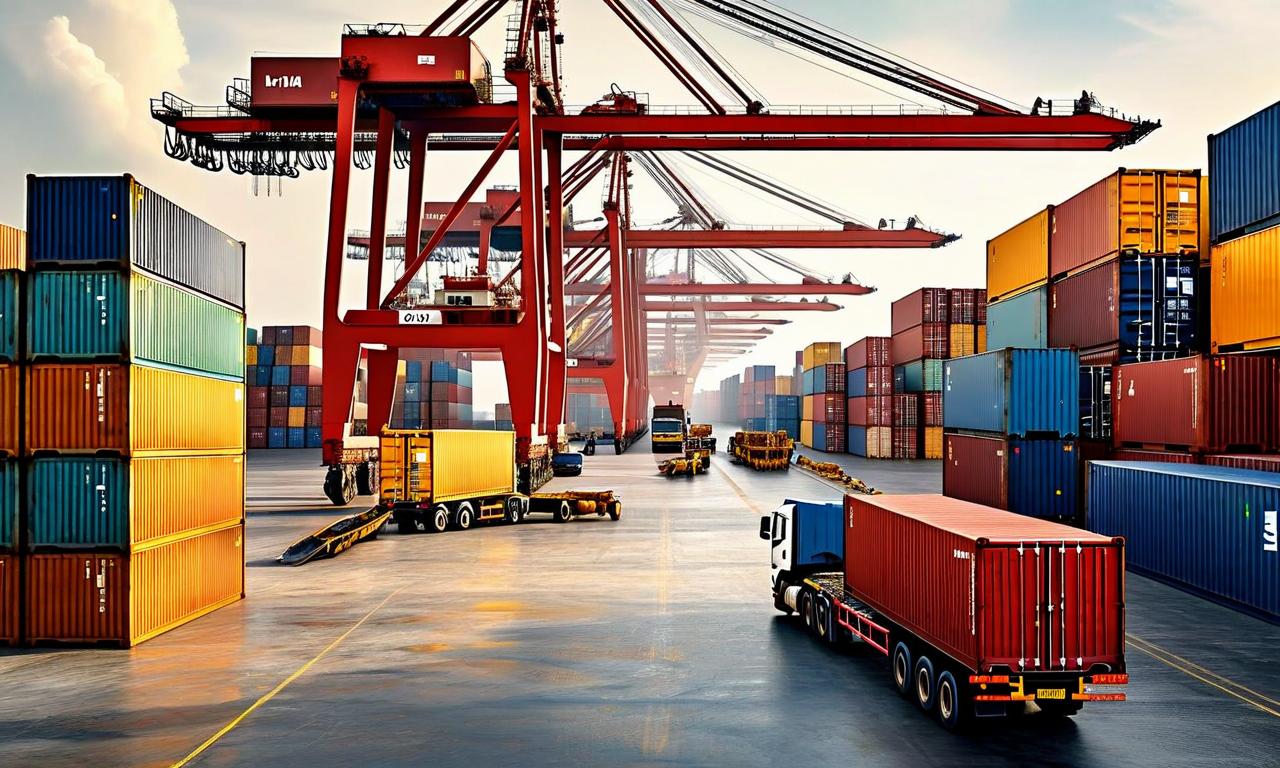
*this image is generated using AI for illustrative purposes only.
Uncertainty surrounding the timing of an India-US trade deal has grown significantly, with fund managers indicating that expectations for a near-term agreement have substantially weakened. Industry experts suggest that even prolonged delays or sudden announcements may not materially impact Indian equity markets, as investors are advised to focus on long-term fundamentals rather than trade-related developments.
Supreme Court Delays Create Tariff Uncertainty
The US Supreme Court did not issue a ruling on Friday regarding the legality of Trump's broad tariff regime, extending uncertainty over whether existing tariffs will remain in place or face potential legal challenges. This delay has created additional complexity for trade relations between the two nations.
Meanwhile, legislation currently under discussion in the US includes provisions for punitive tariffs reaching up to 500%, which could severely impact India's export sector if enacted. The combination of legal uncertainty and potential new tariff measures has created a challenging environment for trade negotiations.
Fund Manager Perspectives on Deal Timeline
Speaking at the CFA Society's India Investment Conference on Friday, WhiteOak Capital's Prashant Khemka expressed diminished optimism about deal prospects. He noted being hopeful "till a couple of months ago, based on all the comments and these things," but acknowledged that the probability of concluding a deal soon appears to be declining.
| Expert Outlook: | Details |
|---|---|
| Previous Expectations: | Hopeful until recent months |
| Current Timeline: | Happy if concluded within calendar year |
| Deal Probability: | Declining for near-term conclusion |
Khemka highlighted the legal uncertainty surrounding US tariffs, noting that the Supreme Court "seems extremely apprehensive about overreach" and that some tariffs could face legal challenges. He cautioned that even if tariffs are rolled back or moderated, markets should not assume automatic positive reactions given broader macroeconomic and liquidity factors.
Limited Market Impact Expected
Fund managers emphasized that Indian markets have treated tariff developments with limited reaction thus far. The consensus among industry experts suggests that trade tensions may not significantly affect equity performance, given India's relatively small export exposure to the US.
Carenlian Capital's Vikas Khemani stressed the importance of company-specific analysis over sector-wide concerns. "In every sector that we don't like, there are companies that we like, and vice versa. You have to drill down to a company-specific basis," he explained.
Khemani also highlighted the limited macroeconomic impact, pointing out that "US exports are less than 2% of GDP. India grows that much in a quarter." This perspective suggests that trade tensions may have minimal overall economic impact on India's growth trajectory.
Structural Shifts Beyond Tariffs
HDFC AMC's Chirag Setalvad emphasized that current challenges extend beyond tariff issues, representing a broader structural shift in global economics. "This is not about tariffs," he stated, adding that "the bigger trend is for countries to now look out for themselves. America looks out for itself, Europe looks out for itself. We are no longer in globalisation."
Setalvad suggested that even resolution of tariff issues would not restore previous global cooperation levels, noting that new concerns would likely emerge to replace current trade tensions.
Investment Strategy Recommendations
Despite ongoing uncertainty, fund managers urged investors to maintain focus on long-term fundamentals rather than reacting to trade negotiations or tariff headlines. Khemka advised systematic investment approaches with long-term horizons, suggesting investors "take advantage" during crisis periods.
The experts noted that significant market corrections typically occur only during widespread economic damage scenarios. "Markets generally go down very sharply when there's a widespread bankruptcy risk," Khemka observed, suggesting current trade tensions may not reach such severe levels.
While acknowledging sector-specific pressures, particularly in textiles, fund managers maintained that selective opportunities exist across various industries through careful company-level analysis and fundamental research.
 18
18





 Create Custom Screeners
  Access 200+ Pre-built Filters
  Use 50+ Readymade Screener





