

Greenland Prime Minister Open to Permanent NATO Mission Amid Arctic Defense Discussions


Greenland's Prime Minister Jens-Frederik Nielsen has expressed willingness to establish a permanent NATO mission and enhance defense cooperation on the Arctic island. Speaking from Nuuk, Nielsen indicated readiness for more substantial arrangements while emphasizing sovereignty as a non-negotiable red line. The statements follow reports of a framework agreement between Trump and NATO Secretary General Mark Rutte, though specific details remain unclear to Greenlandic leadership.

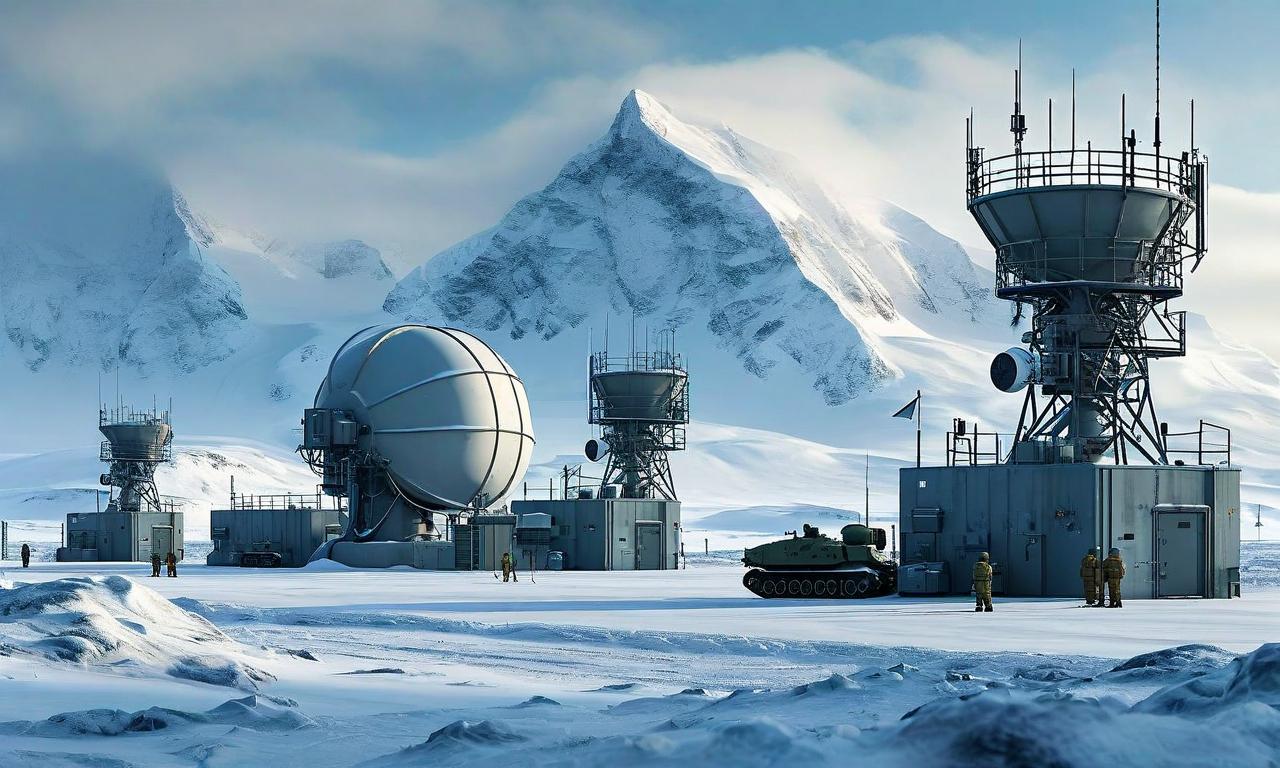

*this image is generated using AI for illustrative purposes only.
Greenland's Prime Minister Jens-Frederik Nielsen has signaled openness to establishing a permanent NATO mission on the Arctic island, marking a significant development in regional defense discussions. Speaking to international media in Nuuk, Nielsen expressed willingness to enhance defense cooperation while maintaining firm boundaries on sovereignty.
Framework for Enhanced Defense Cooperation
Nielsen's comments come amid reports of a framework agreement between Trump and NATO Secretary General Mark Rutte regarding Greenland's strategic importance. According to a European official briefed on the discussions, the arrangement reportedly involves stationing US missiles, securing mining rights to counter Chinese interests, and establishing a bolstered NATO presence.
"We are ready to discuss more, we are also ready to do more and do it more permanently," Nielsen stated during the Thursday briefing. However, the 34-year-old premier clarified that he was unaware of specific details regarding any Trump-Rutte agreement.
Sovereignty as Non-Negotiable Boundary
While expressing openness to expanded cooperation, Nielsen established clear parameters for any future negotiations. The Greenlandic leader emphasized that discussions must proceed through proper diplomatic channels and maintain respectful protocols.
| Key Position: | Details |
|---|---|
| Cooperation Stance: | Ready to discuss permanent arrangements |
| Negotiation Requirement: | Greenland participation in all talks |
| Red Line: | Sovereignty, integrity, and borders |
| Process: | Diplomatic channels and respectful manner |
"We are ready to discuss a lot of things," Nielsen explained. "But sovereignty is a red line, our integrity and our borders and international law is definitely, definitely a red line that we don't want anyone to cross."
Danish Support for NATO Presence
Danish Prime Minister Mette Frederiksen expressed alignment with enhanced NATO involvement in Greenland. Speaking ahead of a European Union leaders' summit in Brussels, Frederiksen indicated that Denmark's long-standing advocacy for stronger NATO presence "has now been heard, and hopefully we will seriously begin to take action on it."
Both Denmark and Greenland have shown openness to expanding the existing US defense treaty. The current agreement, established in 1951 and updated in 2004, permits US base establishment in the territory while requiring consultation with both Denmark and Greenland.
Strategic Arctic Security Considerations
Nielsen emphasized the broader security implications for the Arctic region, stating that a permanent NATO mission would be welcome "because one thing we all agree on is the security of the Arctic and that our region is important." The framework agreement reportedly helps address potential threats from Russia or China while strengthening transatlantic alliance cooperation.
The premier, who assumed leadership of the territory of 57,000 people, also indicated willingness to cooperate on mineral resources development. This cooperation aligns with reported objectives to limit Chinese influence in the region's strategic resources.
Path Forward for Defense Arrangements
The discussions represent a potential shift toward more permanent defense arrangements in the Arctic region. Nielsen's statements suggest Greenland's readiness to engage in substantive negotiations while maintaining strict adherence to sovereignty principles and proper diplomatic protocols.
The framework agreement appears to provide a foundation for enhanced NATO presence in Greenland, addressing both regional security concerns and broader geopolitical considerations in the Arctic. Any future arrangements will require careful navigation of sovereignty concerns while advancing collective defense objectives.
 15
15






 Access Market Heat-map & Insights
  Create, Save & Share your Screener
  Use 200+ Screening Filters





