
 NewsGlobal Capital Rotation Shifts from US to Gold, Silver and Non-US Equity Markets: IKIGAI's Pankaj Tibrewal
Global Capital Rotation Shifts from US to Gold, Silver and Non-US Equity Markets: IKIGAI's Pankaj Tibrewal


IKIGAI's Pankaj Tibrewal identifies a significant global capital rotation from US markets to precious metals and non-US equities, driven by weakening dollar dominance and mounting fiscal pressures. Gold and silver delivered exceptional returns of 67% and 147% respectively in 2025, while emerging markets outperformed US equities. India's strong macroeconomic fundamentals, including 8.20% GDP growth and stable external position, position it favorably to benefit from this global capital reallocation trend.

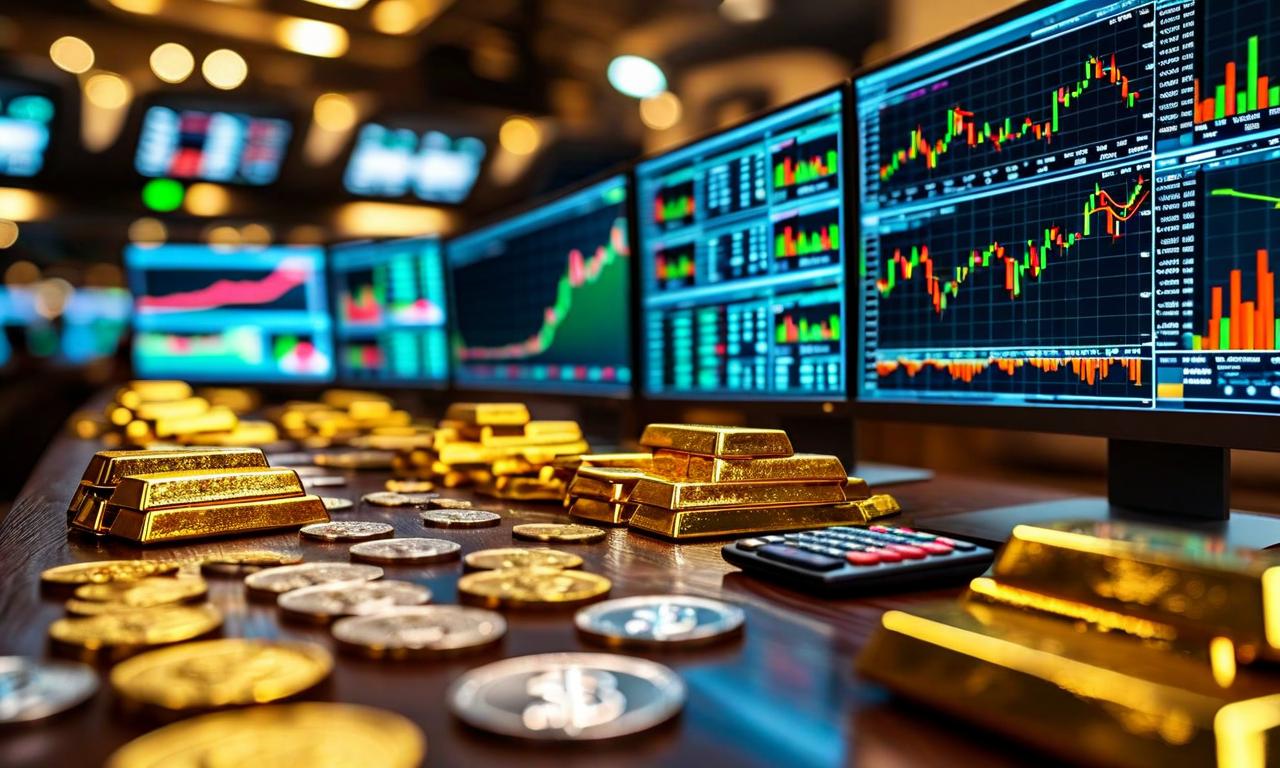

*this image is generated using AI for illustrative purposes only.
Global capital is beginning to rotate from the United States towards precious metals such as gold and silver, non-US equity markets and India, as weakening dollar dominance and rising fiscal stress in developed economies reshape investor allocation, according to Pankaj Tibrewal, Founder and CIO of IKIGAI.
In IKIGAI's latest quarterly newsletter, Tibrewal characterizes 2025 as an unusually unpredictable year for global capital markets . He notes that the structure of global trade and capital flows is fundamentally changing, with the era of smooth globalisation fading as trade becomes more regional and political considerations play larger roles in economic decision-making.
US Dollar Dominance Weakening
One significant consequence of this shift has been the gradual erosion of US dollar dominance in global markets. Tibrewal highlights that the United States' share of global trade has declined substantially from around one-third in 2000 to roughly one-quarter today. Simultaneously, the dollar's share of global foreign-exchange reserves has fallen from 72% to 58% over the same period.
| Metric: | 2000 | Current | Change |
|---|---|---|---|
| US Share of Global Trade: | ~33% | ~25% | -8 percentage points |
| Dollar Share of FX Reserves: | 72% | 58% | -14 percentage points |
| Dollar Index Decline (2025): | - | -9% | - |
Fiscal pressures in the US have intensified significantly, with government debt approaching $40.00 trillion and annual interest costs nearing $1.00 trillion. The newsletter emphasizes that economic growth in the US is increasingly dependent on borrowing and continued capital inflows from international sources.
Non-US Markets Outperform
Despite US fiscal challenges, American equity markets remained resilient through much of 2025. The S&P 500 recorded 38 all-time highs during the year, pushing total US public equity market capitalisation to approximately $72.00 trillion. However, non-US equity markets and commodities significantly outperformed American equities in 2025.
| Market Performance (2025): | Returns |
|---|---|
| MSCI Emerging Markets Index: | +30% |
| S&P 500: | +16% |
| US Market Cap: | $72 trillion |
| US Share of Global Benchmarks: | 68% |
| US Share of Global GDP: | ~15% |
Tibrewal suggests this imbalance between market representation and economic output presents a key consideration for long-term investors, questioning whether future capital allocation could increasingly favour international and emerging markets.
Precious Metals Surge
Gold and silver delivered exceptional performance during 2025, with gold rising approximately 67% and silver gaining nearly 147% in dollar terms, marking silver's strongest annual performance since 2007. Tibrewal attributes this surge to concerns around currency stability, government debt levels, and broader financial risk rather than random market movements.
| Precious Metals Performance: | 2025 Returns |
|---|---|
| Gold: | +67% |
| Silver: | +147% |
| Central Bank Gold Purchases: | ~66 tonnes/month |
| Historical Purchase Rate: | 4x pre-2022 levels |
Central banks played a crucial role in this trend, purchasing an average of approximately 66.00 tonnes of gold per month over the past year. This represents nearly four times the pace seen prior to 2022, reflecting efforts to diversify reserves and reduce dependence on any single currency.
India's Strategic Position
Tibrewal notes that India's macroeconomic position stands out favorably in the current global rebalancing. India began FY26 with strong momentum, recording GDP growth of 8.20% in the second quarter, supported by services, manufacturing, and public investment.
| India Economic Indicators: | Details |
|---|---|
| GDP Growth (Q2 FY26): | 8.20% |
| GST Cuts: | ₹2.00 trillion |
| RBI Rate Reduction: | 125 basis points |
| Liquidity Injection: | ₹11.00 lakh crore |
| Current Account Deficit: | <1% of GDP |
| Remittances: | $136.00 billion |
| Gross FDI (projected): | ~$100.00 billion |
| Rupee Undervaluation: | 2-3% |
A healthy monsoon, rising rural wages, and GST cuts amounting to nearly ₹2.00 trillion supported domestic demand. The Reserve Bank of India reduced policy rates by 125 basis points and injected ₹11.00 lakh crore of liquidity into the financial system. India's external position remains relatively stable, with the current account deficit expected to stay below 1% of GDP, remittances reaching $136.00 billion, and gross foreign direct investment projected to approach $100.00 billion.
Commodities and Geopolitical Factors
Tibrewal observes early signs of a broader recovery in the commodities cycle following years of underperformance. This shift connects not only to economic demand but also to geopolitical considerations, particularly China's dominance in refining critical materials such as lithium, copper, and aluminum. These materials serve as key inputs for electric vehicles, data centres, and power infrastructure, increasing the strategic importance of commodities in global supply chains.
While risks remain, including fiscal constraints, global tariff uncertainty, and weak formal job creation, Tibrewal argues that the broader shift in global capital allocation could work in India's favour as investors increasingly prioritise balance-sheet strength and macroeconomic stability in their investment decisions.
Historical Stock Returns for Global Capital Markets
| 1 Day | 5 Days | 1 Month | 6 Months | 1 Year | 5 Years |
|---|---|---|---|---|---|
| +2.22% | -4.17% | 0.0% | -4.17% | -38.67% | -89.82% |
 15
15







 Access 50+ Readymade Screeners
  Use 200+ Custom Filters
  Get Full Market Insights





