

EU and China Establish Price Floor Framework to Resolve Electric Vehicle Trade Dispute


China and the European Union have established a new framework to resolve their electric vehicle trade dispute through minimum import prices instead of tariffs up to 35.3%. The EU released guidance for Chinese manufacturers on price offers, considering investment plans and fair competition principles. China-manufactured vehicles increased market share from 5% to 6% in the first half of 2025, with projections suggesting Chinese automakers could reach 10% European market share by 2030.

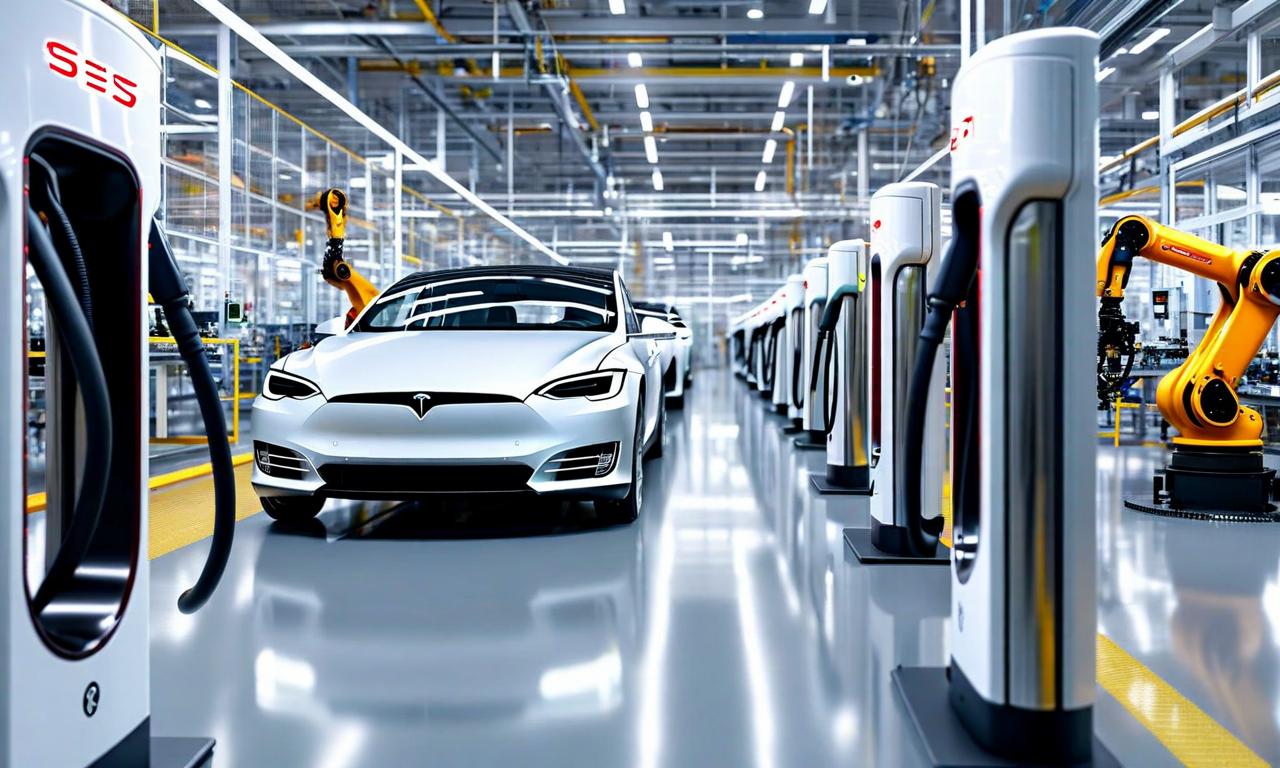

*this image is generated using AI for illustrative purposes only.
China and the European Union announced on Monday they have reached an agreement on steps to resolve their contentious trade dispute over Chinese-made electric vehicle imports. The development marks a significant shift from the punitive tariff approach toward a more collaborative framework based on minimum pricing agreements.
New Pricing Framework Replaces Tariffs
The European Union released a comprehensive guidance document on Monday providing detailed instructions for Chinese electric vehicle manufacturers on submitting price offers for battery EVs. The framework establishes minimum import prices and other specific requirements designed to address concerns over subsidized Chinese vehicles.
| Trade Measure | Previous Approach | New Framework |
|---|---|---|
| Tariff Range | 7.8% to 35.3% | Minimum price floors |
| Duration | Five-year period | To be determined |
| Assessment Method | Anti-subsidy investigation | Individual price offers |
| Additional Consideration | None | EU investment plans |
The EU specified that minimum import prices must be established at levels "appropriate to remove the injurious effects of the subsidization." Chinese manufacturers' investment plans within the European Union will also factor into the evaluation process.
Official Statements Signal Cooperation
European Commission spokesperson Olof Gill emphasized the bloc's openness to global electric vehicle competition under fair conditions. "The European market is open to electric vehicles from all around the world, provided that they have come here according to that level playing field," Gill stated. "If those conditions are met, then we can look at price undertakings in a serious way."
China's Commerce Ministry welcomed the development, describing it as beneficial for both parties. "This is conducive not only to ensuring the healthy development of China-EU economic and trade relations, but also to safeguarding the rules-based international trade order," the ministry said in an official statement.
Market Impact and Future Outlook
The agreement addresses the rapid growth of Chinese electric vehicle presence in European markets. Recent data shows China-manufactured cars accounted for 6% of EU sales in the first half of 2025, representing an increase from 5% during the same period in 2024.
| Market Share Data | First Half 2024 | First Half 2025 |
|---|---|---|
| China-manufactured vehicles | 5% | 6% |
| EU-based manufacturers | Not specified | 74% |
| German production share | Not specified | ~20% |
Rico Luman, senior economist at ING bank specializing in automotive industry analysis, noted that "the minimum prices offer Chinese brands probably some comfort to continue their exports long term while avoiding higher import tariffs." He expressed confidence that Chinese brand expansion will continue despite the new framework.
Industry Analysis and Projections
Consultancy AlixPartners projects Chinese automakers will double their European market share to approximately 10% by 2030. However, Stephen Chan from S&P Global Ratings cautioned that European demand for China-built vehicles could face constraints if approved floor prices "significantly narrow the gap between Chinese BEVs and European rivals."
The China Chamber of Commerce to the EU characterized the agreement as creating a "soft landing" for the electric vehicle trade standoff. The framework represents a departure from the confrontational tariff approach that had strained China-EU relations throughout 2024.
Assessment Process and Trade Compliance
The European Commission committed to evaluating each price offer through an "objective and fair manner, following the principle of non-discrimination" while adhering to World Trade Organization rules. This approach reflects the complex balancing act required given EU manufacturers' heavy dependence on Chinese-made batteries, rare earth materials, and computer chips.
The agreement follows the EU's recent review of a price undertaking offer by Volkswagen's Chinese joint venture, suggesting a broader shift toward negotiated solutions rather than blanket tariff measures in the electric vehicle sector.
 20
20






 Create Custom Screeners
  Access 200+ Pre-built Filters
  Use 50+ Readymade Screener





