
 NewsEmbraer Explores Joint Venture with Adani Group for India's First Commercial Aircraft Assembly Line
Embraer Explores Joint Venture with Adani Group for India's First Commercial Aircraft Assembly Line


Embraer is reportedly exploring a joint venture with Adani Group to establish India's first commercial aircraft final assembly line, with details expected at the upcoming Wings India event in Hyderabad. This potential partnership would make Embraer the first global manufacturer to assemble commercial passenger jets in India, addressing a significant gap in the country's aviation manufacturing ecosystem. While India has defence aircraft assembly capabilities through HAL and partnerships like Airbus-Tata's C-295 project, commercial aircraft manufacturing has remained absent despite India being a major aircraft buyer. The move is driven by India's position as the world's fastest-growing aviation market, with an estimated requirement for 500 regional jets over the next 20 years, and aligns with Adani Group's strategy to build an integrated aviation platform beyond its current airport and MRO operations.

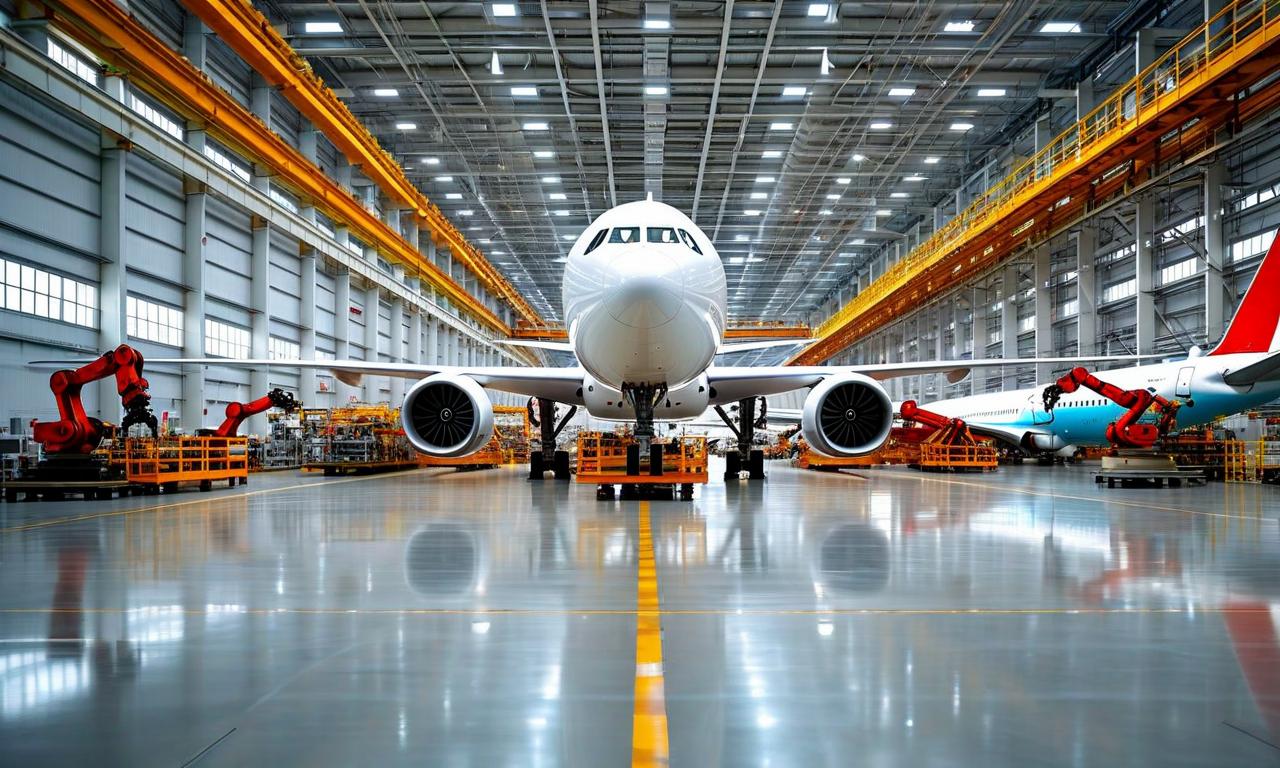

*this image is generated using AI for illustrative purposes only.
Brazilian aircraft manufacturer Embraer is reportedly exploring a joint venture with Adani Group to establish a final assembly line for commercial aircraft in India, according to media reports that emerged in early January 2026. While neither party has officially confirmed the discussions, details are expected to be disclosed at the upcoming Wings India event in Hyderabad. If realized, this partnership would mark a historic milestone, making Embraer the first global manufacturer to assemble commercial passenger jets on Indian soil.
India's Current Aircraft Manufacturing Landscape
India's aircraft assembly experience is currently concentrated in the defence and helicopter segments. State-owned Hindustan Aeronautics Limited operates facilities in Bengaluru and Nashik, where it builds the Tejas Light Combat Aircraft and assembles Su-30MKI fighter jets. The country has also seen international partnerships emerge in the defence sector.
| Manufacturing Partnership: | Details |
|---|---|
| Airbus-Tata Advanced Systems: | C-295 military transport aircraft assembly in Vadodara |
| Airbus Helicopters: | H125 helicopter production at Vemagal facility, Karnataka |
| HAL Operations: | Tejas LCA and Su-30MKI fighter jets in Bengaluru and Nashik |
Despite this defence manufacturing capability, commercial passenger aircraft assembly remains notably absent. Every Airbus A320 and Boeing 737 currently operating in Indian skies is manufactured overseas, highlighting the gap in India's aviation manufacturing ecosystem.
Market Fundamentals Driving Embraer's Interest
India represents the world's fastest-growing major aviation market, driven by rising incomes, infrastructure expansion, and strong policy focus on regional connectivity. Government-backed schemes such as UDAN have encouraged airlines to expand into tier-2 and tier-3 cities, creating routes often too thin for large narrow-body jets but ideal for regional aircraft.
| Market Indicators: | Projections |
|---|---|
| Regional Jets Requirement: | Approximately 500 aircraft over next 20 years |
| Current Embraer Fleet: | Nearly 50 aircraft in service across various operators |
| Target Aircraft: | E-Jet family (E175, E190-E2, E195-E2) |
| Seating Capacity: | 70-146 seats for short and medium-haul operations |
Regional carrier Star Air is among the potential growth customers, representing the expanding demand for smaller aircraft serving India's developing route network.
Strategic Significance of Final Assembly Operations
A final assembly line involves comprehensive manufacturing processes including assembling major aircraft sections, integrating systems, installing interiors, testing avionics, and conducting flight tests before delivery. While high-value components such as engines and avionics continue to be sourced globally, establishing a FAL creates substantial local benefits:
- Local job creation across skilled manufacturing roles
- Development of supplier ecosystems and vendor networks
- Transfer of manufacturing know-how and technical expertise
- Integration into global aircraft production networks
For India, hosting a commercial aircraft FAL would represent a fundamental shift from being solely an aircraft buyer to becoming an active participant in global aviation manufacturing.
Adani Group's Aviation Strategy
The reported discussions align with Adani Group's broader strategy to build an integrated aviation platform. The conglomerate currently controls approximately 23.00% of India's passenger traffic through its airport operations, managing eight airports including Mumbai and Navi Mumbai facilities.
| Adani Aviation Portfolio: | Operations |
|---|---|
| Airport Operations: | 8 airports, 23% of India's passenger traffic |
| MRO Services: | Air Works and Indamer acquisitions |
| Strategic Focus: | Maintenance, repair, and overhaul capabilities |
A final assembly line would extend Adani's presence further up the aviation value chain, moving from infrastructure and services into manufacturing, supporting the group's wider ambitions across logistics, defence, and industrial manufacturing sectors.
Broader Industry Implications
The potential Embraer assembly line carries significance beyond the immediate partnership. For global manufacturers like Boeing and Airbus, India has remained a crucial market but not yet a manufacturing base for commercial jets. Both companies source billions of dollars worth of components and engineering services from Indian suppliers, yet final assembly operations have remained offshore.
An Embraer FAL could serve as a proof of concept, allowing global manufacturers to evaluate India's manufacturing ecosystem, supply-chain maturity, labour productivity, regulatory environment, and execution capabilities. Success could strengthen the case for larger aircraft assembly lines, particularly for single-aisle aircraft that form the backbone of Indian airline fleets.
Implementation Challenges
Despite the promising outlook, significant challenges remain for establishing commercial aircraft assembly in India. The industry requires deep supplier networks, stringent quality control systems, long-term order visibility, and regulatory alignment with global aviation authorities. Aircraft manufacturing demands substantial capital investment, operates on thin margins, and depends heavily on sustained airline demand for production stability.
Any successful final assembly line implementation would require strong policy support, competitive cost structures, and long-term commitments from both manufacturers and airlines to ensure viability and sustainability.
The Embraer-Adani discussions remain exploratory, but the possibility of India's first commercial aircraft assembly line represents a notable evolution in the country's aviation narrative. This potential shift from consumption-focused growth to manufacturing capability could reshape how global manufacturers view India's role in the aviation industry, positioning the country not just as a market, but as a strategic manufacturing partner.
 17
17






 Access Market Heat-map & Insights
  Create, Save & Share your Screener
  Use 200+ Screening Filters





