
 NewsChina's Economy Achieves 5% Growth Target in 2025 Amid Export Strength and Trade Challenges
China's Economy Achieves 5% Growth Target in 2025 Amid Export Strength and Trade Challenges


China's economy achieved 5% growth in 2025, meeting official targets through strong export performance that generated a record $1.2 trillion trade surplus. However, growth slowed to 4.5% in Q4 - the weakest since late 2022 - as domestic consumption remained weak despite government stimulus efforts. While exports offset US tariff impacts through diversification to other markets, rising global protectionism poses future challenges to this export-dependent growth model.

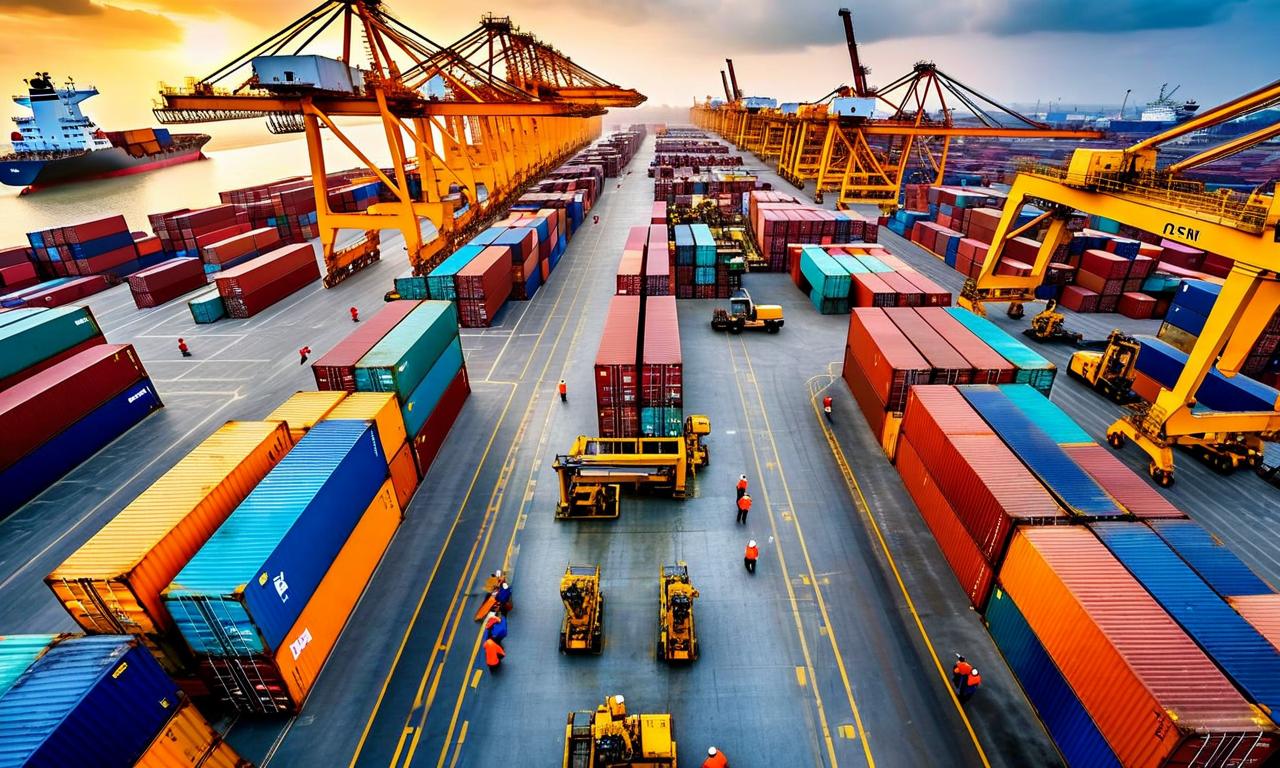

*this image is generated using AI for illustrative purposes only.
China's economy expanded at a 5% annual pace in 2025, successfully meeting the government's official target for growth of "about 5%" despite facing significant trade pressures and domestic economic challenges. The world's second-largest economy demonstrated resilience through strong export performance, though growth momentum decelerated notably in the final quarter of the year.
Quarterly Performance Shows Slowing Momentum
Economic growth slowed considerably in the fourth quarter of 2025, declining to a 4.5% annual rate according to government data released Monday. This represented the weakest quarterly performance since late 2022 during the COVID-19 pandemic period. The deceleration marked a notable shift from the previous quarter's 4.8% growth rate.
| Period | Growth Rate | Context |
|---|---|---|
| Full Year 2025 | 5.00% | Met government target |
| Q4 2025 | 4.50% | Slowest since late 2022 |
| Q3 2025 | 4.80% | Previous quarter |
| Full Year 2024 | 5.00% | Previous year |
| Full Year 2023 | 5.20% | Two years prior |
Export Strength Drives Economic Performance
Strong exports emerged as the primary driver of China's economic expansion, helping to offset weaknesses in domestic consumer spending and business investment. The export performance contributed to a record trade surplus of $1.2 trillion for the year. This export-led growth model proved crucial in maintaining economic stability despite internal challenges including a prolonged property market slump and lingering effects from pandemic disruptions.
Chinese exports faced pressure from increased US tariffs following Trump's return to office, but this decline was successfully offset by expanded shipments to other global markets. However, the sustainability of this export-driven approach faces growing uncertainty as other economies consider implementing protective trade measures.
Domestic Challenges Persist
China's leaders have consistently emphasized boosting domestic demand as a key policy priority, but these efforts have shown limited effectiveness. Several government initiatives aimed at stimulating internal consumption have experienced mixed results:
- Vehicle Trade-in Program: Designed to encourage replacement of older cars with energy-efficient models, but has been losing momentum in recent months
- Home Appliance Subsidies: Trade-in programs for refrigerators, washing machines, and televisions continue but may face scaling back
- Property Market Stabilization: Remains crucial for reviving public confidence and household consumption
According to Chi Lo, senior market strategist for Asia Pacific at BNP Paribas Asset Management, "Stabilisation, not necessarily recovery, of the domestic property market is key to revive public confidence and, hence, household consumption and private investment growth."
Future Growth Outlook and Challenges
Looking ahead, economists anticipate slower growth in 2026, with Deutsche Bank forecasting approximately 4.5% economic expansion. The government's growth targets have gradually declined over recent years, moving from 6% to 6.5% in 2019 to the current "around 5%" target for 2025.
| Forecast Element | Details |
|---|---|
| 2026 Growth Projection | ~4.50% (Deutsche Bank) |
| 2035 GDP Target | $20,000 per capita |
| Required Growth Rate | 4-5% annually to meet 2035 target |
Investments in artificial intelligence and advanced technologies remain a key priority for China's leadership as the country seeks to boost self-reliance and compete globally. However, many ordinary citizens and small businesses continue to face economic uncertainty regarding employment and income stability. Some analysts, including the Rhodium Group think tank, suggest China's actual economic growth may have been slower than official figures indicate, estimating growth between 2.5% to 3% for the year.
 15
15






 Access 50+ Readymade Screeners
  Use 200+ Custom Filters
  Get Full Market Insights





