

China and EU Reach Agreement on Steps to Resolve Electric Vehicle Import Dispute


China and the European Union have agreed on steps to resolve their electric vehicle import dispute, with the EU issuing pricing guidelines for Chinese exporters. Despite existing tariffs of up to 35.3%, Chinese EV market share in Europe grew from 5% to 6% in the first half of 2025. The agreement addresses concerns over Chinese government subsidies while the EU balances trade protection with its need for affordable EVs to meet 2030 emission reduction targets.

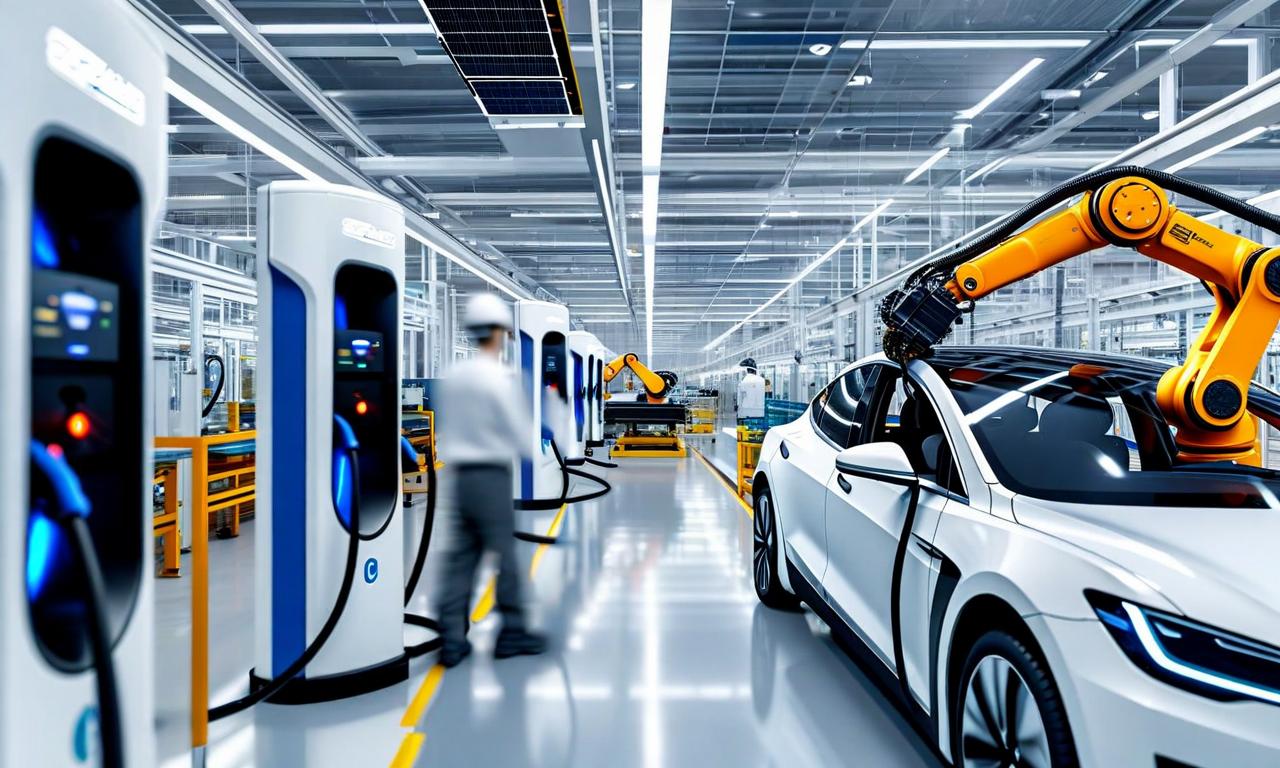

*this image is generated using AI for illustrative purposes only.
China and the European Union announced on Monday they have agreed on steps toward resolving their ongoing dispute over Chinese electric vehicle imports, marking a potential breakthrough in trade tensions between the two economic powers. The agreement involves the EU issuing guidelines on minimum pricing for Chinese auto exporters, though the impact on existing tariffs remains unclear.
Agreement Details and Pricing Guidelines
According to China's Commerce Ministry, the EU will release a guidance document providing instructions for EV manufacturers on making price offers, including minimum import prices and other specifications. The ministry emphasized that the agreement is "conducive not only to ensuring the healthy development of China-EU economic and trade relations, but also to safeguarding the rules-based international trade order."
| Agreement Component | Details |
|---|---|
| Pricing Guidelines | EU guidance document for Chinese exporters |
| Assessment Process | Objective and fair evaluation by European Commission |
| Compliance Framework | World Trade Organisation rules |
| Non-discrimination Principle | Applied to all manufacturer offers |
The EU stated that wide variations in vehicle types necessitated setting specific minimum import prices "appropriate to remove the injurious effects of the subsidisation." The European Commission committed to assessing each offer objectively and fairly, following non-discrimination principles and World Trade Organisation rules.
Current Tariff Structure and Market Impact
The agreement comes against the backdrop of significant tariffs imposed by both the EU and United States on Chinese electric vehicles. The EU implemented tariffs of up to 35.3% on Chinese EV imports in 2024 following an investigation into alleged unfair government subsidies. The United States took a more aggressive approach, enacting a 100% tariff on China-made electric cars, effectively blocking virtually all Chinese EV imports.
| Region | Tariff Rate | Implementation Year |
|---|---|---|
| European Union | Up to 35.3% | 2024 |
| United States | 100% | 2024 |
Despite these tariffs, Chinese car brands have continued expanding into European markets. China-manufactured cars increased their EU market share from 5% in the first half of 2024 to 6% in the first half of 2025, according to the European Automobile Manufacturers' Association (ACEA) and S&P Global Mobility.
Trade Volume Growth and Market Dynamics
The dispute stems from the dramatic growth in Chinese EV imports to Europe. The value of battery-powered cars imported to Europe skyrocketed from $1.6 billion in 2020 to $11.5 billion in 2023. Notably, most imports came from Western automakers with factories in China, including Tesla and BMW, rather than exclusively Chinese brands.
| Import Value Timeline | Amount |
|---|---|
| 2020 | $1.6 billion |
| 2023 | $11.5 billion |
EU officials expressed concerns that China's domestic automakers were positioned to capture significant market share by undercutting European car brands through Beijing's substantial subsidies. These subsidies include government fleet orders, low-interest loans from state-owned banks, access to cheap factory land, tax breaks, and subsidised raw materials from state-owned industries.
European Market Structure and Future Outlook
EU-based manufacturers currently represent 74% of total EU car sales in the first half of 2025, maintaining their dominant position despite growing Chinese presence. Germany leads European production, accounting for approximately 20% of cars sold in the EU, followed by Spain, Czechia, and France.
The EU faces a strategic challenge as it needs affordable electric cars from abroad to achieve its ambitious goal of cutting greenhouse gas emissions by 55% by 2030. This environmental imperative creates tension with protectionist measures against Chinese imports, highlighting the complex balance between climate goals and trade policy.
 16
16






 Access Market Heat-map & Insights
  Create, Save & Share your Screener
  Use 200+ Screening Filters





