

Canada launches Operation North Pacific Guard to combat illegal fishing


Fisheries and Oceans Canada launched Operation North Pacific Guard on June 9, 2026, to combat illegal fishing in the North Pacific Ocean. The mission involves patrolling over 15,000 km with international partners and uses aerial and maritime surveillance. It supports global food security, marine sustainability, and Canada's Indo-Pacific Strategy.



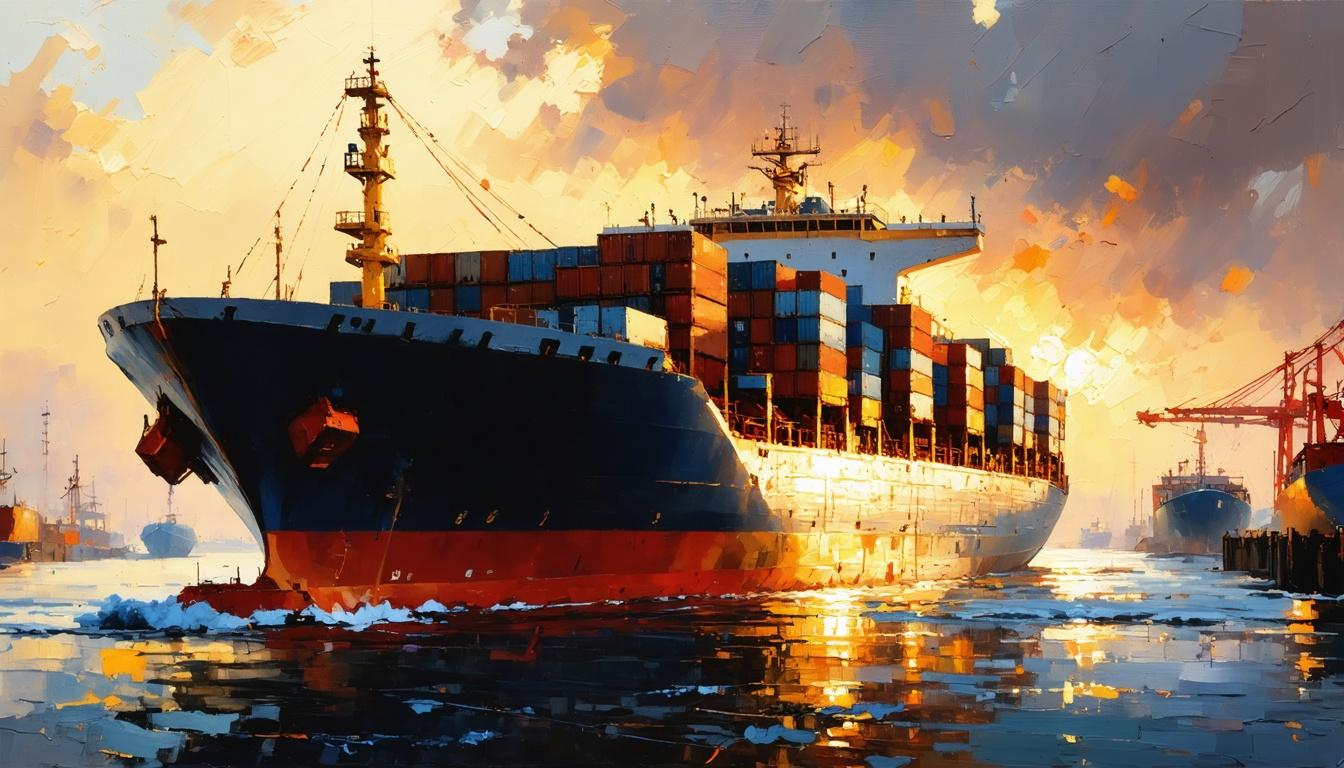
*this image is generated using AI for illustrative purposes only.
Fisheries and Oceans Canada (DFO) launched its fourth annual high seas patrol on June 9, 2026, to detect and deter illegal, unreported, and unregulated (IUU) fishing in the North Pacific Ocean. The mission, known as Operation North Pacific Guard (Op. NPG), aims to protect fish stocks and marine ecosystems, which are under increasing pressure from climate change and IUU activities. IUU fishing accounts for approximately 30 per cent of all fishing activity worldwide, threatening global seafood supply chains and fair markets.
Operation Details
The patrol is led by DFO fishery officers and supported by the Canadian Coast Guard and the Royal Canadian Mounted Police. International partners include the United States Coast Guard, the National Oceanic and Atmospheric Administration, the Fisheries Agency of Japan, and the Republic of Korea Coast Guard. The mission will cover over 15,000 km of high seas and last for two months.
Assets and Capabilities
The primary vessel for the mission is the Canadian Coast Guard Ship (CCGS) Sir Wilfrid Laurier, a high endurance, multi-purpose, and biofuel-capable light icebreaker. Additionally, Canada has deployed a long-range Fisheries Aerial Surveillance and Enforcement aircraft to Hokkaido, Japan, for daily aerial patrols. This aircraft has previously identified conservation issues such as shark finning, dolphin harpooning, and pollution violations.
Strategic Importance
Op. NPG is funded by the Pacific Salmon Strategy Initiative, which received $412.9 million over five years under A Force of Nature: Canada's Strategy to Protect Nature. The operation also aligns with Canada's Indo-Pacific Strategy, reinforcing international law and deepening partnerships with Indo-Pacific economies. Canadian fishery officers have participated in Op. NPG since 2019, enforcing the United Nations ban on high seas driftnets and verifying compliance with Regional Fisheries Management Organizations (RFMO) regulations.
International Cooperation
The mission underscores Canada's commitment to international collaboration in maritime security. Prime Minister Carney and Japan's Prime Minister Takaichi announced a Comprehensive Strategic Partnership on March 6, 2026, which includes strengthened cooperation on maritime security and information sharing. This year's operation involves 19 DFO fishery officers, including four conducting air surveillance in Japan and one joining Japan's patrol vessel as a ship rider.
Environmental Data Collection
Beyond enforcement, fishery officers will collect environmental data and water samples to support research on high seas environments. These samples will be analyzed in Canada and Japan to study the migration range of species like Pacific salmon and microplastic levels in the water. The Canadian Coast Guard was transferred to the Department of National Defence in 2025, enhancing its role in maritime security and sovereignty.

How might the integration of the Canadian Coast Guard under the Department of National Defence in 2025 influence the tactical scope and rules of engagement for future patrols?
What specific new enforcement measures or intelligence-sharing protocols are expected to result from the recent Comprehensive Strategic Partnership between Canada and Japan?
How will the data collected on Pacific salmon migration and microplastic levels during this mission shape future international quotas or environmental regulations?
 15
15





 Create Custom Screeners
  Access 200+ Pre-built Filters
  Use 50+ Readymade Screener





