

Boeing Implements Comprehensive Safety Reforms Across US Manufacturing Facilities


Boeing has implemented comprehensive safety reforms across its US manufacturing facilities, reducing 737 Max production from 63 to 42 aircraft monthly at the Renton facility. A March 2024 safety plan has achieved a 40% reduction in assembly line defects and 60% decrease in pending final assembly jobs. The reforms span the Renton facility for narrow-body aircraft, Everett for wide-body production, and Charleston for 787 Dreamliner assembly, with enhanced worker training and quality control processes implemented across all locations.

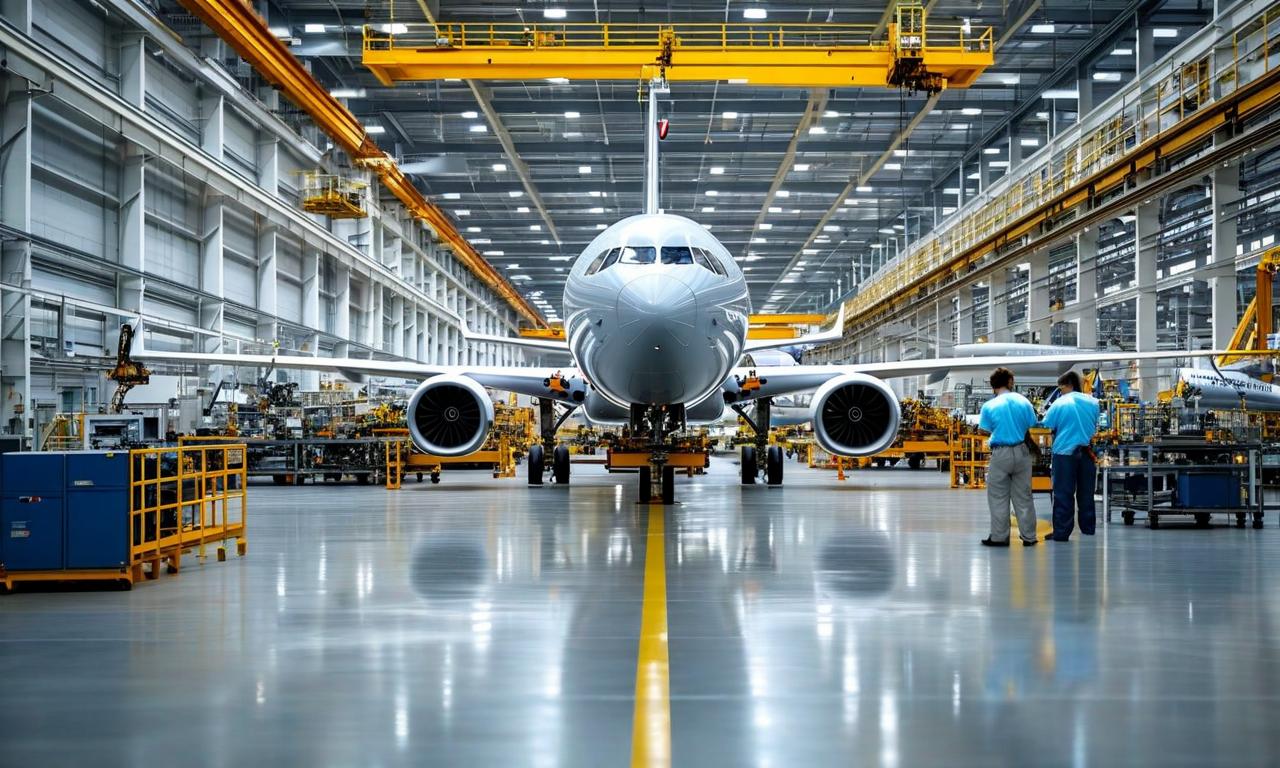

*this image is generated using AI for illustrative purposes only.
Boeing is undertaking comprehensive safety and quality reforms across its US manufacturing facilities as the company works to address the crisis that has marked recent years. The aircraft manufacturer has been implementing changes ranging from production slowdowns to enhanced inspection protocols across its assembly lines.
Production Changes at Renton Facility
At Boeing's Renton facility in Seattle, where the 737 Max is assembled, the company has significantly adjusted its production approach. The facility currently operates at a reduced pace compared to its full capacity.
| Production Parameter: | Current Status |
|---|---|
| Monthly Capacity: | 63 aircraft |
| Current Production: | 42 aircraft |
| Assembly Process: | 10 positions, advancing daily |
The 737 Max assembly follows a structured process where each aircraft moves through ten positions, advancing one position daily. Mechanics assemble components including the fuselage, wings, and landing gear systematically until the aircraft reaches delivery readiness.
Safety and Quality Improvements
Boeing introduced a safety and quality plan in March 2024, which the company reports is showing measurable results across its operations.
| Improvement Metric: | Reduction Achieved |
|---|---|
| Assembly Line Defects: | 40% decrease |
| Pending Jobs at Final Assembly: | 60% reduction |
The strategy focuses on identifying and resolving problems earlier in the assembly process rather than addressing issues at the final stages. This approach aims to improve overall quality control and reduce downstream complications.
Wide-Body Aircraft Production at Everett
The Everett facility, described as the world's largest manufacturing building, handles Boeing's wide-body aircraft programmes including the 777 family. During recent observations, several 777 Freighter aircraft were visible on the assembly line.
The facility manages the complexity of modern aircraft manufacturing, where each wide-body aircraft incorporates millions of parts sourced globally. Boeing has responded to this complexity by implementing tighter process controls and increased oversight throughout the production line.
787 Dreamliner Assembly in Charleston
The Charleston facility represents Boeing's approach to composite aircraft manufacturing, where the 787 Dreamliner is assembled entirely on-site. The facility handles the unique requirements of composite materials, which demand greater precision than traditional metal construction.
| Charleston Facility Metrics: | Details |
|---|---|
| Carbon Fiber Length per Aircraft: | 2,200 miles |
| Total Parts per 787: | 2.3 million |
| Final Assembly Positions: | 4 positions |
| Time per Position: | 5 days |
| Monthly Production: | 7-8 aircraft |
| Simultaneous Final Assembly: | 8 aircraft |
The facility fabricates major fuselage sections including aft and body sections before final assembly. The carbon fiber used in a single 787 Dreamliner, if laid out continuously, would stretch approximately 2,200 miles.
Workforce and Training Initiatives
Across all facilities, Boeing has increased investment in worker training programmes. The company emphasizes encouraging employees to identify and report quality issues without concerns about repercussions. The focus centers on early problem detection and maintaining consistent standards throughout the production system.
The reforms represent Boeing's systematic approach to addressing manufacturing quality and safety concerns that have affected the company in recent years. The implementation spans multiple facilities and production programmes, with measurable targets for defect reduction and process improvement.
 20
20




 Access Market Heat-map & Insights
  Create, Save & Share your Screener
  Use 200+ Screening Filters





