

Amazon's $35B India Investment to Drive Global Innovation and Exports


Amazon has committed to investing $35 billion in India by 2030, making it the country's largest foreign direct investor. This investment, in addition to $40 billion already invested between 2010 and 2025, will focus on infrastructure development, AI initiatives, technology advancement, export facilitation, seller support, workforce upskilling, and education. Amazon aims to support 15 million sellers with AI-based tools and provide AI learning exposure to 4 million government students. The company has set a target of $80 billion in cumulative exports from India by 2030, up from the current $20 billion achieved in five years. India has become an innovation hub for Amazon, with its quick-commerce solutions being adapted globally.

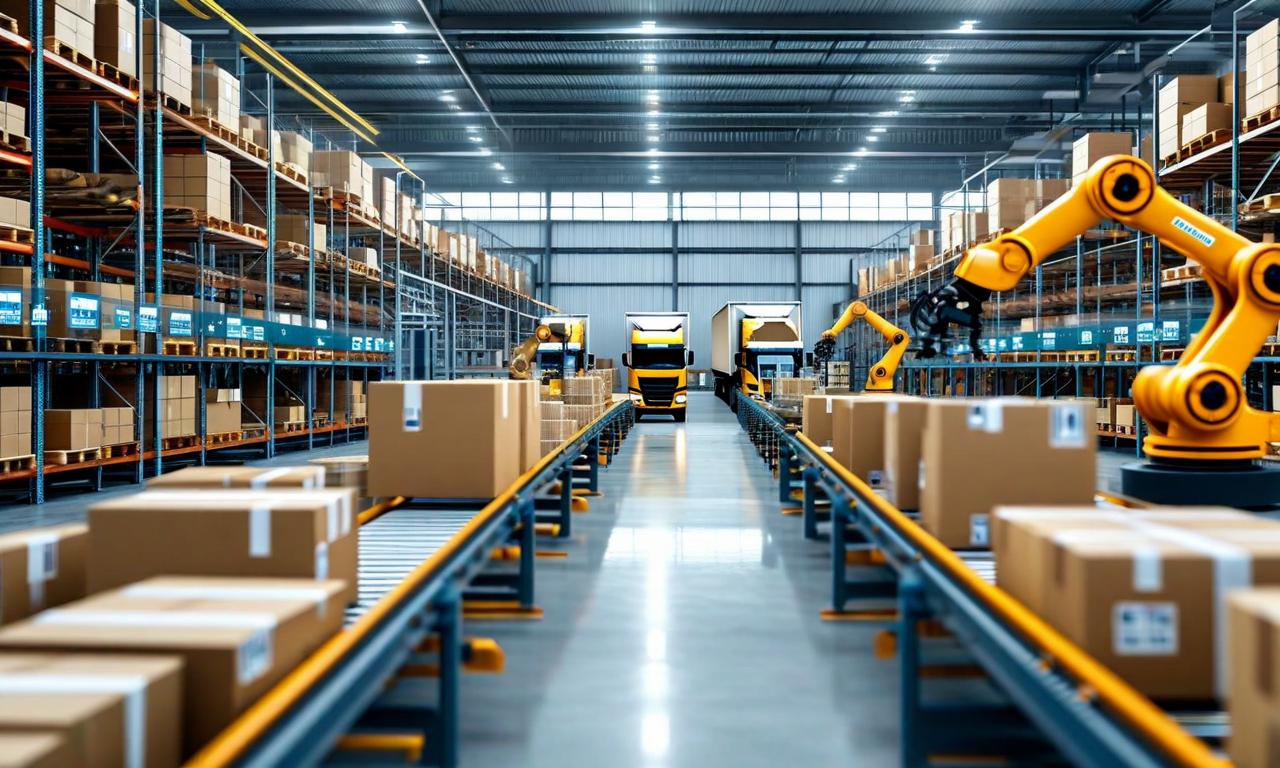

*this image is generated using AI for illustrative purposes only.
Amazon has unveiled its largest investment commitment to India, announcing a $35 billion investment by 2030 that positions the e-commerce giant as the country's largest foreign direct investor. This substantial commitment comes over and above the $40 billion already invested between 2010 and 2025, underscoring India's strategic importance to Amazon's global operations.
Comprehensive Investment Strategy
The $35 billion investment will span multiple dimensions of Amazon's business operations in India. According to Udit Madan, Senior Vice President of Amazon Worldwide Operations, the investment encompasses infrastructure development, artificial intelligence initiatives, technology advancement, export facilitation, seller enablement programs, workforce upskilling, and educational initiatives.
| Investment Focus Areas | Details |
|---|---|
| Seller Support | 15 million sellers to access AI-based training and tools |
| Education Initiative | 4 million government students to gain AI learning exposure |
| Business Digitization | Support and empowerment of small businesses |
| AI Accessibility | Making artificial intelligence accessible at scale |
Export Growth and Global Connectivity
Amazon's export performance from India demonstrates a remarkable growth trajectory. The company has crossed $20 billion in cumulative exports from India within just five years of focused effort. Building on this success, Amazon has set an ambitious target of reaching $80 billion in cumulative exports by 2030, connecting Indian sellers and producers to customers worldwide.
| Export Metrics | Performance |
|---|---|
| Current Achievement | $20.00 billion in cumulative exports (5 years) |
| 2030 Target | $80.00 billion in cumulative exports |
| Growth Focus | Connecting Indian sellers to global customers |
Innovation Hub and Global Solutions
India has emerged as a significant innovation engine for Amazon's global operations. The country's quick-commerce revolution, featuring same-day deliveries and 10-minute orders, has set new consumer expectations that Amazon is adapting worldwide. The company has already launched 20-minute deliveries in the Middle East and 30-minute quick-commerce offerings in Seattle and Philadelphia.
A notable example of India-to-global innovation is the Amazon Hub Points Program, which partners with local kirana stores for pickup and delivery services. Initially launched in India to scale rapidly during festivals and peak periods, this model has been successfully adapted in Spain, parts of Europe, and Manhattan, providing supplemental delivery capacity where traditional networks face limitations.
Technology Integration and Workforce Evolution
Amazon operates at extraordinary scale, moving over 100 million packages through its network daily with support from 1.2 million employees globally. The company has deployed one million robots worldwide, representing more than a decade of robotics integration. These advanced systems perform various tasks including moving goods to employees, product picking, and packaging operations.
The integration of robotics technology has transformed the nature of work within Amazon's operations. While the overall workforce continues to grow, employee roles have shifted from repetitive tasks to more knowledge-oriented and skilled functions. This evolution reflects a broader trend toward automation of repetitive processes while humans increasingly perform higher-value work.
Future Delivery and Automation Outlook
Amazon views delivery evolution as a continuum rather than a replacement system. While everyday essentials may arrive within minutes through quick-commerce solutions, other products will continue following same-day or overnight fulfillment models. The company anticipates that collaborative robots assisting human workers will become commonplace over the next 5-10 years, particularly in last-mile delivery scenarios where robots could assist delivery drivers in carrying packages from vehicles to customer doors.
The $35 billion investment in India by 2030 aims to leverage the country as a global innovation hub, focusing on artificial intelligence, infrastructure development, and export growth. This strategic move not only reinforces Amazon's commitment to the Indian market but also positions India as a key player in the company's global expansion and technological advancement plans.
 15
15







 Access 50+ Readymade Screeners
  Use 200+ Custom Filters
  Get Full Market Insights





