

Alibaba Group Plans IPO for Chipmaking Unit T-Head Amid AI Chip Market Growth


Alibaba Group is preparing to list its chipmaking unit T-Head through an IPO, first restructuring it with employee ownership. The move capitalizes on strong investor interest in AI chip companies amid China's push for semiconductor independence. CEO Eddie Wu has committed over $53 billion to AI development, while T-Head has secured contracts including AI accelerator deployment for China's second-largest wireless carrier.

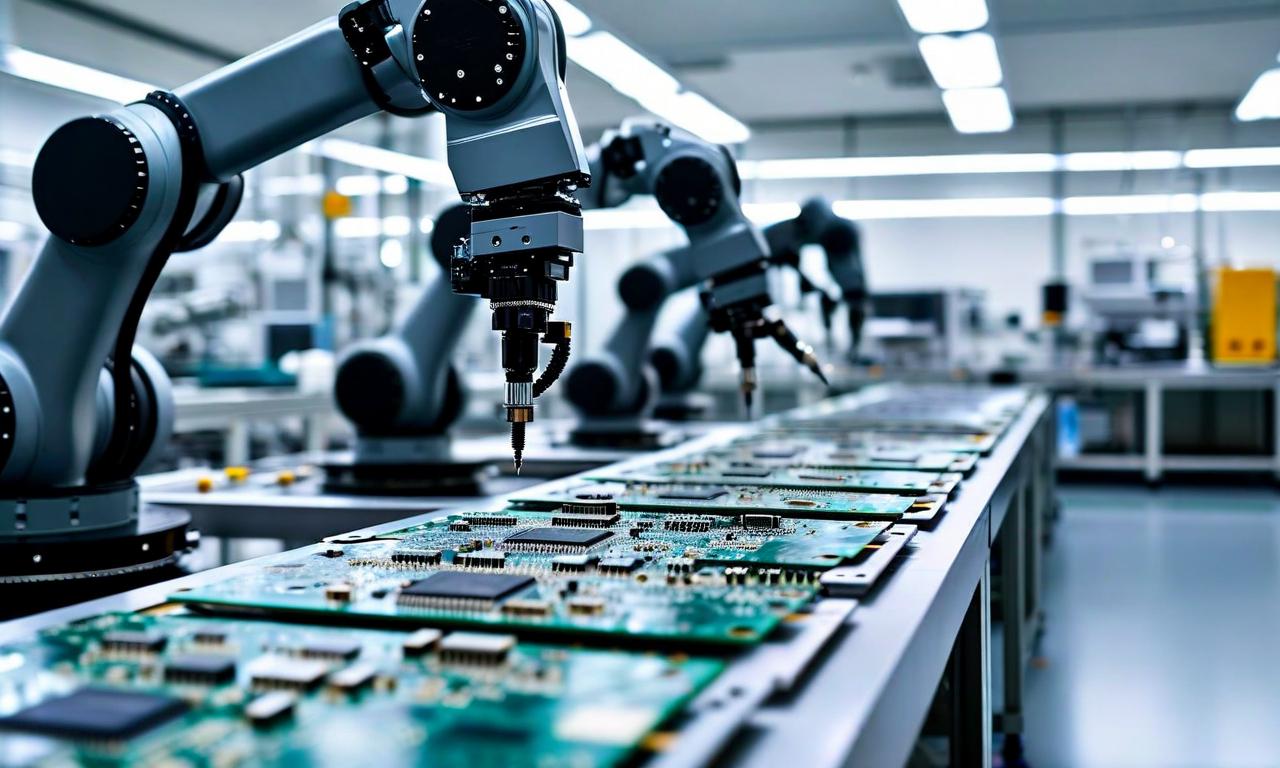

*this image is generated using AI for illustrative purposes only.
Alibaba Group Holding Ltd. is preparing to list its chipmaking arm T-Head through an initial public offering, tapping into strong investor interest in companies competing with Nvidia Corp. in the AI accelerator business. The move represents a significant step in China's efforts to develop domestic semiconductor capabilities amid ongoing technology restrictions.
Restructuring and IPO Plans
As a preliminary step, Alibaba plans to restructure T-Head as a business partly owned by employees before proceeding with the public listing. While the company is exploring an IPO for the unit, the timing for the offering remains unclear, and the process is still in early stages.
| Parameter: | Details |
|---|---|
| Current Status: | Early planning stages |
| First Step: | Employee ownership restructuring |
| IPO Timeline: | To be determined |
| Valuation: | Not yet established |
Debuts by rival chipmakers such as Moore Threads Technology Co. have attracted strong investor interest, reflecting market confidence that Beijing will support the domestic semiconductor industry as an alternative to American technology.
Strategic AI Investment Initiative
The chipmaking IPO aligns with Alibaba's broader artificial intelligence strategy. CEO Eddie Wu has committed over $53.00 billion toward infrastructure and AI development, with the company indicating this investment could increase over time. This substantial financial commitment underscores Alibaba's ambition to become a leading AI company rivaling firms like OpenAI.
Alibaba has been among the most aggressive investors in AI development since DeepSeek energized the local technology sector. The company operates diverse businesses including cloud services, streaming platforms, and meal delivery services, providing multiple applications for its chip technology.
T-Head Progress and Market Position
T-Head has demonstrated tangible progress in the competitive AI chip market. The unit recently signed a contract with China's second-largest wireless carrier to deploy its Pingtouge AI accelerators in a major data center in northwestern China. This deployment will operate alongside accelerators from competitors MetaX Integrated Circuits and Biren Technology Co.
| Development: | Details |
|---|---|
| Key Contract: | China's No. 2 wireless carrier |
| Product: | Pingtouge AI accelerators |
| Location: | Northwestern China data center |
| Competitors: | MetaX, Biren Technology |
Consumer AI Platform Development
Alibaba has integrated its chip development with consumer-facing AI services through its Qwen mobile application. The company revamped Qwen in November as a major step into consumer AI services, with plans to develop it into a comprehensive personal assistant by integrating various Alibaba services.
In January, Alibaba connected its flagship online shopping and travel services to Qwen, marking its biggest step toward building a unified artificial intelligence platform for consumers. This integration demonstrates how T-Head's chip technology supports the company's broader AI ecosystem.
Industry Context and Competition
Alibaba's chip initiative reflects a broader trend among major Chinese technology firms developing domestic AI silicon capabilities. Companies like Baidu Inc. are exploring similar projects as most advanced Nvidia chips remain banned from the Chinese market. Nvidia's AI accelerators are widely considered the gold standard for training cutting-edge models from companies like OpenAI and Anthropic, making domestic alternatives increasingly valuable for Chinese technology companies.
 17
17






 Access Market Heat-map & Insights
  Create, Save & Share your Screener
  Use 200+ Screening Filters





