
 NewsSix Private Giants Eye Nuclear Power: Reliance, Adani Among Bidders for Small Modular Reactors
Six Private Giants Eye Nuclear Power: Reliance, Adani Among Bidders for Small Modular Reactors


Six major private companies, including Reliance Industries, Adani Power, and Tata Power, have shown interest in setting up Bharat Small Modular Reactors (BSMRs) in response to NPCIL's proposal. The project involves constructing two 220 MW Pressurised Heavy Water Reactors across 16 potential sites in six states. The unique financing model requires bidders to fund the project while NPCIL retains operational control. This initiative marks a significant step in India's nuclear energy program, potentially transforming the country's energy landscape.

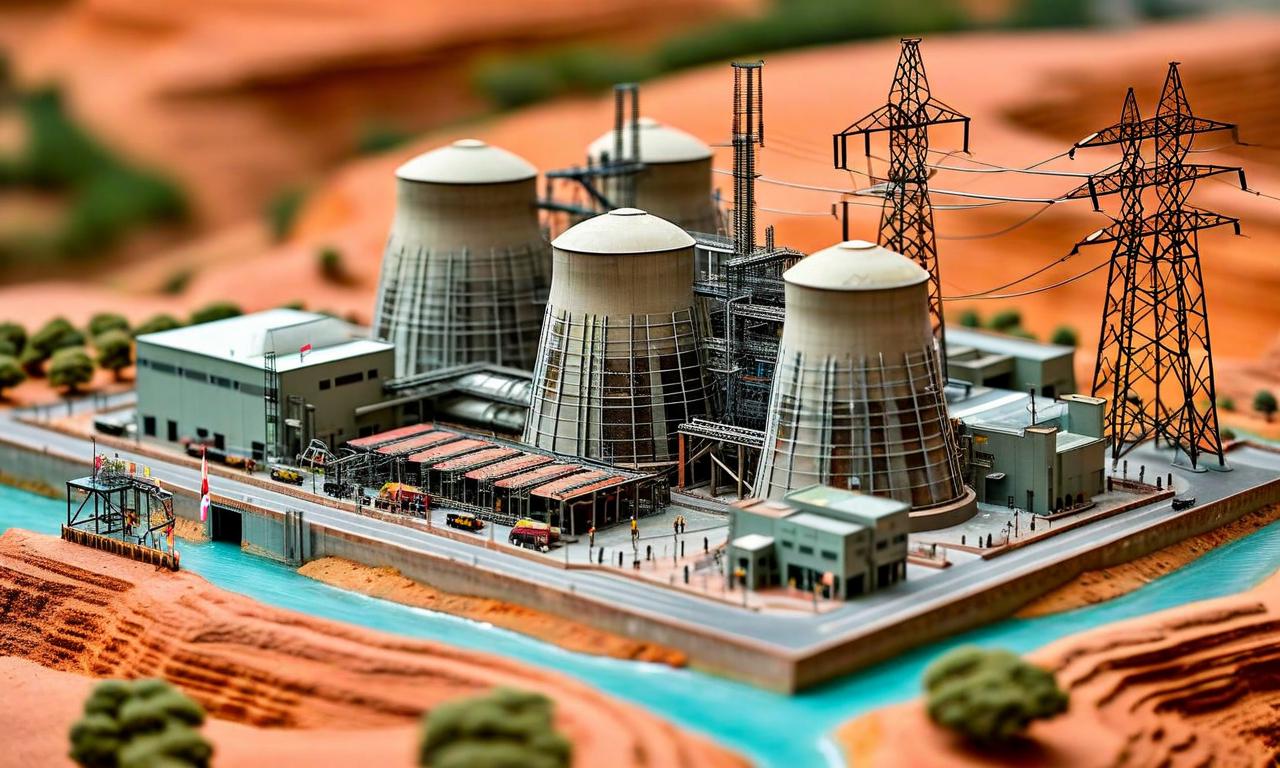

*this image is generated using AI for illustrative purposes only.
In a significant development for India's nuclear energy sector, six major private companies have shown keen interest in setting up Bharat small modular reactors (BSMRs). This move comes in response to a request for proposals from the Nuclear Power Corporation of India Limited (NPCIL), marking a potential shift in the landscape of nuclear power generation in the country.
Industry Heavyweights in the Race
The list of interested companies reads like a who's who of Indian industry:
- Reliance Industries
- Adani Power
- Jindal Steel and Power
- Tata Power
- Hindalco Industries
- JSW Energy
These corporate giants have identified a total of 16 potential sites spread across six states for the establishment of BSMRs.
Geographical Spread of Proposed Sites
The proposed sites for the BSMRs are distributed as follows:
| State | Number of Sites |
|---|---|
| Gujarat | 5 |
| Madhya Pradesh | 4 |
| Odisha | 3 |
| Andhra Pradesh | 2 |
| Jharkhand | 1 |
| Chhattisgarh | 1 |
Project Specifications
The project involves the construction of two 220 MW Pressurised Heavy Water Reactors, primarily intended for industrial captive use. This move aligns with India's push for diversifying its energy mix and reducing carbon emissions.
Bidding Process Update
NCPIL has extended the proposal submission deadline from September 30 to March 31, providing more time for companies to prepare their bids. The process has already seen significant progress:
- Four companies have submitted the required documents and collected technical data
- Two additional companies are currently under evaluation
Unique Financing Model
The project introduces an innovative financing model:
- Successful bidders will be responsible for financing the entire project
- Bidders must reimburse NPCIL for all lifecycle costs
- NPCIL will retain operational control and ownership of the assets
- In return, bidders will receive assured long-term access to the full electricity output for their industrial operations
This arrangement allows private sector participation while ensuring government oversight in the sensitive nuclear power sector.
Implications for India's Energy Sector
This development represents a significant step in India's nuclear energy program. By involving private sector giants, the government aims to accelerate the growth of nuclear power generation while addressing the energy needs of large industrial consumers.
The interest shown by these major corporations underscores the growing recognition of nuclear energy's potential in India's future energy mix. It also highlights the private sector's willingness to invest in capital-intensive, long-term energy projects.
As the bidding process unfolds, it will be crucial to monitor how these companies navigate the complex regulatory and safety requirements associated with nuclear power generation. The success of this initiative could pave the way for more extensive private participation in India's nuclear energy sector, potentially transforming the country's energy landscape in the coming decades.
 20
20







 Access Market Heat-map & Insights
  Create, Save & Share your Screener
  Use 200+ Screening Filters





