

GST Council Maintains 5% Rate on EVs, Revises Tax Structure for Auto Sector


The GST Council has decided to keep the 5% GST rate for all electric vehicles, including luxury models. A new two-tier tax structure was approved with 5% for essential items and 18% as the standard rate, along with a 40% bracket for luxury items, effective September 22. For conventional vehicles, GST rates have been revised: small cars and motorcycles up to 350cc will now be taxed at 18% instead of 28%, while larger vehicles will be taxed at 40%. Auto components' GST rate has been reduced to 18% from 28%. These changes are expected to boost EV adoption, make small cars more affordable, stimulate the two-wheeler market, and potentially lower manufacturing costs in the auto component industry.

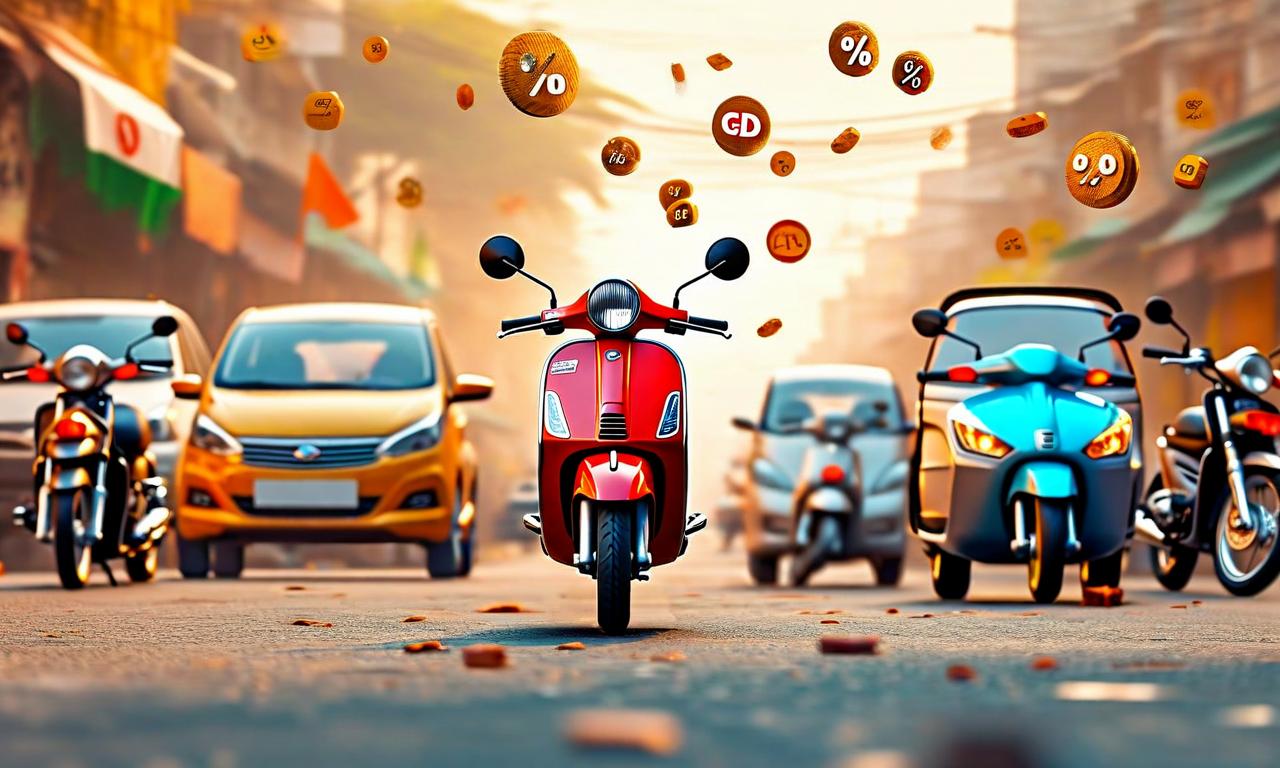

*this image is generated using AI for illustrative purposes only.
In a significant move for the automotive industry, particularly the electric vehicle (EV) sector, the GST Council has decided to maintain the current 5% GST rate on all electric vehicles. This decision establishes a clear stance on promoting EV adoption in India.
Key Highlights of GST Council's Decision
- EVs Retain 5% GST: All categories of electric vehicles, including luxury models, will continue to be taxed at the 5% GST rate without any additional cess.
- New Two-Tier Structure: The Council approved a new tax structure with rates of 5% for essential items and 18% as the standard rate, along with a 40% bracket for luxury items.
- Implementation Date: The new structure is set to take effect from September 22.
Rejected Proposals
The Council's decision overrides earlier recommendations from a Group of Ministers, which had suggested:
- Increasing EV GST to 18% for vehicles priced between ₹18.70 lakh and ₹37.40 lakh ($23,000-$46,000).
- A 28% GST rate for EVs priced above ₹37.40 lakh ($46,000).
Changes in Conventional Vehicle Taxation
The GST Council also announced significant changes for conventional vehicles:
| Vehicle Type | Specification | Old GST Rate | New GST Rate |
|---|---|---|---|
| Small Cars | Under 1,200cc (petrol) and 1,500cc (diesel), length not exceeding 4,000mm | 28% | 18% |
| Motorcycles | Up to 350cc | 28% | 18% |
| Larger Vehicles | Above these specifications | 28% | 40% |
| Auto Components | - | 28% | 18% |
Impact on the Automotive Sector
These decisions are expected to have far-reaching effects on the Indian automotive industry:
- EV Market Boost: The continuation of the 5% GST rate on all EVs, regardless of price, is likely to maintain the momentum in EV adoption across various segments.
- Affordable Small Cars: The tax reduction on small cars could make them more accessible to a broader consumer base.
- Two-Wheeler Market: The GST reduction on motorcycles up to 350cc might stimulate demand in this popular segment.
- Auto Component Industry: The reduced GST on auto components could potentially lower manufacturing costs, benefiting both manufacturers and consumers.
Industry Reactions
While specific industry reactions are not provided, these tax revisions are likely to be welcomed by various sectors of the automotive industry. EV manufacturers, in particular, may view the consistent 5% GST rate as a positive signal for long-term investment and growth in the sector.
The GST Council's decisions reflect a balanced approach, maintaining support for the emerging EV sector while also providing tax relief to certain segments of the conventional automotive industry. As these changes take effect, their impact on vehicle pricing, consumer behavior, and overall market dynamics will be closely watched by industry stakeholders and analysts alike.
 19
19






 Create Custom Screeners
  Access 200+ Pre-built Filters
  Use 50+ Readymade Screener





