

Xanadu expands US operations with New York office


Xanadu Quantum Technologies Limited is significantly expanding its U.S. operations, establishing a strategic base in Albany, New York, and growing its workforce across 19 states. The U.S.-based workforce has increased more than 5-fold since 2023, with further growth expected by year-end. This expansion leverages the company's recent technical achievements, including the Aurora system and GKP qubit demonstrations, and new partnerships with industry leaders like Corning and Applied Materials.

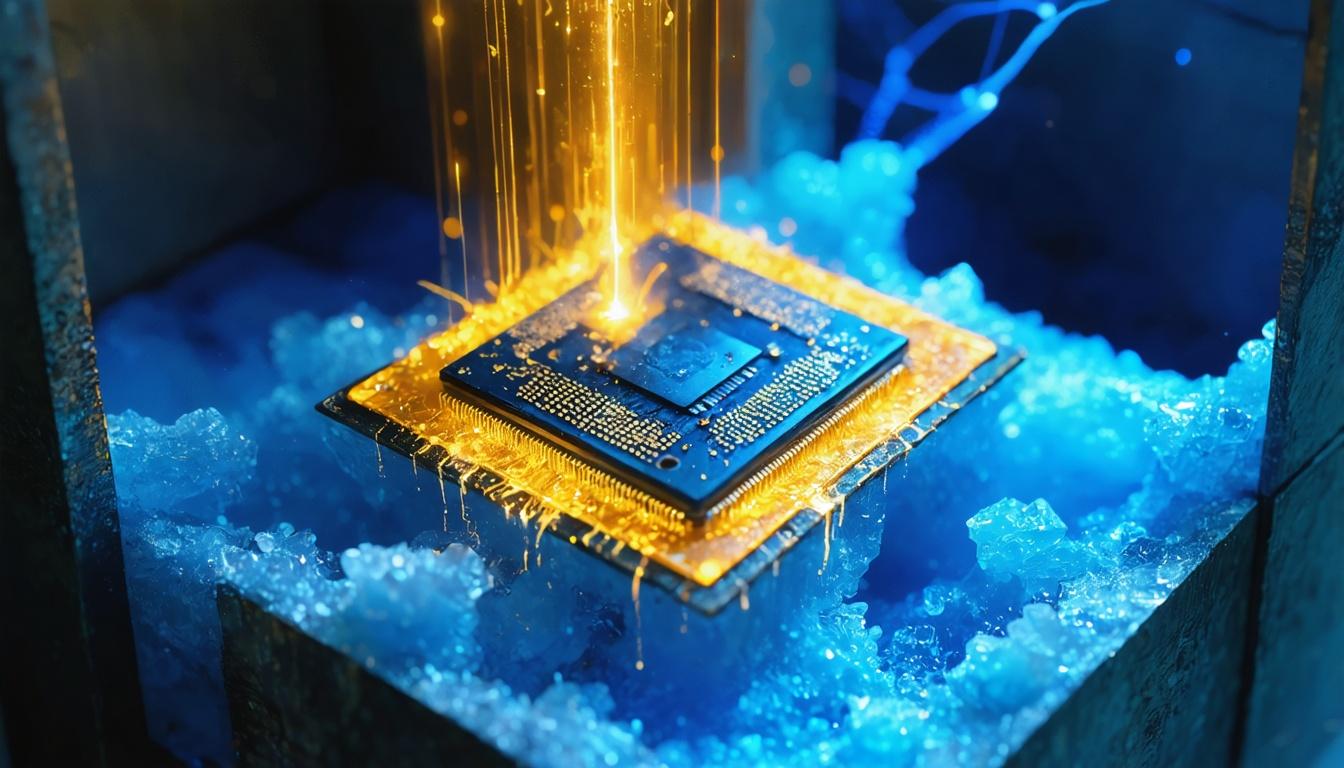

*this image is generated using AI for illustrative purposes only.
Xanadu Quantum Technologies Limited announced a significant expansion of its U.S. operations, anchored by a new presence in Albany, New York. The company is scaling its footprint across the country, including growth in the San Francisco Bay Area and a distributed presence spanning 19 states. This expansion aims to leverage established semiconductor and photonics supply chains to expedite research and development. Xanadu's U.S.-based workforce has grown by more than 5-fold since 2023, with further significant growth anticipated by the end of this year.
Albany has emerged as a hub for global innovation in quantum computing and advanced semiconductor research, positioning it as an ideal strategic base for Xanadu’s U.S. expansion. The company cited its commanding technical progress and industrial partnerships as drivers for this growth. Xanadu’s Aurora system established a foundation for future fault-tolerant quantum systems, demonstrating the modularity and networkability of its photonic approach. Additionally, the company demonstrated GKP qubits on-chip, solving a scalability hurdle for fault-tolerance on a mass-producible platform.
Strategic Partnerships
Building on these technical milestones, Xanadu has secured key industrial partnerships to accelerate innovation. The company has recently collaborated with several major technology firms to advance its photonic quantum computing hardware.
| Partner | Focus Area |
|---|---|
| Corning | Advanced materials |
| Applied Materials | Semiconductor equipment |
| DISCO | Precision processing |
| EV Group | Lithography and wafer bonding |
Dr. Christian Weedbrook, Founder and Chief Executive Officer of Xanadu, stated that the rapid growth in the United States is a testament to the talent and strategic partnerships built across the semiconductor and technology industries. He emphasized that co-locating with key partners ensures rapid response times and close-knit collaboration across teams. The company believes that continued strategic expansion in the U.S. will position it strongly to bring fault-tolerant systems to reality.

How will Xanadu's proximity to semiconductor supply chains in Albany impact the timeline for achieving commercial fault-tolerant quantum systems?
What specific advantages does the photonic approach offer in leveraging existing semiconductor manufacturing infrastructure compared to other quantum modalities?
Will the rapid U.S. expansion lead to a shift in Xanadu's primary research and development重心 away from its Canadian headquarters?
 20
20






 Create Custom Screeners
  Access 200+ Pre-built Filters
  Use 50+ Readymade Screener





