

USA Rare Earth stock falls 9.4% after missing Q2 revenue and loss estimates


USA Rare Earth shares declined 9.4% in after-hours trading following second-quarter results that missed analyst estimates for revenue and adjusted net loss. The company reported an operating loss of $46.314 million and revenue of $5.821 million, compared to estimates of $8.05 million and a loss of $(0.13) per share. Despite the misses, the firm maintains a strong cash position of $1.53 billion, supported by potential U.S. Department of Commerce funding, as it advances strategic acquisitions and manufacturing expansions globally.

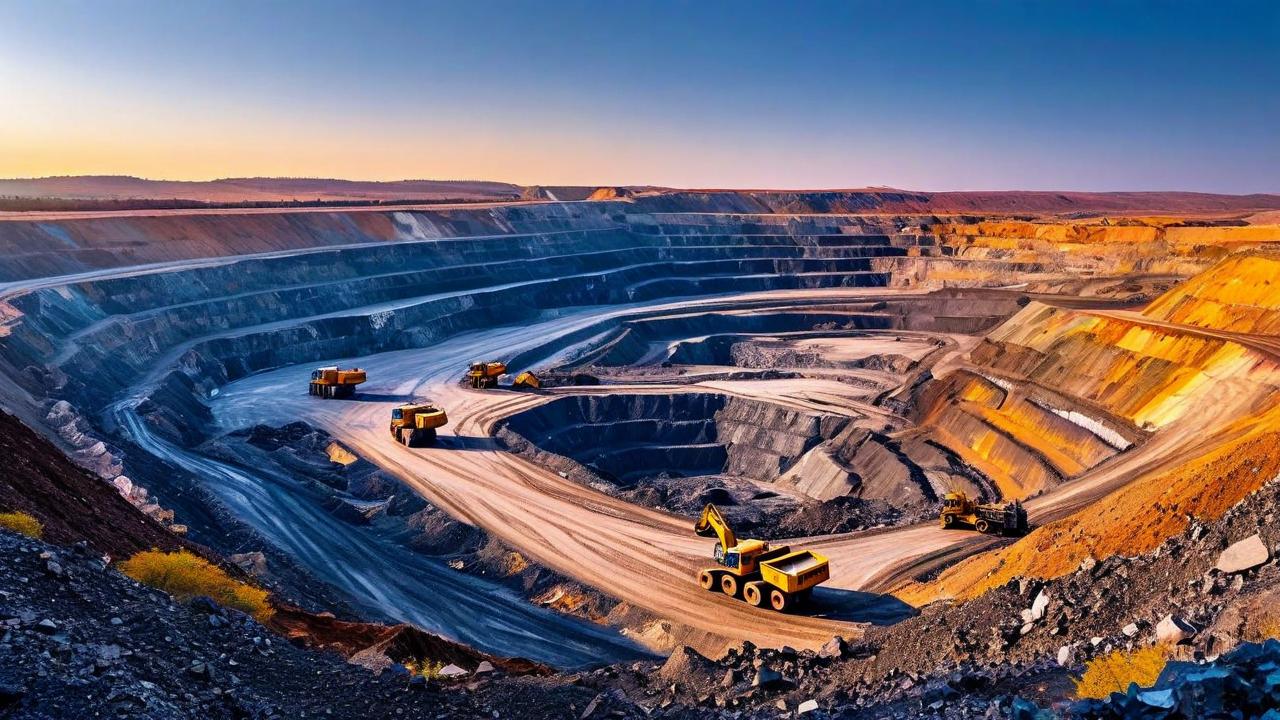

*this image is generated using AI for illustrative purposes only.
USA Rare Earth, Inc. shares dropped 9.40% in after-hours trading to $17.25 on Monday following second-quarter 2026 results that missed analyst expectations for both revenue and adjusted net loss. The rare earth developer reported an operating loss of $46.314 million, widening significantly from the $8.804 million loss in the prior-year period, while generating $5.821 million in revenue against estimates of $8.05 million. The adjusted net loss of $(0.15) per share also missed the consensus estimate for a loss of $(0.13) per share.
The market reaction underscores investor sensitivity to execution risks as the company scales its global operations. Despite the misses, USA Rare Earth ended the quarter with a robust cash balance of $1.53 billion, bolstered by definitive agreements for up to $1.6 billion in U.S. Department of Commerce funding under the CHIPS Act program. CEO Barbara Humpton emphasized the company’s transition from development to delivery, stating, "We are moving from assembling a world-class set of operations to delivering for our customers and driving value for our shareholders."
Financial Performance Overview
| Metric | Q2 2026 | Q2 2025 | Estimate | H1 2026 |
|---|---|---|---|---|
| Revenue | $5.821 million | — | $8.05 million | $11.519 million |
| Operating Loss | $(46.314) million | $(8.804) million | — | $(82.989) million |
| Net Loss (GAAP) | $(10.333) million | $(142.506) million | — | $(77.322) million |
| Adj. Net Loss (per share) | $(0.15) | $(0.21) | $(0.13) | — |
| Cash Balance | $1.53 billion | — | — | $1.53 billion |
Revenues for the quarter totaled $5.821 million, against cost of product revenue of $7.404 million, resulting in a gross loss of $1.583 million. For the first half of 2026, revenues reached $11.519 million. Operating expenses surged to $44.731 million in Q2 2026 from $8.804 million in Q2 2025, primarily due to increased selling, general, and administrative costs of $32.607 million and research and development expenses of $10.768 million. This spending aligns with the company’s aggressive expansion strategy across the United States, United Kingdom, France, and Brazil.
Strategic Milestones and Expansion
The quarter marked decisive progress in building an integrated global rare earth value chain. In June 2026, USA Rare Earth finalized definitive agreements with the U.S. Department of Commerce, unlocking access to up to $1.6 billion in funding, comprising up to $277 million in federal grants and up to $1.3 billion in senior secured loan capacity. Disbursements are tied to project milestones, significantly de-risking the path to full-scale production.
Key operational achievements included:
- Serra Verde Acquisition: Announced a definitive agreement to acquire 100% of Serra Verde Group for approximately $2.8 billion, securing the only large-scale producer of heavy rare earth elements outside Asia.
- New Manufacturing Sites: Selected Blacksburg, South Carolina, for a new magnet manufacturing facility targeting 6,400 metric tons per annum of NdFeB magnets, with commissioning targeted for 2028.
- Processing Capabilities: Commissioned its hydrometallurgical demonstration facility in Wheat Ridge, Colorado, and completed the first commercial pour of yttrium metal through its subsidiary Less Common Metals in Cheshire, United Kingdom.
- Leadership Transition: CEO Barbara Humpton announced her retirement effective October 1, 2026, to be succeeded by Thras Moraitis, current CEO of Serra Verde Group.
What the Numbers Show
The divergence between the narrowing GAAP net loss and the widening adjusted operating loss highlights the impact of non-operational factors on the bottom line. While other income provided a substantial buffer against operational deficits in Q2 2026, turning positive at $33.838 million after recording an expense of $133.909 million in Q2 2025, the core business continues to consume significant capital as it scales. The $1.53 billion cash position provides ample runway for the planned expansions, including the Round Top Definitive Feasibility Study expected in Q4 2026. However, investors should note that operating losses are expected to persist as the company invests heavily in infrastructure before reaching commercial scale.

How will the leadership transition from Barbara Humpton to Thras Moraitis impact the execution timeline of the $2.8 billion Serra Verde acquisition?
Given the milestone-based disbursement structure of the $1.6 billion CHIPS Act funding, what specific operational risks could delay capital inflows and strain the current cash runway?
Will the aggressive expansion into the UK, France, and Brazil expose USA Rare Earth to new regulatory or geopolitical headwinds that could offset its strategic diversification away from Asia?
 16
16












 Create Custom Screeners
  Access 200+ Pre-built Filters
  Use 50+ Readymade Screener





