

Uber sells entire Serve Robotics stake amid partnership rift


Uber Technologies sold its entire stake in Serve Robotics, surprising the startup and signaling a souring partnership marked by 'differing views' on operations. This follows a first-time quarterly drop in delivery volumes via Uber, prompting Serve to slash its 2026 revenue guidance from $26 million to $9–$10 million. While Serve missed Q2 revenue estimates, it saw a 50% rise in deliveries with another partner.

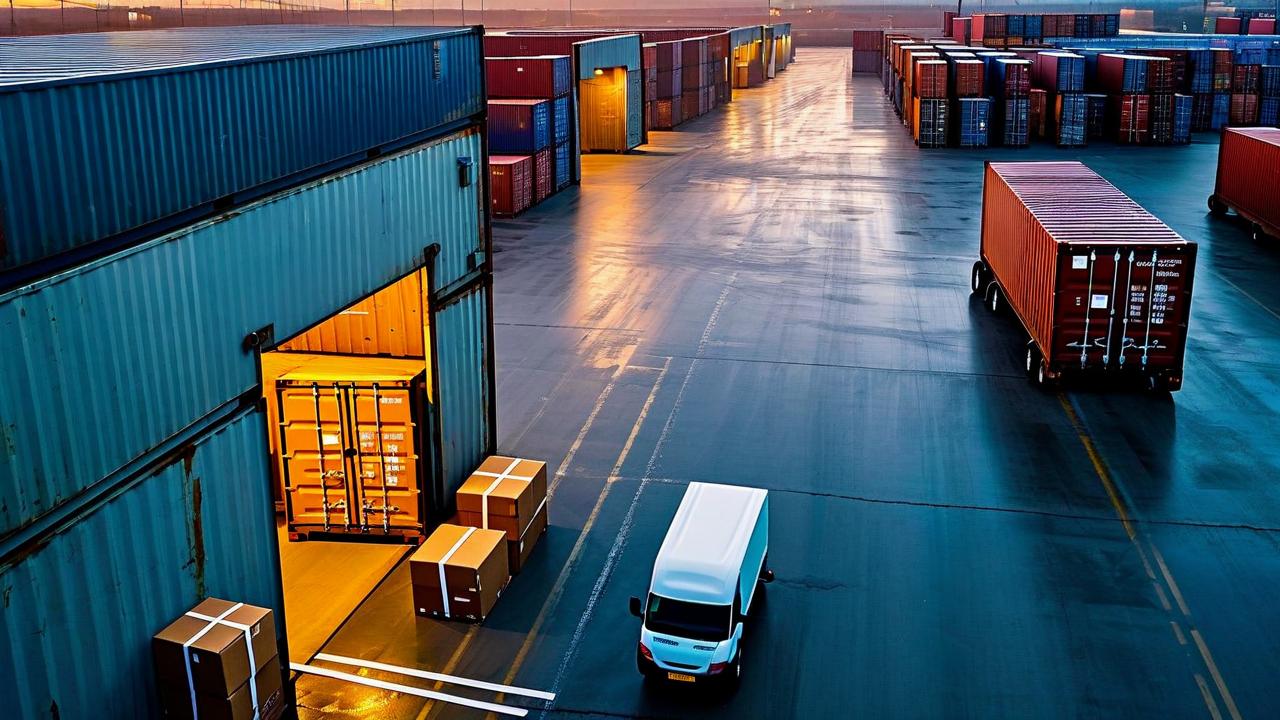

*this image is generated using AI for illustrative purposes only.
Uber Technologies (NYSE: UBER) has exited its investment in Serve Robotics (NASDAQ: SERV), selling its entire remaining stake in the autonomous delivery robot company. The disclosure, made in a regulatory filing on Friday, came as a surprise to Serve Robotics, which stated it was unaware of the exit until the news surfaced publicly.
The dissolution of the financial tie marks a significant shift in the partnership that began in 2022 and was expanded in May 2023 to include up to 2,000 sidewalk robots for use on the Uber app across several U.S. cities. Serve Robotics CEO Ali Kashani indicated during the recent second-quarter earnings call that the two companies hold "differing views" regarding their shared autonomous fleet and potential operating models. Bloomberg reported that Serve hinted the commercial deal will not be renewed after its expiration in 2027.
Operational Reversal
The strategic divergence coincides with a break in Serve’s growth trajectory on the Uber platform. Kashani noted that delivery volume through Uber had grown for 17 consecutive quarters from the first quarter of 2022 through the first quarter of this year. However, that trend reversed for the first time in the second quarter, driven by lower-than-expected robot utilization.
Despite the setback with Uber, Serve reported that deliveries with another food delivery partner rose approximately 50% in the recent quarter. Uber maintains partnerships with more than 30 autonomous vehicle companies, including firms in which it holds investment stakes.
Financial Impact and Guidance Cut
Serve Robotics reported second-quarter revenue of $3.28 million, missing the Street consensus estimate of $3.49 million. While the company posted a lower loss per share than analysts expected, it significantly reduced its full-year outlook. Serve lowered its 2026 revenue guidance to a range of $9 million to $10 million, a sharp decline from its prior guide of $26 million for the fiscal year. The company attributed the revision to lower-than-expected delivery volume through its Uber Eats partnership.
| Metric: | Q2 Actual | Street Estimate |
|---|---|---|
| Revenue: | $3.28 million | $3.49 million |
| Full-Year 2026 Guide: | $9–$10 million | $26 million (prior) |
Kashani emphasized that Serve is driving innovation in last-mile delivery as its scaled robot fleet powers deliveries across multiple verticals. The CEO stated the company is seeking more diversified revenue streams and new monetization opportunities.
What the Numbers Show
The drastic reduction in Serve Robotics’ full-year revenue guidance—from $26 million to a range of $9 million to $10 million—highlights a heavy dependency on the Uber channel for top-line growth. With Uber representing the primary volume driver for 17 consecutive quarters prior to Q2, the simultaneous reversal in Uber delivery volumes and the subsequent exit of Uber as a shareholder suggest that near-term revenue recovery may require substantial diversification away from this single partner. The 50% growth with an alternative food delivery partner provides a counterbalance but remains insufficient to offset the magnitude of the guidance cut without further scale.
Market Reaction
Serve Robotics stock traded at $5.04 on Wednesday, up 2.9%. The stock has declined 57.4% year-to-date, trading within a 52-week range of $4.32 to $18.64.
Uber originally acquired Serve Robotics’ division when it bought Postmates for $2.65 billion in 2020. The unit, initially known as Postmates X, was spun off as Serve Robotics in 2021. Five years later, Uber’s ownership stake is fully divested, and the operational partnership appears to be winding down.

How will Serve Robotics accelerate its diversification strategy to offset the loss of Uber's volume, given that alternative partners currently account for only a fraction of its total deliveries?
What specific operational or strategic disagreements led to the 'differing views' between Serve and Uber, and could this signal broader friction in Uber's autonomous delivery partnerships?
Given the drastic cut in 2026 revenue guidance, what new monetization models or verticals must Serve Robotics successfully scale to justify its current valuation?
 15
15











 Access 50+ Readymade Screeners
  Use 200+ Custom Filters
  Get Full Market Insights





