

Time Technoplast files FY26 sustainability report, details green initiatives


- Capital expenditure on sustainable tech rose to 25.06% in FY26 from 14.24% in FY25
- Commissioned 12,000 MT recycling facility at Bhilad, Gujarat for captive use
- Secured approvals for Type-3 composite cylinders and Type-IV hydrogen cylinders
- Renewable energy consumption reached 46.6 billion KJ, up from 40.8 billion KJ
- Achieved 10% reduction in carbon footprint against FY23 baseline

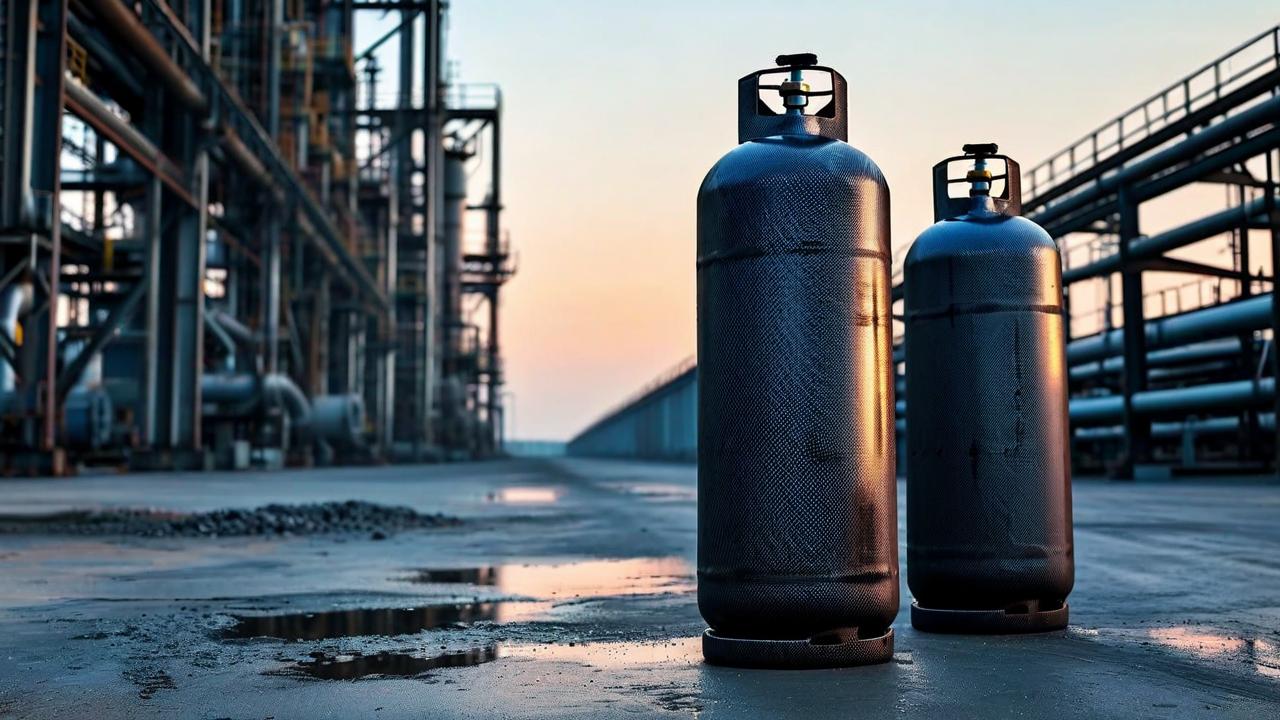

*this image is generated using AI for illustrative purposes only.
Time Technoplast Limited has filed its Business Responsibility and Sustainability Report (BRSR) for the financial year ending March 2026. The submission outlines the company's environmental performance and strategic sustainability milestones achieved during the period.
The filing highlights significant capital expenditure directed toward sustainable technologies. Approximately 25.06% of total capital expenditure in FY26 was invested in specific technologies to improve environmental and social impacts, a notable increase from 14.24% in the previous year. This investment supported the commissioning of a greenfield recycling facility at Bhilad, Gujarat, with an annual capacity of 12,000 metric tonnes for captive consumption.
Operational Milestones
The company advanced its circular economy strategy through its wholly-owned subsidiary, Time Ecotech Private Limited. The Bhilad facility marks the first of three planned recycling plants across India, aimed at supporting Post-Consumer Recycled (PCR) compliance.
Key developments disclosed in the report include:
- Approval for manufacturing High-Pressure Type-3 Fully Wrapped Fibre Reinforced Composite Cylinders for diverse applications including transportation and medical use.
- Approval for designing and manufacturing 250-litre high-pressure Type IV composite hydrogen cylinders for onboard use in buses and trucks.
- ICAT test report approval for E-Rickshaw Batteries built on lead-selenium technology.
Environmental Performance
The report discloses detailed metrics on energy consumption and waste management. Total energy consumed from renewable sources stood at 46,646,218,800 KJ in FY26, up from 40,862,655,665 KJ in FY25. Conversely, energy from non-renewable sources was 705,424,739,184 KJ, compared to 680,848,685,356 KJ in the prior year.
| Metric | FY26 | FY25 |
|---|---|---|
| Renewable Energy Consumption (KJ) | 46,646,218,800 | 40,862,655,665 |
| Non-Renewable Energy Consumption (KJ) | 705,424,739,184 | 680,848,685,356 |
| Total Waste Generated (Tonnes) | 4,239 | 3,945 |
| Waste Recycled/Re-used (Tonnes) | 3,714 | 3,450 |
Waste management data shows total waste generation rose to 4,239 metric tonnes from 3,945 metric tonnes in FY25. However, the volume of waste recovered through recycling or re-use also increased to 3,714 metric tonnes from 3,450 metric tonnes. The company reported achieving a 10% reduction in carbon footprint compared to the FY23 baseline.
What the Numbers Show
The divergence between rising non-renewable energy consumption and the stated goal of sourcing 75% of power from green sources within two years indicates a transitional phase in the company's energy mix. While renewable energy intake grew by approximately 14% year-on-year, it still constituted a small fraction of total energy usage, which exceeded 752 billion KJ in aggregate. The heavy reliance on non-renewable sources suggests that upcoming Power Purchase Agreements (PPAs) in Maharashtra and Uttarakhand will be critical to meeting the stated decarbonization targets.
Historical Stock Returns for Time Technoplast
| 1 Day | 5 Days | 1 Month | 6 Months | 1 Year | 5 Years |
|---|---|---|---|---|---|
| +0.20% | -0.12% | -3.68% | +11.32% | -24.70% | +412.31% |

How will the upcoming Power Purchase Agreements in Maharashtra and Uttarakhand impact Time Technoplast's ability to meet its target of sourcing 75% of power from green sources within two years?
What is the projected timeline for commissioning the remaining two recycling plants, and how will they contribute to the company's Post-Consumer Recycled (PCR) compliance strategy?
Given the rise in non-renewable energy consumption despite increased renewable uptake, what specific operational changes are planned to decouple production growth from carbon intensity?
 17
17










 Access Market Heat-map & Insights
  Create, Save & Share your Screener
  Use 200+ Screening Filters





