

Steelmakers urge ETS reform to protect EU industrial base


ArcelorMittal, thyssenkrupp Steel and voestalpine have called for urgent reform of the EU Emissions Trading System (ETS) to prevent a 30–40% decline in steel-intensive manufacturing and protect up to 5 million jobs. The companies warn that rising ETS costs, expected to increase steel production costs by 50% by the early 2030s, threaten Europe's industrial base. They propose a temporary pause in ETS cost escalation until key enablers for economic decarbonisation are in place.

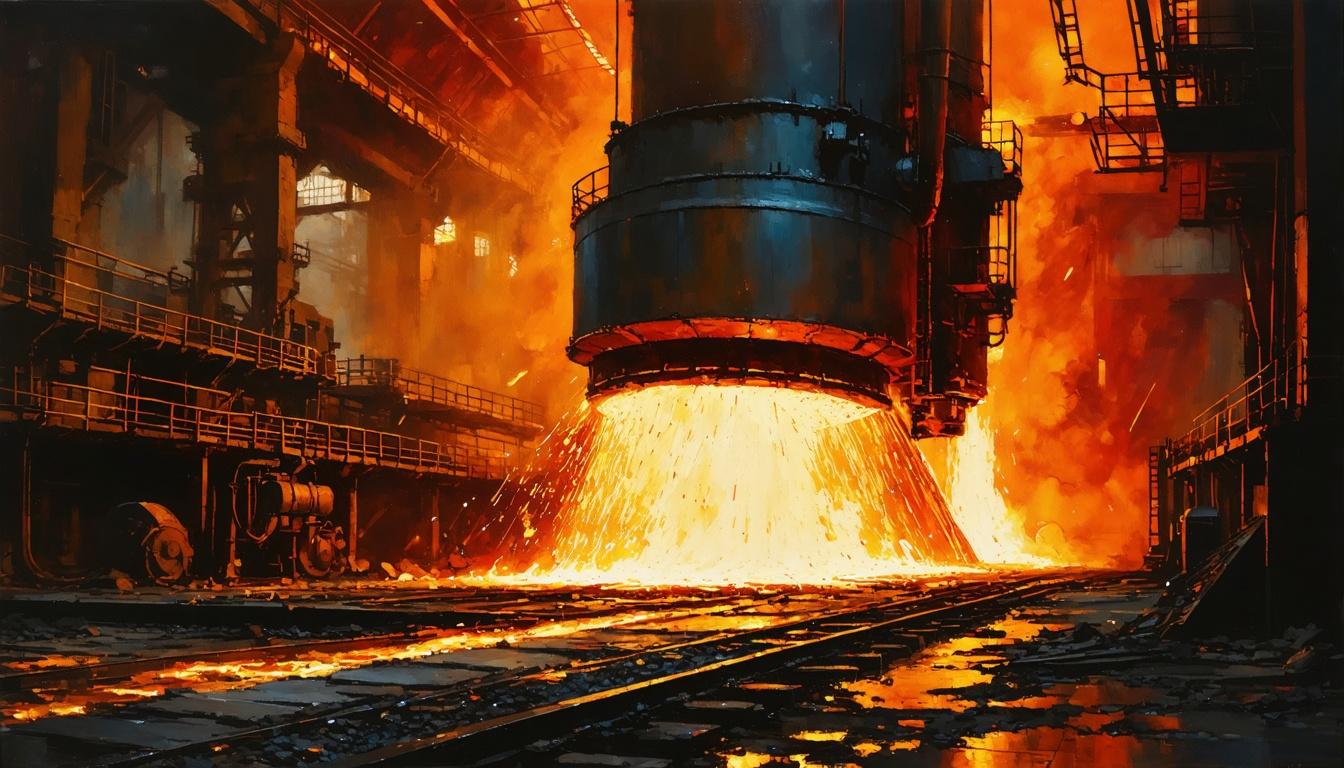

*this image is generated using AI for illustrative purposes only.
Three of Europe's leading steelmakers, ArcelorMittal Europe, thyssenkrupp Steel and voestalpine, have issued a joint call for urgent reform of the EU Emissions Trading System (ETS). The companies warn that without pragmatic adjustments, the current policy trajectory risks destroying Europe's industrial base. They estimate that without reforms, the EU could face a 30–40% decline in steel-intensive manufacturing activity, putting up to 5 million jobs at risk across the value chain.
Together, the three companies represent around 60% of Europe's integrated steel production. While they have committed to decarbonising their operations, they stress that the policy framework must enable, not inhibit, these transformations. The companies argue that key enablers for economic decarbonisation, such as competitive electricity prices, affordable green hydrogen and Carbon Contracts for Difference, remain insufficiently developed or unavailable at scale.
Rising costs and economic risks
Under the current EU ETS framework, the cost of producing steel in the EU is expected to increase by around 50% by the early 2030s. The companies note that steel-intensive imports are not subject to an equivalent carbon cost, while EU steel exports receive no rebate to recover the carbon cost. This imbalance poses a profound threat to European steelmaking and the broader value chain.
The companies highlight that the ETS has driven emissions reductions in the power sector by about 49% between 2005 and 2023. However, they assert that it is not yet delivering a viable pathway for energy-intensive industries such as steel. They argue that the current system runs counter to the EU's ambition, as set out in the Industrial Accelerator Act, to increase manufacturing's share of GDP to 20%.
Calls for a pause in ETS cost escalation
ArcelorMittal, thyssenkrupp Steel and voestalpine have outlined specific measures to address the situation. They are calling for a temporary pause in ETS cost escalation, maintaining the current level until the key enablers of economically viable decarbonisation are in place. Additionally, they want a framework that ensures first movers are supported, with ETS revenues directed toward industrial decarbonisation.
The companies also seek a balanced approach to import and export competitiveness to address the unintended consequences of the current system. While acknowledging the recent introduction of the Carbon Border Adjustment Mechanism (CBAM) and upcoming Tariff Rate Quotas as important steps, they stress that ETS reform is essential to ensure Europe can both decarbonise and maintain a strong industrial base.
| Key Metric | Value / Impact |
|---|---|
| Share of EU integrated steel production | Around 60% |
| Expected increase in EU steel production cost by early 2030s | Around 50% |
| Potential decline in steel-intensive manufacturing activity without reform | 30–40% |
| Jobs at risk across the value chain | Up to 5 million |
Executive perspectives
Marie Jaroni, CEO of thyssenkrupp Steel, said the ETS needs a reality check as it does not reflect the current state of Europe's industry. She emphasised the need for a cost pause to safeguard the transformation and ensure that first movers are not put at a disadvantage.
Herbert Eibensteiner, CEO of voestalpine AG, noted that the phase-out of free allocation is already diverting financial resources needed for the decisive phase of transformation. He stated that a pause in the ETS framework is essential to safeguard investments and enable further decarbonisation steps.
Lakshmi Mittal, executive chairman of ArcelorMittal, said a future for the ETS that incentivises decarbonisation without compromising competitiveness must be found. He added that the choice policymakers face is between a climate strategy that strengthens Europe's resilience and economic security, and one that hollows it out.

How likely is the European Commission to implement a temporary pause in ETS cost escalation given the current political climate?
What specific timeline is required for green hydrogen infrastructure to reach the scale necessary to support economically viable steel decarbonization?
Could the proposed reforms trigger retaliatory trade measures from major steel-exporting nations outside the EU?
 15
15



 Access 50+ Readymade Screeners
  Use 200+ Custom Filters
  Get Full Market Insights





