

Shake Shack Q2 Results: Revenue rises 17%, EPS beats estimates


Shake Shack Inc. beat Q2 2026 earnings estimates with adjusted EPS of $0.43 vs $0.30 expected. Revenue jumped 17.2% to $417.6 million, driven by strong Shack sales growth. However, margins narrowed due to higher food and paper costs, causing operating income to decline despite improved labor efficiency.

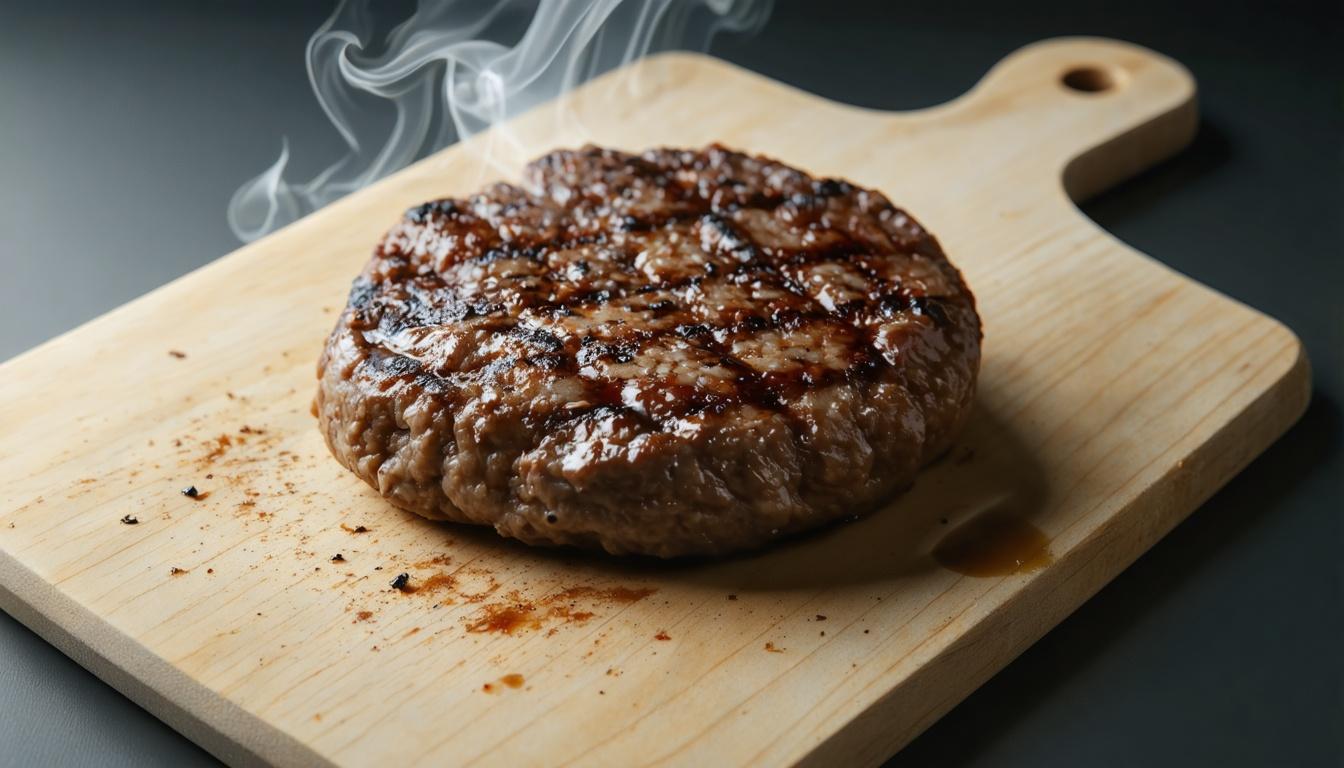

*this image is generated using AI for illustrative purposes only.
Shake Shack Inc. (NYSE: SHAK) delivered second-quarter 2026 financial results that exceeded market expectations, posting adjusted earnings of 43 cents per share against an analyst estimate of 30 cents. The fast-casual restaurant chain reported revenue of $417.6 million, a 17.2% increase from $356.5 million in the prior year period, surpassing the $417.2 million consensus. This top-line growth was primarily fueled by a 17.5% surge in Shack sales to $403.4 million and a 7.1% rise in licensing revenue to $14.2 million. Systemwide sales grew 13.8% to $625.8 million, while same-Shack sales increased by 3.5%, indicating broad-based demand strength across its portfolio of more than 710 locations.
Despite the earnings beat, GAAP net income declined to $16.9 million from $18.5 million year-earlier, with net income attributable to Shake Shack falling to $15.7 million, or 37 cents per diluted share, compared to $17.1 million, or 41 cents per share, previously. Adjusted pro forma net income was $18.9 million, down from $19.5 million. The company opened 16 company-operated Shacks and 11 licensed Shacks during the quarter, expanding its footprint which now includes about 460 locations in 35 U.S. states and the District of Columbia, alongside more than 250 international sites.
Operational Metrics and Margins
Restaurant-level profit rose 12.8% to $92.7 million, although the restaurant-level profit margin narrowed to 23% from 23.9%. This compression was attributed to rising input costs; food and paper costs increased to 28.8% of Shack sales from 28.2%, and other operating expenses climbed to 15.6% from 14.8%. Conversely, labor and related expenses improved to 25.1% from 25.7%, partially offsetting the pressure on margins. Occupancy costs remained stable at 7.5%. Operating income declined to $20.7 million from $22.4 million, while adjusted EBITDA increased 4% to $61.2 million, though its margin fell to 14.7% from 16.5%.
| Metric | Q2 2026 | Q2 2025 | Change |
|---|---|---|---|
| Revenue | $417.6 million | $356.5 million | +17.2% |
| Shack Sales | $403.4 million | — | +17.5% |
| Systemwide Sales | $625.8 million | — | +13.8% |
| Same-Shack Sales | — | — | +3.5% |
| Adjusted EPS | $0.43 | — | Beat $0.30 est. |
| Restaurant-Level Profit | $92.7 million | — | +12.8% |
Cash Flow and One-Time Costs
For the first 26 weeks of 2026, operating cash flow declined to $65.5 million from $96.2 million, while capital expenditures totaled $104.9 million. Cash and cash equivalents stood at $308 million as of July 1, representing a decrease of $52.2 million from year-end levels. The quarter included several non-recurring adjustments that impacted the bottom line: $1.1 million in executive transition costs, $848,000 in legal settlement costs, $425,000 in impairment and Shack closure costs, and $374,000 related to the conflict in the Middle East and professional fees for nonrecurring matters.
What the Numbers Show
The divergence between rising restaurant-level profit (+12.8%) and declining operating income (-$1.7 million) highlights significant headwinds from corporate-level expenses and margin compression at the unit level. While labor cost improvements provided some relief, they were insufficient to counterbalance the increases in food/paper and other operating expenses. The narrowing adjusted EBITDA margin (14.7% vs 16.5%) suggests that top-line growth is currently being offset by higher input costs, a trend investors will monitor closely as the company executes its expansion strategy.
Fiscal 2026 Outlook
Shake Shack reaffirmed its fiscal 2026 sales guidance of $1.6 billion to $1.7 billion, aligning with the $1.65 billion analyst estimate. At the time of publication on Wednesday, Shake Shack shares were up 0.24% at $66.35.

How will Shake Shack's management address the widening gap between restaurant-level profit growth and declining operating income amidst rising corporate expenses?
What specific strategies is the company implementing to mitigate the impact of increasing food and paper costs on its narrowing adjusted EBITDA margins?
Given the decline in operating cash flow despite revenue growth, how does Shake Shack plan to fund its aggressive expansion of 27 new locations without depleting its cash reserves?
 15
15








 Create Custom Screeners
  Access 200+ Pre-built Filters
  Use 50+ Readymade Screener





