

Schaeffler India releases transcript of September 28 investor meeting


- Schaeffler India released the full transcript of its September 28, 2026 investor group meeting, filed under Regulation 30 of SEBI (LODR) Regulations, 2015
- Management confirmed overall localization at 80%, with automotive at 90% and industrial at 65%-70%; exports are expected to remain between 15% and 20% of business
- Railways contributes 13%-14% of revenue with at least double-digit growth; the company produced its first 1.6-metre bearing for 6-megawatt wind turbines
- Based on year-to-date June performance, the company is on track to cross ₹10,000 crore in revenue
- No timeline has been provided for the legal integration of Vitesco into Schaeffler India; promoter holding stands at 74.13%

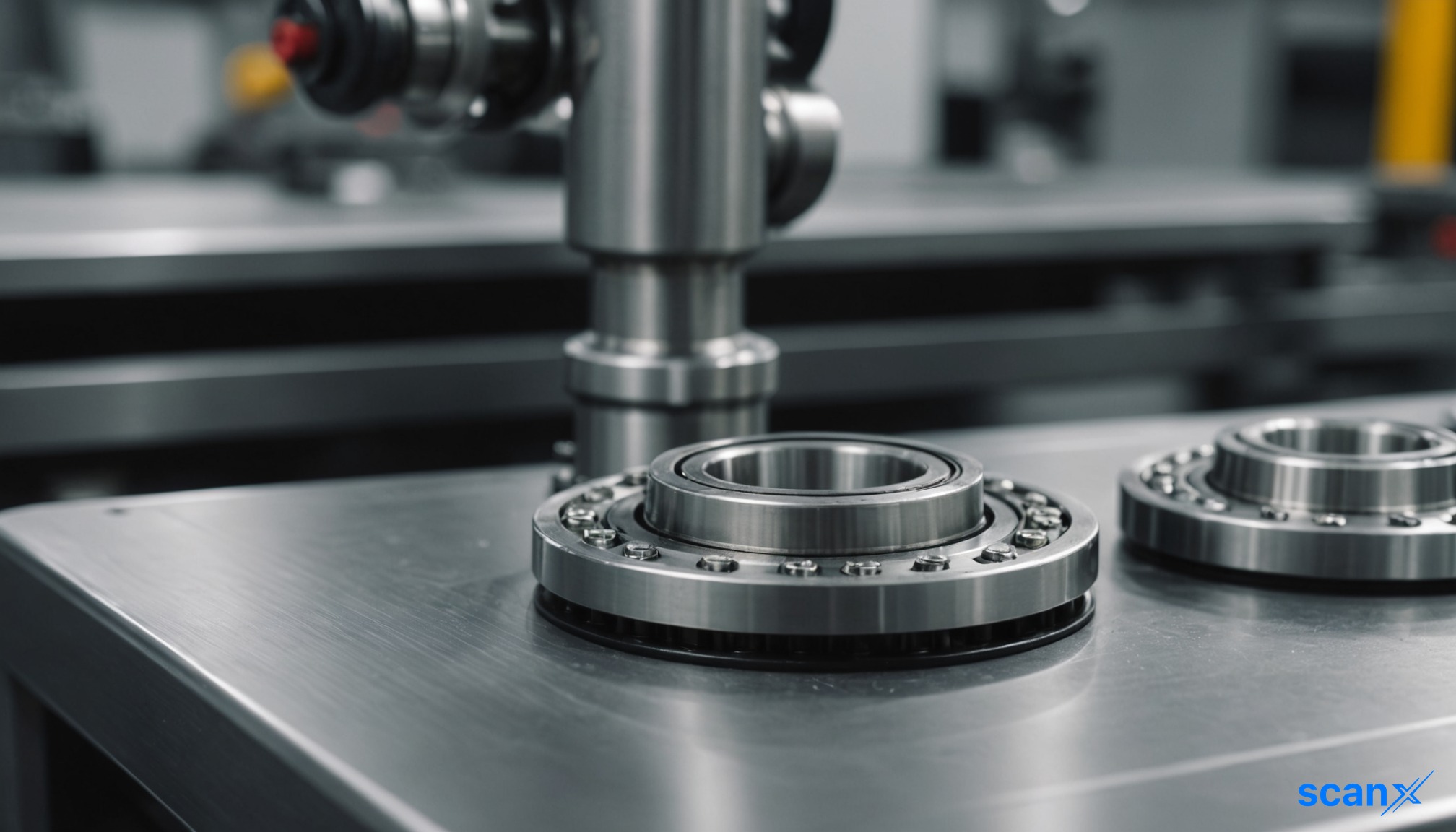

*this image is generated using AI for illustrative purposes only.
Schaeffler India Limited has released the transcript of its investor group meeting held on September 28, 2026, following the earlier disclosure of the audio recording. The transcript was filed with stock exchanges under Regulation 30 of the SEBI (Listing Obligations and Disclosure Requirements) Regulations, 2015.
The meeting featured Managing Director and Chief Executive Officer Harsha Kadam, Director Finance and Chief Financial Officer Hardevi Vazirani, and Head of Investor Relations Gauri Kanikar. The session was conducted as an open question-and-answer format with institutional investors.
Meeting schedule
The day comprised one-on-one sessions with prominent fund houses followed by a large group meeting with multiple institutional investors.
| Time slot | Type of interaction | Participants |
|---|---|---|
| 9:00 am – 9:45 am | One-on-one | Nippon Life India Asset Management |
| 10:00 am – 10:45 am | One-on-one | SBI Funds Management Pvt. Ltd. |
| 11:00 am – 11:45 am | One-on-one | Kotak Mahindra AMC |
| 12:00 pm – 12:45 pm | One-on-one | DSP Investment Managers |
| 2:00 pm – 2:45 pm | One-on-one | Axis Asset Management Co. Ltd. |
| 3:00 pm – 3:45 pm | Group meeting | Aditya Birla Sun Life AMC, Axis Max Life Insurance, Bandhan Mutual Fund, Canara Robeco Mutual Fund, Edelweiss Asset Management Hybrid Funds, HDFC Life Insurance Co. Ltd., HSBC Global AM (India) Pvt. Ltd, ICICI Prudential Life Insurance Co. Ltd., Invesco Asset Management, Janchor Partners Ltd., Mirae Asset MF, Motilal Oswal Asset Management Co. Ltd., Nippon India Portfolio Management, Tata Asset Management Ltd., UTI Asset Management Co. Ltd. |
Exports and localization strategy
On the topic of exports, Vazirani noted that the current export mix comprises approximately 50% to intercompany partners in Europe, 25% to Southeast Asia, and the remainder to China and the Americas. Kadam added that the company's export strategy is a subset of its localization strategy, with overall localization at approximately 80%. Automotive localization stands at 90%, while industrial localization is in the range of 65% to 70%. Notably, 13% of exports go to China. Management indicated that exports are expected to remain between 15% and 20% of business as the domestic market grows at 14% to 15%.
On commodity cost pass-through, management indicated that steel price increases are handled through indexed formulas built into contracts. Vazirani noted that historically approximately 70% of input cost increases are recovered from customers, with the remaining 30% absorbed through operational efficiencies and localization.
Capacity expansion and key growth sectors
Management discussed ongoing expansion at the Shoolagiri greenfield facility, where a second hall building is under construction and a new production line is being brought in from Europe. In Savli, Hall 3 construction has begun, focused purely on the wind segment. The company has produced its first 1.6-metre bearing, designed for 6-megawatt wind turbines.
On railways, Vazirani noted that the segment contributes approximately 13% to 14% of revenue and has been delivering at least double-digit growth. Kadam highlighted growth drivers including locomotive electrification, upgradation of freight and passenger trains, and new product portfolios covering axle boxes, traction motors, and gearboxes.
| Sector | Key development |
|---|---|
| Wind | 1.6-metre bearing produced; Hall 3 construction started at Savli |
| Railways | 13%-14% of revenue; double-digit growth; electrification driving insulation-coated bearing demand |
| Automotive (EV) | Phase 2 localization underway for e-axles; end-of-line testing capacity at 300,000 pieces |
| Shoolagiri | Second hall under construction; new production line arriving from Europe |
Vazirani stated that based on year-to-date June performance, the company will cross ₹10,000 crore in revenue, and that this scale of business can absorb the cost of capital of new products.
E-mobility and Vitesco integration
On e-mobility, Kadam noted that EV adoption in India is currently below 5% and that research data indicates it will reach approximately 15% by 2030-31. The company is present across ICE, hybrid, and EV segments. The e-axle currently has 100% import content at Phase 1, with Phase 2 localization involving sub-component assembly already underway. Phase 3 will involve local sourcing of child parts, with supplier development ongoing.
On the Vitesco integration, Vazirani clarified that there is no fundamental hurdle to legal integration, but that the global group must integrate Vitesco entities worldwide, with private companies being easier to integrate before listed entities. The company's promoter holding stands at 74.13%, leaving 26% as public float, which constrains the steps required before legal integration. No timeline has been provided for the merger.
Book-to-bill and order visibility
Kadam explained that the company tracks a book-to-bill ratio as a key metric for growth visibility. A ratio above one indicates sufficient new business pipeline to sustain growth, while a ratio below one signals the need to accelerate business acquisition. Project probability is tracked at 25%, 50%, and 75% stages, with customer development cycles typically spanning one to three years.
Compliance and disclosure
The transcript disclosure was filed on October 5, 2026, and signed by Ashish Tiwari, General Counsel and Company Secretary. The company confirmed that no Unpublished Price Sensitive Information was shared during the meetings, ensuring equal access to information for all investors. The initial meeting schedule communication was signed on September 22, 2026, and the audio recording disclosure was filed on September 29, 2026.
Historical Stock Returns for Schaeffler India
| 1 Day | 5 Days | 1 Month | 6 Months | 1 Year | 5 Years |
|---|---|---|---|---|---|
| -1.92% | -5.82% | -8.34% | -7.28% | -12.02% | +137.33% |

How will the completion of the Shoolagiri and Savli capacity expansions impact Schaeffler India's margin profile as fixed costs are absorbed by higher volumes?
What specific regulatory or shareholder approval hurdles remain for the Vitesco integration given the 74.13% promoter holding and the need to integrate private entities first?
How might Schaeffler India's export mix shift if geopolitical tensions or trade policies in Europe or China disrupt its current 50% intercompany and 13% China export channels?
 15
15








 Access Market Heat-map & Insights
  Create, Save & Share your Screener
  Use 200+ Screening Filters





