

Raj Rayon Industries files FY26 sustainability report with ₹11,797 crore turnover


- Turnover rose to ₹11,797 crore in FY26 from ₹8,493 crore in FY25
- Permanent worker turnover rate spiked to 83% from 20% in the prior year
- Electricity consumption reported at 94.7 million Giga Joules, up sharply from previous year
- Water withdrawal increased to 319,375 kilolitres with zero discharge reported
- Zero complaints recorded regarding human rights or workplace discrimination

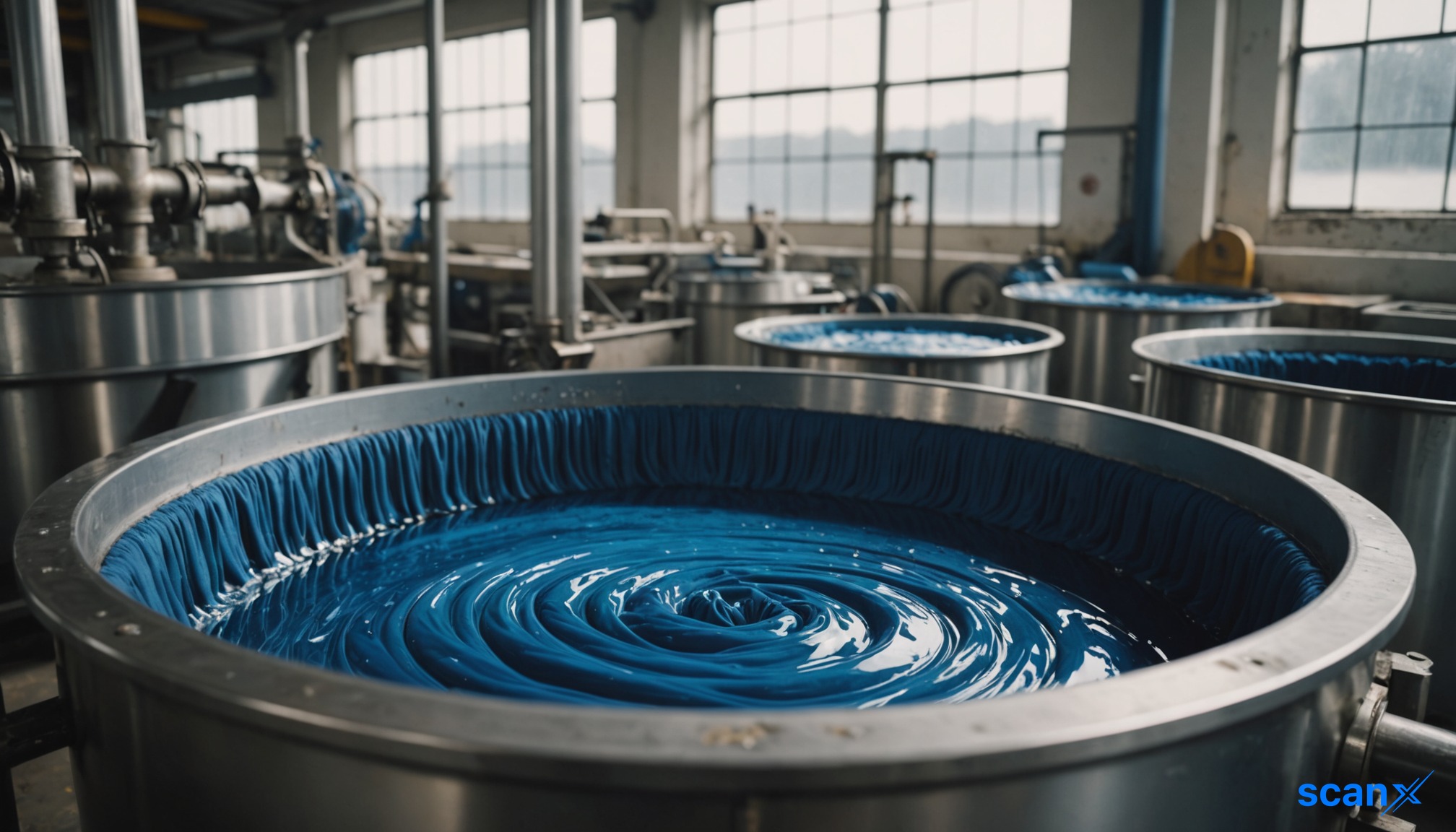

*this image is generated using AI for illustrative purposes only.
Raj Rayon Industries has submitted its Business Responsibility and Sustainability Report (BRSR) for the financial year ended March 31, 2026, to the Bombay Stock Exchange and the National Stock Exchange of India. The filing, made pursuant to Regulation 34(2)(f) of the SEBI (Listing Obligations and Disclosure Requirements) Regulations, 2015, outlines the company’s operational performance, governance structures, and environmental impact for FY26.
The company reported a total turnover of ₹11,797.17 crore for the period, marking a significant increase from the previous year's figure of ₹8,493.79 crore. This growth reflects the scaling up of its manufacturing operations, which are primarily focused on polyester chips, partially oriented yarn (POY), and polyester texturised yarn (PTY). POY manufacturing alone contributed 68.66% to the total turnover.
Operational and Workforce Metrics
As of the end of FY26, Raj Rayon employed 244 permanent employees and 168 permanent workers at its single plant location in Silvassa, Dadra and Nagar Haveli and Daman and Diu. The workforce composition remains heavily male-dominated, with 93.85% of employees being male.
The report discloses a high turnover rate for permanent workers, which stood at 83% in FY26, up from 20% in FY25. In contrast, the turnover rate for permanent employees was 26%, compared to 5% in the prior year. The company noted that it has recently initiated production in its factory unit and is in the process of implementing comprehensive well-being measures for its workforce.
Environmental Disclosures
Under Principle 6, the company detailed its energy and water consumption patterns. Total electricity consumption surged to 94,771,463 Giga Joules in FY26, a substantial rise from 222,192 Giga Joules in FY25. Fuel consumption was reported as zero for FY26, whereas it stood at 257,530 Giga Joules in the previous year.
Water withdrawal increased to 319,375 kilolitres in FY26 from 263,895 kilolitres in FY25, primarily sourced from groundwater (292,000 kilolitres) and third-party sources (27,375 kilolitres). The company stated that it recycles all used water after treatment for plantation activities and maintains rainwater harvesting systems to replenish groundwater levels. No water discharge was reported for either year.
What the Numbers Show
A notable divergence exists between the reported revenue growth and the absolute scale of energy consumption disclosed in the report. While revenue grew by approximately 39% year-on-year, the reported electricity consumption figure jumped by over 42,000% in absolute Giga Joule terms. This massive discrepancy in magnitude suggests a potential change in reporting methodology or unit classification between FY25 and FY26, as the previous year's fuel consumption was also recorded in Giga Joules but at a much lower absolute value.
Governance and Social Responsibility
The company confirmed compliance with CSR norms under Section 135 of the Companies Act, 2013, citing a net worth of ₹156.47 crore. It reported zero complaints related to human rights, sexual harassment, or discrimination during the year. Training on human rights covered 22.54% of permanent employees and 8.93% of permanent workers. The Board of Directors includes two women, representing 33.33% of the total board strength.
Historical Stock Returns for Raj Rayon Industries
| 1 Day | 5 Days | 1 Month | 6 Months | 1 Year | 5 Years |
|---|---|---|---|---|---|
| -1.52% | 0.0% | -12.51% | +3.07% | -28.16% | +1,392.59% |

How will Raj Rayon Industries address the 83% turnover rate among permanent workers to ensure operational stability and protect its FY26 revenue growth trajectory?
What specific measures will the company implement to reconcile the massive discrepancy in reported energy consumption units between FY25 and FY26, and will this impact future ESG ratings?
Given the heavy reliance on groundwater for water withdrawal, what long-term sustainability strategies is the company pursuing to mitigate regulatory risks in the Silvassa region?
 19
19






 Create Custom Screeners
  Access 200+ Pre-built Filters
  Use 50+ Readymade Screener





