

Petrobras Q2FY26 Results: Record profit, $70.8B debt


- Record Q2FY26 recurring net profit and gross profit achieved despite Brent not being at historical highs
- Oil production hit 2.7 million bpd, surpassing targets by 200,000 barrels through operational efficiency
- Adjusted EBIT jumped 70% QoQ to $20 billion; operating cash flow rose 50% to $12.3 billion
- Diesel imports cut 40% as refinery utilization exceeded 100%; oil exports grew 12%
- Gross debt stands at $70.8 billion with target to converge to $65 billion



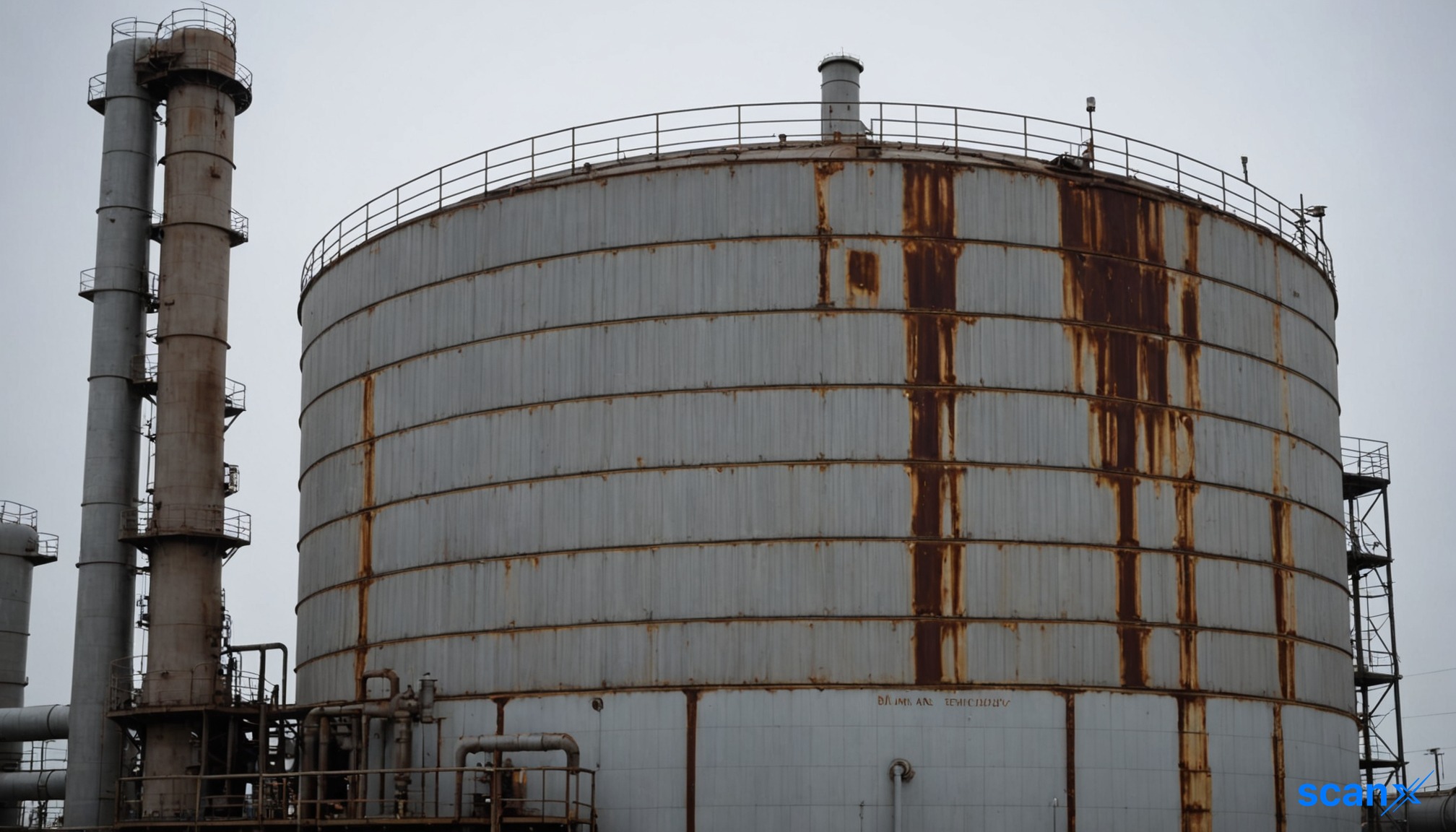
*this image is generated using AI for illustrative purposes only.
Petrobras Brasileiro (NYSE: PBR) reported record second-quarter 2026 financial results, achieving the highest recurring net profit and gross profit in its history. The company produced 2.7 million barrels of oil per day, surpassing its target by 200,000 barrels.
The results were driven by operational efficiency and increased production rather than record-high oil prices. Brent crude averaged above $104 per barrel, a level not among the company's ten highest historical prices. Despite this, adjusted EBIT excluding one-off events reached $20 billion, up 70% quarter-on-quarter and nearly double the figure from 12 months ago.
Production and Refining Highlights
Oil production rose 15% year-on-year, equivalent to 350,000 additional barrels. Key contributors included the ramp-up of platforms P78 and P79, with P78 producing 120,000 barrels and Alexandre de Gusmão at the Mero field producing 100,000 barrels. Both have capacities of 180,000 barrels per day.
The Almirante Tamandaré FPSO in Búzios reached peak production of 270,000 barrels per day, exceeding its original capacity of 225,000 barrels. Six other platforms are also operating above nameplate capacities, adding more than 100,000 barrels per day without additional construction investment.
In refining, utilization factors surpassed 100%, reaching a record 101% FUT. This efficiency allowed the company to reduce diesel imports by 40% compared to the previous quarter while increasing byproduct production by 6%. Oil exports increased by 12% quarter-on-quarter.
| Metric | Q2 2026 | Change |
|---|---|---|
| Oil Production | 2.7 million bpd | +15% YoY |
| Adjusted EBIT | $20 billion | +70% QoQ |
| Operating Cash Flow | $12.3 billion | +50% QoQ |
| Refinery Utilization | >100% | Record high |
Financial Performance and Debt Management
Gross profit for the quarter was $19.5 billion, the highest in company history. Operating cash flow grew nearly 50% to $12.3 billion. The company paid $88.6 billion in taxes and government take, an increase of approximately $22 billion versus the second quarter of last year.
Petrobras repaid loans and financing totaling $2.9 billion, including $1.4 billion in bank market transactions and $700 million in bond redemptions. Contract renegotiations for rig charters are expected to generate over $1 billion in cash flow savings through 2035. Gross debt ended at $70.8 billion, with net debt at $60.4 billion. The company maintains its expectation of converging gross debt to $65 billion.
What the Numbers Show
The divergence between Brent prices and financial results highlights operational leverage. While Brent was not at historical highs, the 70% jump in adjusted EBIT and record net profit were driven primarily by volume growth (15% YoY) and cost discipline. The ability to increase production by 100,000+ barrels from existing assets without new capital expenditure significantly boosted margins, demonstrating that value creation is increasingly coming from asset optimization rather than just new project additions.
Outlook and Investments
Capital expenditure for Q2 was $5.3 billion, up 4% from Q1. Total investment for the first half of the year reached $10.4 billion, with over 80% focused on exploration and production. The company plans to bring forward deliveries for platforms P80, P82, and P83. P80 sailaway is scheduled for Q3 2026, with production potentially starting in Q1 2027. A new gas discovery in Colombia was announced, aligning with international expansion strategies in Africa and Mexico.
Operating expenses for the first half totaled $11.7 billion, slightly above plan due to higher freight, logistics costs, and exchange rate effects. Management noted that expenses may exceed the full-year projection of $20.2 billion if global logistics costs and exchange rates remain elevated. The company also addressed Braskem's potential legal reorganization, stating it is evaluating options under a new shareholders' agreement following an injunction ending October 24.

How might the potential overrun in operating expenses due to elevated global logistics costs impact Petrobras's ability to maintain its gross debt convergence target of $65 billion?
What are the specific risks associated with accelerating the sailaway and production timelines for platforms P80, P82, and P83, particularly regarding supply chain constraints?
How will the resolution of Braskem's legal reorganization and the new shareholders' agreement affect Petrobras's consolidated financial reporting and strategic focus on its petrochemical segment?
 15
15







 Access Market Heat-map & Insights
  Create, Save & Share your Screener
  Use 200+ Screening Filters





