

Permanent Magnets revenue rises 19% as Alloys division gains traction in Q1FY27


Permanent Magnets Limited posted a 19% revenue surge to ₹63.23 crore in Q1FY27, aided by new capacity in the Alloys division. Despite top-line growth, net profit dropped 14% to ₹6.25 crore as rising material costs and finance charges squeezed margins. Management highlighted ongoing CAPEX projects in Quantum Magnetics and Relays as future growth drivers.



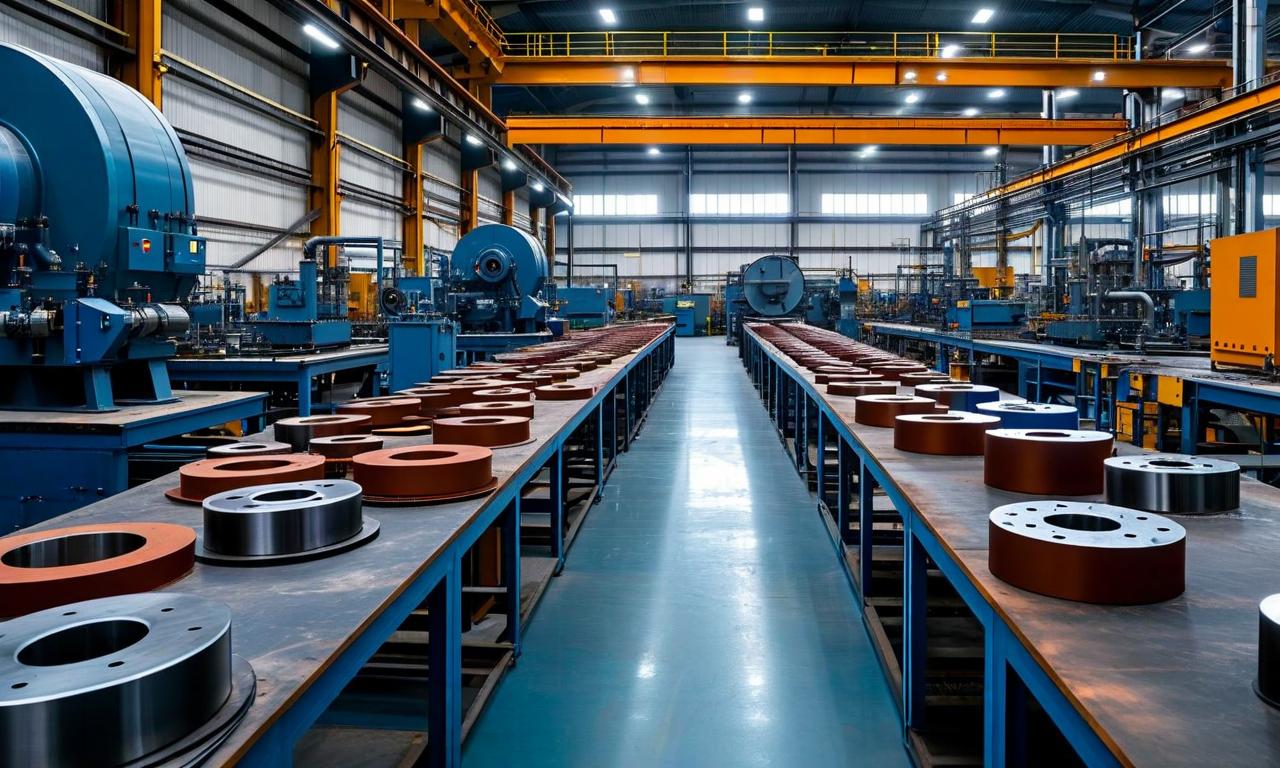
*this image is generated using AI for illustrative purposes only.
Permanent Magnets Limited reported a 19% year-on-year rise in standalone revenue from operations to ₹63.23 crore for the quarter ended June 30, 2026 (Q1FY27), driven by strong contributions from its Alloys division following new capacity commissioning. Despite the top-line growth, net profit declined by 14% to ₹6.25 crore from ₹7.28 crore in Q1FY26, as rising input costs and increased finance charges compressed margins. The divergence between revenue expansion and profit contraction underscores the impact of higher operational expenses that could not be fully passed on to customers.
The Board of Directors approved the unaudited financial results on August 04, 2026, pursuant to Regulation 33 of the SEBI (Listing Obligations & Disclosure Requirements) Regulations, 2015. The figures were prepared in accordance with Ind AS and reviewed by statutory auditors Jayesh Sanghrajka and Co LLP, who issued an unmodified limited review report. In compliance with Regulation 47, the company published the results on its website and submitted advertisement details to the Bombay Stock Exchange.
Financial Performance
Revenue growth was broad-based, with standalone gross sales reaching ₹63.23 crore compared to ₹53.16 crore in Q1FY26. Consolidated revenue stood at ₹63.23 crore, up from ₹53.55 crore in the year-ago period. EBITDA rose to ₹11.93 crore from ₹11.15 crore; however, EBITDA margin contracted to 19% from 21%, reflecting the impact of higher input and operating costs. Cost of materials consumed rose significantly to ₹35.49 crore (standalone) from ₹27.29 crore, eroding gross margins, while employee benefits expenses also increased to ₹4.11 crore from ₹3.31 crore.
The table below summarises key financial metrics for the quarter:
| Metric: | Standalone Q1FY27 | Standalone Q1FY26 | Consolidated Q1FY27 | Consolidated Q1FY26 |
|---|---|---|---|---|
| Revenue from Operations: | ₹63.23 crore | ₹53.16 crore | ₹63.23 crore | ₹53.55 crore |
| Net Profit: | ₹6.25 crore | ₹7.28 crore | ₹3.80 crore | ₹6.17 crore |
| Earnings Per Share (Basic): | ₹7.27 | ₹8.47 | ₹4.42 | ₹7.17 |
| Total Income: | ₹64.05 crore | ₹54.53 crore | ₹64.16 crore | ₹54.79 crore |
EBITDA performance details are captured below:
| Metric: | Q1FY27 | Q1FY26 |
|---|---|---|
| EBITDA: | ₹11.93 crore | ₹11.15 crore |
| EBITDA Margin: | 19% | 21% |
Finance costs emerged as a key pressure point, particularly in the consolidated accounts. Standalone finance costs were ₹1.12 crore, up from ₹0.57 crore in Q1FY26. In the consolidated statement, finance costs nearly quadrupled to ₹2.37 crore from ₹0.62 crore, directly impacting the bottom line. Other expenses also rose to ₹14.01 crore (standalone) from ₹11.87 crore, while depreciation and amortization increased to ₹3.11 crore from ₹2.16 crore.
Strategic Updates
Sharad Taparia, Managing Director, attributed the revenue growth to a favourable product mix and the commercial contribution from the Alloys division, which began operations after commissioning new capacity in Q4FY26. The company continues to engage with customers across Oil & Gas, Aerospace, and other sectors. Taparia noted that the Relays project is progressing towards commercial business in the second half of the financial year. Additionally, Phase 2 CAPEX for Quantum Magnetics, covering block cutting, machining, and surface treatment, remains on track for commissioning in Q3FY27.
Legal Proceedings Update
The company disclosed that the Honourable Bombay High Court has granted an interim stay order against the winding-up order passed against the company on April 15, 2015. Permanent Magnets Limited has deposited ₹0.19 crore with interest as per the directions of the High Court. The statutory auditors drew specific attention to this legal proceeding in their review report, noting that the report remains unmodified regarding this matter.
What the Numbers Show
The divergence between revenue growth and profit contraction highlights margin compression in Q1FY27. While top-line growth of 19% indicates healthy demand for engineering and current sensing applications, the contraction in EBITDA margin to 19% from 21% resulted in lower net margins. Standalone net margin declined to approximately 9.90% from 13.70% in the previous year. The sharp rise in consolidated finance costs suggests increased debt servicing obligations at the group level, which disproportionately affected consolidated profitability compared to standalone figures.
Historical Stock Returns for Permanent Magnets
| 1 Day | 5 Days | 1 Month | 6 Months | 1 Year | 5 Years |
|---|---|---|---|---|---|
| -0.23% | -0.88% | -1.08% | +4.93% | +4.93% | +4.93% |

How will the upcoming commissioning of Phase 2 CAPEX for Quantum Magnetics in Q3FY27 impact the company's cost structure and margin recovery trajectory?
What specific pricing strategies or hedging mechanisms is Permanent Magnets Limited implementing to mitigate the impact of rising input costs on future EBITDA margins?
Will the commercialization of the Relays project in the second half of FY27 provide sufficient high-margin revenue to offset the current pressure from increased finance costs?
 16
16









 Access Market Heat-map & Insights
  Create, Save & Share your Screener
  Use 200+ Screening Filters





