

JBS forms $5B joint venture with Indonesia’s Danantara for Asia protein expansion


JBS and Indonesia's sovereign wealth fund unit Danantara are forming a joint venture to expand protein production in Asia-Pacific. The deal includes a $2.5 billion equity commitment from Danantara and planned $2.5 billion in debt, targeting markets with 745 million people.

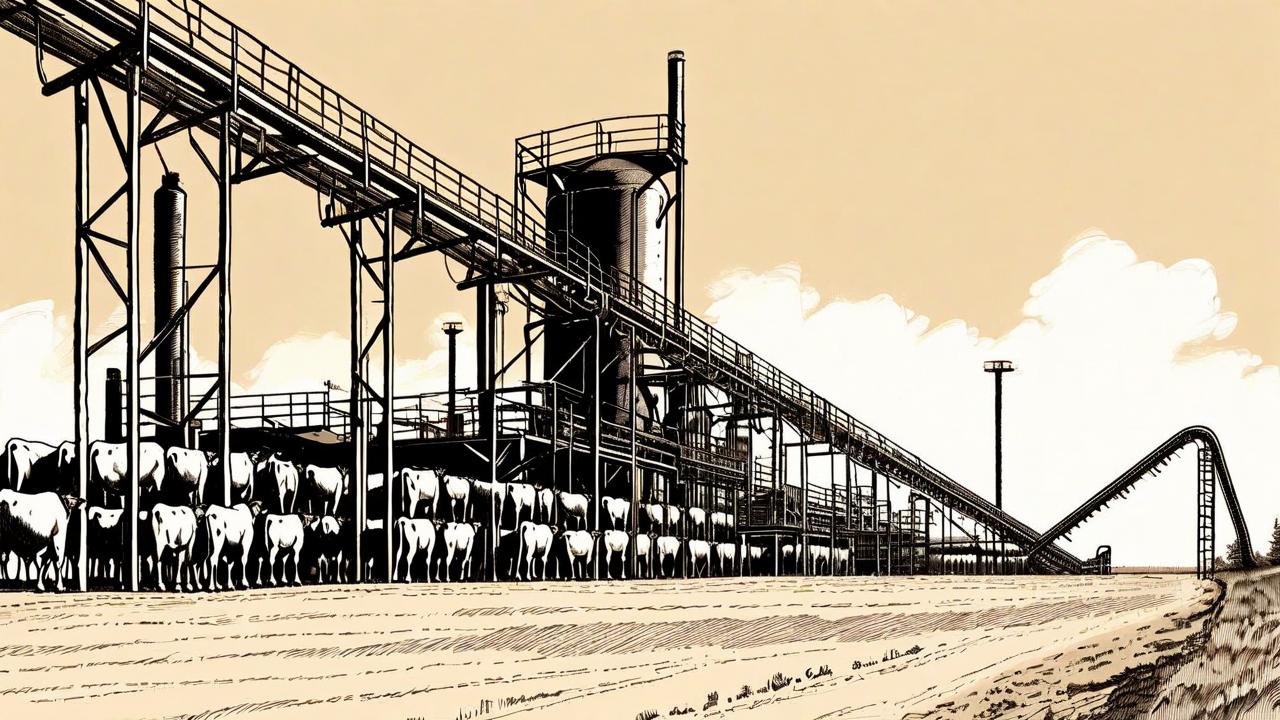

*this image is generated using AI for illustrative purposes only.
JBS USA Holding Lux S.à.r.l. ("JBS Holding") and PT Danantara Investment Management, the investment arm of Indonesia’s sovereign wealth fund ("DIM"), have entered into a partnership to pursue investment opportunities in the protein production sector in Indonesia, other South-East Asian markets, Australia and New Zealand. This strategic alliance targets regions accounting for approximately 745 million people, or 9.2% of the global population, aiming to expand production capacity through greenfield, brownfield, and acquisition strategies.
The transaction structure centers on a wholly-owned Dutch holding company (the "Joint Venture Company"). JBS will contribute 100% of its equity interest in its Australia and New Zealand businesses into this entity prior to completion. DIM will subscribe for 25% of the shares in the Joint Venture Company for an aggregate investment of USD 2,500,000,000. This investment begins with USD 800,000,000 at completion, representing approximately 9.64% of the shares, with the remainder invested over three years. Following the full equity injection, the Joint Venture Company is expected to raise up to USD 2,500,000,000 of external debt financing, bringing the partnership’s expected aggregate capital raise to USD 5,000,000,000.
Governance and Share Adjustment
The Joint Venture Company will be governed by a one-tier board of up to seven directors. From completion, this board will comprise two executive directors nominated by JBS and five non-executive directors (three from JBS and two from DIM). For governance and economic interest purposes during the first three years following completion, DIM will be deemed to have a 25% participation, provided its actual participation is above 7.5%. After this period, governance rights will align with actual shareholdings.
A share adjustment mechanism protects DIM’s investment value. If the 2026-2027 average EBITDA of the Joint Venture Company is lower than its 2025 EBITDA after DIM concludes its investment, DIM is entitled to compensatory shares. However, DIM’s aggregate participation shall not exceed 30% as a result of this adjustment. Certain material corporate decisions, including new share issuances, restructurings, and debt incurrence above agreed leverage ratios, require DIM’s affirmative vote.
Investment Strategy and Exit Provisions
Proceeds from the DIM Investment will follow an Acquisition Plan prepared by the Board. For the first two years post-completion, funds may only finance greenfield investments or acquisitions in Indonesia’s protein sector. Thereafter, the remaining USD 1,700,000,000 commitment can target opportunities across Southeast Asia, Australia, and New Zealand, including capital expenditure on greenfield or brownfield projects.
The Parties have agreed to a mutual five-year lock-up on their respective shares. Upon expiration, customary transfer arrangements apply, including drag-along rights for JBS and tag-along rights for DIM. The Parties intend to pursue an initial public offering (IPO) of the Joint Venture Company. If no IPO occurs after the sixth anniversary of completion, DIM has the right to exchange its shares for newly issued JBS shares. This Exchange Right expires at the earlier of 12 years after completion or an IPO. The value of exchanged shares will be based on the Joint Venture Company’s LTM EBITDA multiplied by JBS’s EBITDA multiple, with share counts determined by JBS’s weighted average NYSE price over the preceding 90 trading days.

How might the requirement for DIM's affirmative vote on debt incurrence impact the Joint Venture Company's agility in pursuing time-sensitive acquisition opportunities in Southeast Asia?
What are the potential risks to JBS if the Joint Venture Company fails to achieve an IPO within six years, forcing the execution of DIM's exchange right for JBS shares?
How could the share adjustment mechanism, which allows DIM to receive compensatory shares if EBITDA declines, influence management's short-term operational decisions versus long-term strategic investments?
 20
20





 Create Custom Screeners
  Access 200+ Pre-built Filters
  Use 50+ Readymade Screener





