JBS appoints Wesley Batista Filho as Global CEO effective January 2027

scanx
Reviewed by
Anirudha BScanX News Team
Key Highlights

JBS N.V. announced the appointment of Wesley Batista Filho as Global CEO effective January 2027, succeeding Gilberto Tomazoni who moves to Vice Chairman and Senior Advisor. The transition follows Tomazoni's tenure which saw revenue grow from US$49.7 billion to US$86.2 billion.

powered bylight_fuzz_icon
47935111

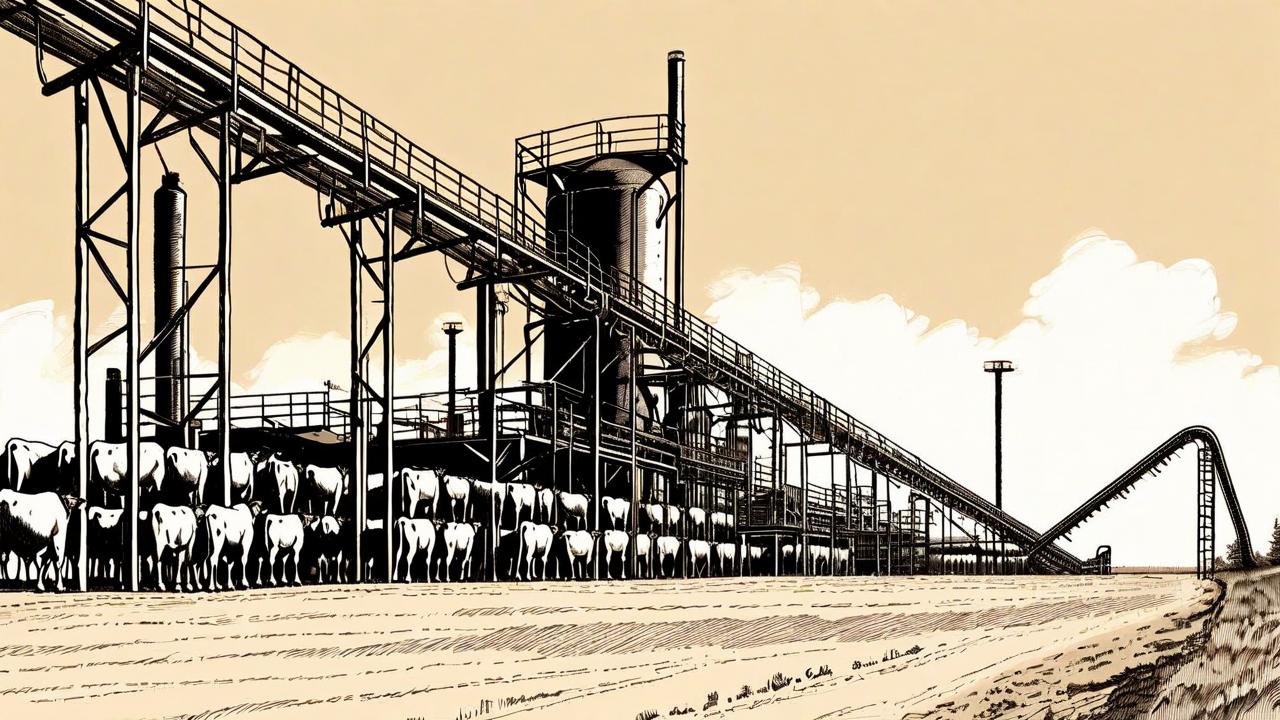
*this image is generated using AI for illustrative purposes only.

JBS N.V. announced on Aug. 10, 2026, that Wesley Batista Filho will assume the role of Global CEO, effective January 2027, marking a planned leadership transition for the global food company. Gilberto Tomazoni, the current Global CEO, will step down from the executive role after 14 years with the company, including eight years as CEO, and will transition to Vice Chairman of the Board and Senior Advisor. Tomazoni will oversee the leadership transition over the next five months to ensure continuity in operations and strategy.

The appointment reflects JBS’s commitment to internal succession planning, leveraging Batista Filho’s extensive experience across the company’s global operations. Batista Filho began his career at JBS 15 years ago and has held key leadership positions, including CEO of JBS Brazil, President of Seara, and, since 2023, CEO of JBS USA. His promotion follows a career trajectory that includes leading JBS Canada, JBS USA Fed Beef, and the company’s global operations as Global President of Operations.

During Tomazoni’s tenure as Global CEO, JBS reported significant financial growth and strategic expansion. Revenue grew 73%, increasing from US$49.7 billion to US$86.2 billion. The company expanded into new protein categories, strengthened its portfolio of branded and value-added products, invested in biotechnology, achieved investment-grade status, and completed its listing on the New York Stock Exchange. These developments positioned JBS for its next phase of growth under new leadership.

Leadership Transition Details

Executive Current Role New Role Effective Date
Wesley Batista Filho CEO, JBS USA Global CEO January 2027
Gilberto Tomazoni Global CEO Vice Chairman & Senior Advisor Post-transition (approx. Jan 2027)

Tomazoni will continue to serve as Chairman of the Board of Pilgrim’s Pride Corporation (PPC) and will become Chairman of the J&F Institute, an institution dedicated to developing business leaders. Batista Filho, currently overseeing JBS USA—the company’s largest revenue platform—will take charge of global operations. JBS USA generates more than half of the company’s total revenue and operates more than 60 production facilities across 31 states with 70,000 team members.

Strategic Outlook

Wesley Batista Filho emphasized the importance of maintaining the company’s core values and operational excellence during the transition. He stated that priorities remain focused on supporting team members, serving customers and producer partners, and creating long-term value for shareholders. Batista Filho highlighted his decade-long working relationship with Tomazoni and their shared vision for the company’s future.

Tomazoni expressed confidence in Batista Filho’s ability to guide JBS through its next chapter, citing his deep understanding of the business, culture, and people. Tomazoni noted that Batista Filho led JBS USA to important strategic advances over the past three years, building a stronger and more competitive business. The leadership change aims to build on the strong foundation established during Tomazoni’s tenure while pursuing new opportunities for growth and value creation.

How might Wesley Batista Filho's extensive background in JBS USA influence the company's strategic prioritization of its North American operations versus other global markets?

What specific operational or cultural adjustments can investors expect as JBS transitions from Tomazoni's long-term leadership to Batista Filho's management style?

Will the upcoming leadership change impact JBS's recent momentum in achieving investment-grade status and its trajectory for further financial de-risking?

like16
dislike

JBS forms $5B joint venture with Indonesia’s Danantara for Asia protein expansion

scanx
Reviewed by
Naman SScanX News Team
Key Highlights

JBS and Indonesia's sovereign wealth fund unit Danantara are forming a joint venture to expand protein production in Asia-Pacific. The deal includes a $2.5 billion equity commitment from Danantara and planned $2.5 billion in debt, targeting markets with 745 million people.

powered bylight_fuzz_icon
47664717

*this image is generated using AI for illustrative purposes only.

JBS USA Holding Lux S.à.r.l. ("JBS Holding") and PT Danantara Investment Management, the investment arm of Indonesia’s sovereign wealth fund ("DIM"), have entered into a partnership to pursue investment opportunities in the protein production sector in Indonesia, other South-East Asian markets, Australia and New Zealand. This strategic alliance targets regions accounting for approximately 745 million people, or 9.2% of the global population, aiming to expand production capacity through greenfield, brownfield, and acquisition strategies.

The transaction structure centers on a wholly-owned Dutch holding company (the "Joint Venture Company"). JBS will contribute 100% of its equity interest in its Australia and New Zealand businesses into this entity prior to completion. DIM will subscribe for 25% of the shares in the Joint Venture Company for an aggregate investment of USD 2,500,000,000. This investment begins with USD 800,000,000 at completion, representing approximately 9.64% of the shares, with the remainder invested over three years. Following the full equity injection, the Joint Venture Company is expected to raise up to USD 2,500,000,000 of external debt financing, bringing the partnership’s expected aggregate capital raise to USD 5,000,000,000.

Governance and Share Adjustment

The Joint Venture Company will be governed by a one-tier board of up to seven directors. From completion, this board will comprise two executive directors nominated by JBS and five non-executive directors (three from JBS and two from DIM). For governance and economic interest purposes during the first three years following completion, DIM will be deemed to have a 25% participation, provided its actual participation is above 7.5%. After this period, governance rights will align with actual shareholdings.

A share adjustment mechanism protects DIM’s investment value. If the 2026-2027 average EBITDA of the Joint Venture Company is lower than its 2025 EBITDA after DIM concludes its investment, DIM is entitled to compensatory shares. However, DIM’s aggregate participation shall not exceed 30% as a result of this adjustment. Certain material corporate decisions, including new share issuances, restructurings, and debt incurrence above agreed leverage ratios, require DIM’s affirmative vote.

Investment Strategy and Exit Provisions

Proceeds from the DIM Investment will follow an Acquisition Plan prepared by the Board. For the first two years post-completion, funds may only finance greenfield investments or acquisitions in Indonesia’s protein sector. Thereafter, the remaining USD 1,700,000,000 commitment can target opportunities across Southeast Asia, Australia, and New Zealand, including capital expenditure on greenfield or brownfield projects.

The Parties have agreed to a mutual five-year lock-up on their respective shares. Upon expiration, customary transfer arrangements apply, including drag-along rights for JBS and tag-along rights for DIM. The Parties intend to pursue an initial public offering (IPO) of the Joint Venture Company. If no IPO occurs after the sixth anniversary of completion, DIM has the right to exchange its shares for newly issued JBS shares. This Exchange Right expires at the earlier of 12 years after completion or an IPO. The value of exchanged shares will be based on the Joint Venture Company’s LTM EBITDA multiplied by JBS’s EBITDA multiple, with share counts determined by JBS’s weighted average NYSE price over the preceding 90 trading days.

How might the requirement for DIM's affirmative vote on debt incurrence impact the Joint Venture Company's agility in pursuing time-sensitive acquisition opportunities in Southeast Asia?

What are the potential risks to JBS if the Joint Venture Company fails to achieve an IPO within six years, forcing the execution of DIM's exchange right for JBS shares?

How could the share adjustment mechanism, which allows DIM to receive compensatory shares if EBITDA declines, influence management's short-term operational decisions versus long-term strategic investments?

like19
dislike

More News on JBS NV