

IonQ appoints Ball, Baxter to board to aid quantum scaling


- IonQ appoints Dr. Eric Ball and Timothy Baxter to its board of directors
- Appointments aim to support rapid scalability in quantum manufacturing
- Ball brings 40 years of financial experience, including $52 billion financing at Oracle
- Baxter joins after SkyWater Technology acquisition, bringing 40 years of tech leadership
- IonQ recently set a world record with 99.99% two-qubit gate fidelity in 2025

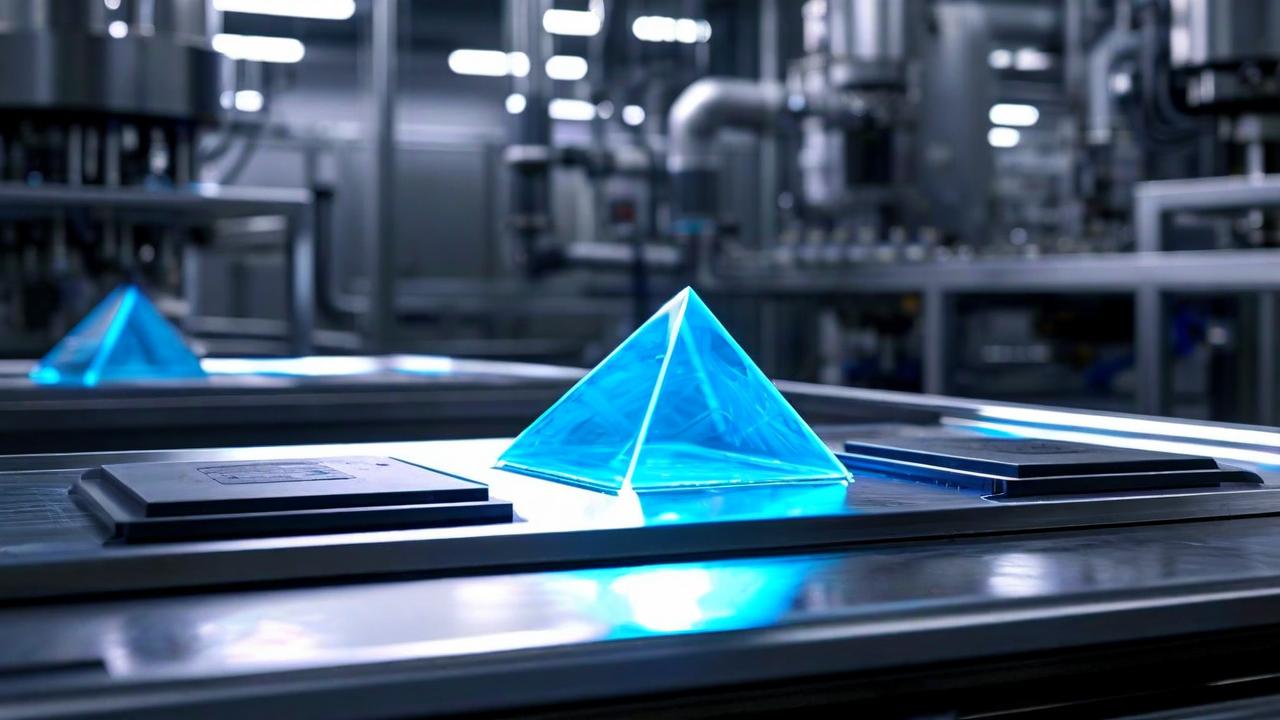

*this image is generated using AI for illustrative purposes only.
IonQ (NYSE: IONQ) appointed Dr. Eric Ball and Timothy Baxter to its board of directors to support the company’s next phases of growth in quantum computing.
The appointments aim to bolster IonQ’s transition toward rapid scalability in quantum manufacturing and the integration of its full-stack platform components.
Board Additions
IonQ Chairman and CEO Niccolo de Masi stated that the company is making a leap to rapid scalability in quantum computing manufacturing while integrating all components of its unique quantum platform.
De Masi noted that as the leading quantum merchant supplier, IonQ has significant responsibilities and expects to make advances due to its pioneering vertical integration. He added that Ball and Baxter bring complementary insights and firsthand expertise to the board and leadership team.
Dr. Eric Ball
Dr. Eric Ball brings nearly 40 years of experience in senior financial roles at public companies, including AT&T, Cisco, and Flextronics. He served as Senior Vice President and Treasurer at Oracle for 10 years, where he arranged $52 billion of financing and served on M&A teams for over 100 acquisitions.
Ball holds a PhD in Management Economics, has taught economics at three universities, authored two books, and serves on multiple corporate and non-profit boards.
Timothy Baxter
Timothy Baxter served as Chairman of the SkyWater Technology Board of Directors until the company’s recently completed acquisition by IonQ. He has over 40 years of experience leading major technology companies, including senior management roles at AT&T, Sony, and Samsung, where he rose to CEO of Samsung North America.
Baxter helped launch next-generation technologies including 5G, HDTV, and Blu-ray. He currently serves on several private and publicly traded boards.
Company Context
IonQ describes itself as the world’s leading full-stack quantum platform and foundry, delivering integrated solutions across computing, networking, sensing, and security. Its newest generation of systems, the IonQ Tempo, follows earlier systems that helped customers such as Amazon Web Services, AstraZeneca, and NVIDIA achieve a 20x performance increase over previous quantum solutions.
In 2025, IonQ achieved 99.99% two-qubit gate fidelity, setting a world record in quantum computing performance. The company operates across North America, Latin America, EMEA, and APAC, with services available through major cloud providers since 2021.

How will Dr. Eric Ball's extensive M&A experience influence IonQ's strategy for potential future acquisitions to accelerate its vertical integration?
What specific manufacturing challenges does IonQ anticipate overcoming with Timothy Baxter's leadership to achieve the promised rapid scalability in quantum hardware production?
How might the addition of these board members impact IonQ's financial planning and capital allocation strategies as it transitions from R&D focus to mass production?
 15
15













 Create Custom Screeners
  Access 200+ Pre-built Filters
  Use 50+ Readymade Screener





