

Indian Oil shareholders pass all resolutions at 67th AGM


- Indian Oil shareholders passed all nine resolutions at its 67th AGM on August 31, 2026
- Final dividend of ₹1.25 per share for FY26 received 99.54% support from voters
- Promoter group voted in favour of all resolutions; public non-institutions showed >99% support
- Institutional dissent reached ~42% against reappointment of rotating directors
- MoA amendments approved to include hydrogen, carbon credits, and data centers



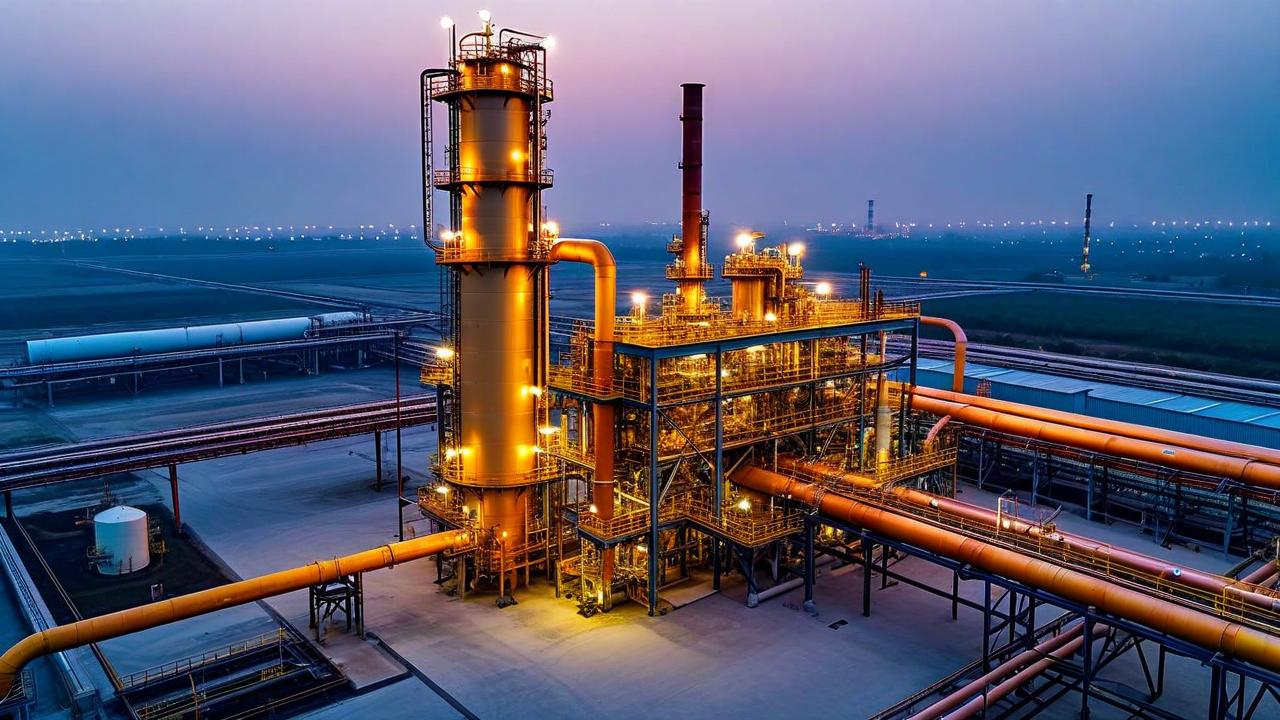
*this image is generated using AI for illustrative purposes only.
Indian Oil Corporation Limited shareholders approved all nine resolutions at its 67th annual general meeting held on August 31, 2026. The meeting concluded with a final dividend declaration of ₹1.25 per equity share for FY26 receiving near-unanimous support.
The session, chaired by A. S. Sahney, ran from 10:30 am to 1:50 pm via video conferencing. Management provided an overview of performance for FY25-26 and the first quarter of FY26-27, addressing capital expenditure and alternative energy initiatives.
Voting Participation and Results
The record date for voting was August 24, 2026, with a total shareholder base of 2,929,529. Remote e-voting was conducted from August 27 to August 30, 2026. Only one promoter group member and 241 public shareholders attended the meeting through video conferencing, indicating high reliance on remote e-voting.
CS Umesh S. Pawaskar was appointed as the scrutinizer. The Comptroller and Auditor General (CAG) provided nil comments, while auditors issued an unmodified report.
Key Resolutions Approved
Shareholders voted on nine ordinary and one special resolution. All resolutions were passed with the requisite majority.
| Resolution Description | Type | Votes In Favour (%) |
|---|---|---|
| Adoption of audited financial statements for year ended March 31, 2026 | Ordinary | 99.24% |
| Declaration of final dividend of ₹1.25 per equity share for FY25-26 | Ordinary | 99.54% |
| Reappointment of directors Rashmi Govil and Arvind Kumar retiring by rotation | Ordinary | 91.97% |
| Appointment of Saumitra P. Srivastava as Whole-time Director (Marketing) | Ordinary | 93.62% |
| Appointment of A. Amarnath as Government Nominee Director | Ordinary | 92.08% |
| Approval of material related-party transactions with Petronet LNG Ltd | Ordinary | 98.08% |
| Ratification of cost auditor remuneration for FY ending March 31, 2027 | Ordinary | 99.54% |
| Amendment to Memorandum and Articles of Association | Special | 99.99% |
Scope of Constitutional Amendments
The approved MoA amendments bifurcate the object clause into Main Objects and Ancillary Objects, in line with the Companies Act 2013. New business fields have been inserted to reflect prevailing scenarios and expansion plans. These include bio-refinery, hydrogen and ammonia, specialty chemicals, critical minerals, trading of energy commodities and their derivatives, carbon markets, carbon credits, green certificates, data centers, digital and software services, yarns, fertilizers, and project management engineering services.
Additionally, shareholders adopted a new set of Articles of Association to replace the existing ones, ensuring alignment with the Companies Act 2013 and applicable regulatory frameworks.
What the Numbers Show
While promoter group support remained at 100% across all non-related-party resolutions, institutional dissent was visible in governance matters. Public institutions voted against the reappointment of directors Rashmi Govil and Arvind Kumar by approximately 41.89%, and against the appointment of Saumitra P. Srivastava by 33.24%. Despite this dissent, the resolutions passed comfortably due to overwhelming support from public non-institutional shareholders, who voted in favour by more than 99.98% in both cases.
Historical Stock Returns for Indian Oil Corporation
| 1 Day | 5 Days | 1 Month | 6 Months | 1 Year | 5 Years |
|---|---|---|---|---|---|
| -0.34% | +1.05% | -0.92% | -7.92% | -7.22% | 0.0% |

How will Indian Oil's expansion into carbon markets and green certificates impact its revenue diversification strategy amidst global energy transition trends?
What specific capital expenditure plans has management outlined for the newly approved bio-refinery and hydrogen initiatives in the upcoming fiscal year?
How might the institutional dissent regarding director appointments influence future corporate governance reforms or board composition at Indian Oil?
 18
18












 Access 50+ Readymade Screeners
  Use 200+ Custom Filters
  Get Full Market Insights





