

Hesai Group Q2 net income rises 60% YoY to RMB70.6 million


Hesai Group posted Q2 2026 net revenues of RMB860.8 million, up 21.9% YoY, with net income rising 60% to RMB70.6 million. Operating income dropped 90.4% due to margin compression, but non-operating gains supported bottom-line growth. The company raised its 2026 SGI revenue guidance to RMB200-300 million and expects Q3 revenues of RMB1,100-1,150 million.



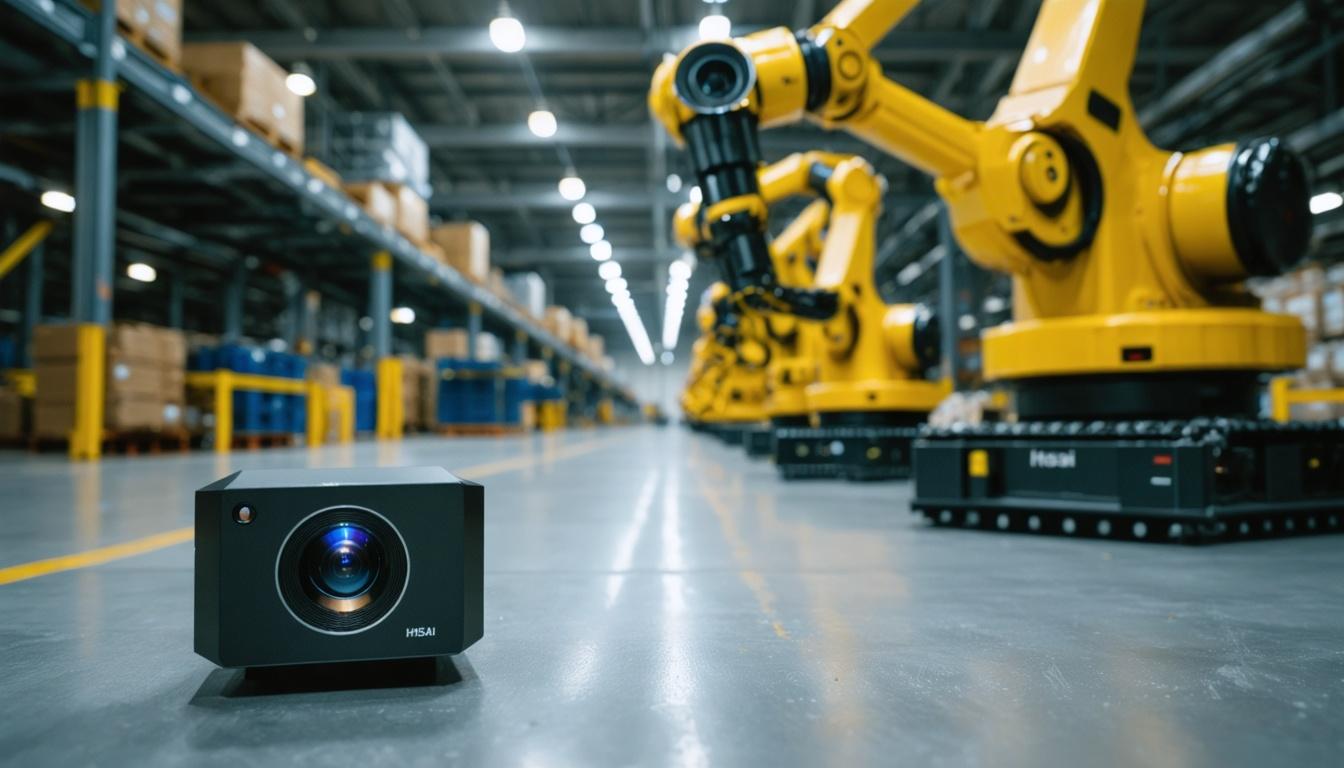
*this image is generated using AI for illustrative purposes only.
Hesai Group (NASDAQ: HSAI, HKEX: 2525) reported net revenues of RMB860.8 million (US$126.9 million) for the second quarter of 2026, marking a 21.9% increase from RMB706.4 million in the same period last year. The Shanghai-based lidar manufacturer delivered total shipments of 628,275 units, driven by robust demand across its autonomous driving assistance systems (ADAS) and robotics segments.
The company achieved net income of RMB70.6 million, up 60.0% year-over-year from RMB44.1 million. This marks Hesai's fifth consecutive quarter of GAAP profitability. However, adjusted earnings per share (EPS) fell 85.7% to $0.01 from $0.07 in the prior-year period. Non-GAAP net income rose 38.3% to RMB101.3 million, reflecting strong operational performance despite continued investments in its emerging business lines.
Shares of Hesai were down 6.20% at $16.95 during premarket trading on Tuesday following the results release.
Operational Highlights
Total lidar shipments grew 78.4% year-over-year, with distinct growth trajectories across product categories:
- ADAS lidar shipments: Reached 485,904 units, up 60.1% from 303,564 units in Q2 2025.
- Robotics lidar shipments: Surged 193.4% to 142,371 units, compared to 48,531 units in the prior-year period.
Product revenues accounted for the vast majority of top-line growth, rising 22.9% to RMB859.7 million. Service revenues declined 84.3% to RMB1.1 million, primarily due to lower non-recurring engineering service income.
CEO Yifan "David" Li said Hesai's core lidar business continues to scale as demand expands beyond vehicles into humanoid robots and other intelligent machines. The company has secured new orders from Unitree, Robbyant, Galbot, Galaxea, Dexmal and other customers.
Financial Performance
| Metric | Q2 2026 | Q2 2025 | Change |
|---|---|---|---|
| Net Revenues | RMB860.8 million | RMB706.4 million | +21.9% |
| Gross Margin | 40.1% | 42.5% | -240 bps |
| Operating Income | RMB2.2 million | RMB22.9 million | -90.4% |
| Net Income | RMB70.6 million | RMB44.1 million | +60.0% |
Gross margin contracted to 40.1% from 42.5% in the prior-year period, attributed to a higher revenue contribution from products with relatively lower margins. Cost of revenues increased 27.0% to RMB515.6 million, outpacing revenue growth. Research and development expenses rose 16.0% to RMB231.2 million, driven by incremental investments in the company's Strategic Growth Initiatives (SGI).
What the Numbers Show
While GAAP operating income fell sharply by 90.4% to RMB2.2 million, the company's bottom-line profitability expanded significantly. The divergence between operating results and net income is driven by substantial non-operating gains. Interest income surged to RMB58.9 million (up from RMB21.0 million YoY) and investment income contributed RMB36.6 million, whereas these items were negligible or absent in the same period last year. These financial returns effectively offset the compression in operating margins, allowing net income to grow 60% despite the decline in core operational profitability. The drop in adjusted EPS to $0.01 highlights the disconnect between core operational efficiency and overall GAAP profitability driven by these financial items.
Strategic Growth Initiatives
Hesai reported initial revenue contributions from its SGI segment, led by robotic actuation modules. The company supplied modules to Sharpa, an AI robotics firm, with over 10,000 units delivered by the end of the quarter. Its production line is now operational, and shipments for dexterous hands are underway. Hesai expects production of full-body joints to ramp soon.
Driven by stronger-than-expected commercialization momentum, management raised its full-year 2026 SGI revenue guidance from RMB100 million to a range of RMB200-300 million. The company expects the SGI business to reach approximately US$100 million in revenues in 2027 and achieve breakeven in the same year.
Kosmo, the company's spatial intelligence platform, secured orders from humanoid robotics companies including Galbot, with initial revenues expected in the third quarter of 2026. The technology converts physical environments into reusable, AI-ready 3D assets to help bridge the gap between simulation and real-world deployment.
Business Outlook
For the third quarter of 2026, Hesai expects net revenues to be between RMB1,100 million and RMB1,150 million, representing a year-over-year increase of approximately 38% to 45%. In US dollar terms, this corresponds to an expected range of $162 million to $169 million. The outlook reflects preliminary estimates of market conditions and customer demand.
As of June 30, 2026, the company held cash reserves of RMB7,050.6 million (US$1,039.1 million), down slightly from RMB7,231.7 million at the end of the first quarter.

How sustainable is Hesai's gross margin contraction as it shifts revenue mix toward lower-margin robotics and ADAS products, and what pricing power does it retain in a competitive lidar market?
Given the sharp decline in GAAP operating income despite rising net income, will investors continue to reward the stock if core operational profitability remains weak relative to non-operating financial gains?
Can Hesai realistically achieve its raised SGI revenue guidance of RMB200-300 million for 2026, and what are the key execution risks in scaling robotic actuation modules and dexterous hands?
 15
15





 Create Custom Screeners
  Access 200+ Pre-built Filters
  Use 50+ Readymade Screener





