

Hero MotoCorp Q1 FY27: Revenue surges 36%, EV capacity doubles


Hero MotoCorp's Q1 FY27 results highlight strong revenue growth of 36% to ₹12,999 crore, driven by volume expansion and premiumization. EV business surged 151% with capacity doubling to 30,000 units/month. Despite commodity inflation pressuring gross margins, disciplined cost controls maintained healthy EBITDA margins at 13.3%.


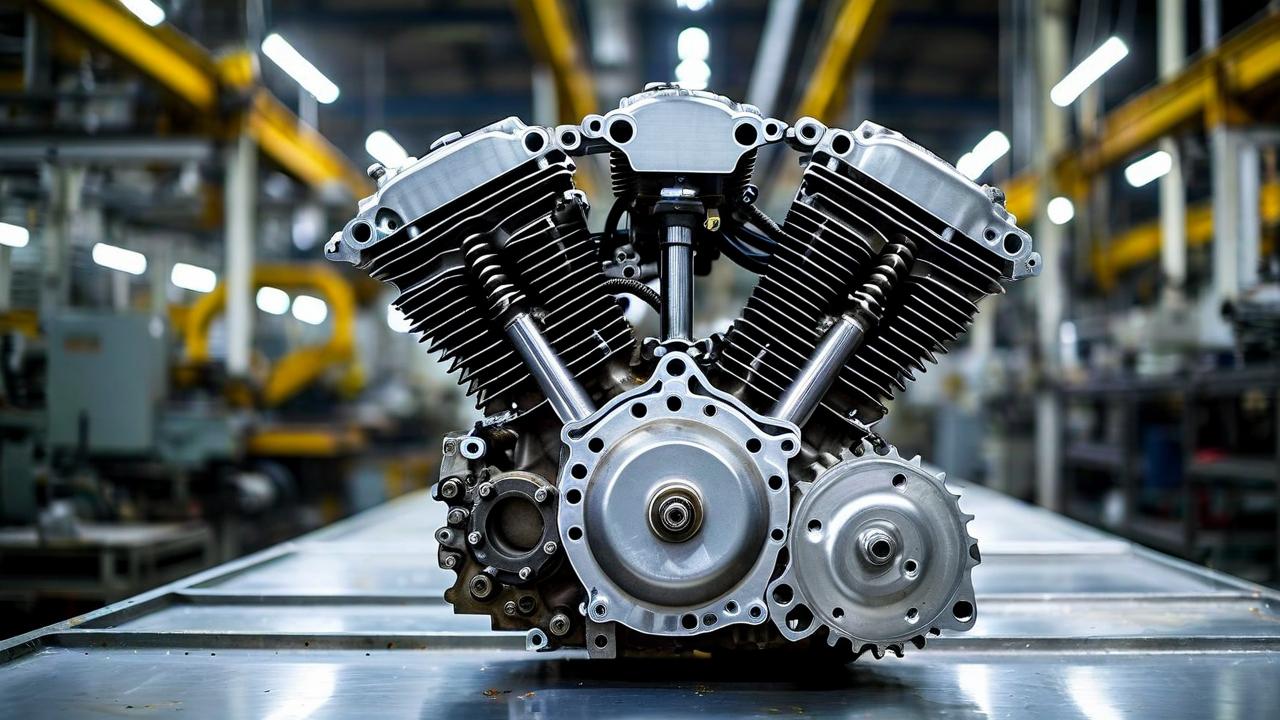
*this image is generated using AI for illustrative purposes only.
Hero MotoCorp Limited delivered a robust financial performance in the first quarter of fiscal year 2027 (Q1 FY27), reporting revenue from operations of ₹12,999 crore, a 36% year-on-year increase. Profit after tax (PAT) rose to ₹1,454 crore, while EBITDA reached ₹1,727 crore. The strong top-line growth was driven by a 23% surge in total volume, supported by premiumization and a significant shift in product mix towards electric vehicles (EVs), scooters, and global exports. Despite a 300 basis points quarter-on-quarter contraction in gross margins due to commodity inflation, disciplined cost management limited the EBITDA margin decline to 120 basis points, settling at 13.3%.
The company’s operational strategy focused on high-growth segments yielded tangible results. The EV business recorded a wholesale growth of 151%, with VIDA volumes reaching 57,000 units, up 26% quarter-on-quarter. To meet this demand, Hero MotoCorp doubled its EV manufacturing capacity from 15,000 to 30,000 units per month by early August 2026, with plans to reach 45,000 units before the end of FY27. In the internal combustion engine (ICE) segment, domestic volumes grew 18%, while global business expanded by 63%. The company gained 230 basis points of market share in ICE scooters, crossing close to 7% market share, and expanded its overall wholesale market share by 30 basis points.
Financial Performance and Margin Dynamics
| Metric | Q1 FY27 Value | YoY Change | Key Driver |
|---|---|---|---|
| Revenue from Operations | ₹12,999 crore | +36% | Mix shift to EV/Premium, Price realization |
| EBITDA | ₹1,727 crore | N/A | Volume growth, Cost savings (LEAP program) |
| EBITDA Margin | 13.3% | -120 bps (QoQ) | Commodity inflation offset by mix improvement |
| PAT | ₹1,454 crore | N/A | Strong operational leverage |
| EV Revenue Contribution | ~₹660 crore | ~5% of total | VIDA sales growth |
CFO Vivek Anand highlighted that the gross margin pressure was primarily due to a ~4.5% net commodity inflation impact triggered by geopolitical tensions in West Asia, affecting steel, aluminum, and precious metals. However, the company mitigated this through a positive mix benefit of 8%, rationalized operating expenses, and accelerated cost savings under its internal LEAP program. Other expenses reduced sequentially by 14%. Notably, the ICE portfolio’s EBITDA margin contracted by only 90 basis points to 15.9%, cushioned by strong operating leverage and a 30% growth in the profitable parts and accessories business.
Strategic Initiatives and Capacity Expansion
Hero MotoCorp continued to invest aggressively in brand building and product launches. New launches included the Super Splendor XTEC 2.0, Passion Plus Disc variant, and the premium VIDA VX2 EV scooter. The company also introduced flex-fuel variants of its Splendor and HF models, capable of running on ethanol blends up to 85%, which saw strong initial traction with nearly 5,000 units sold within two weeks of launch.
Capacity expansions were completed across key segments:
- EVs: Capacity increased from 15,000 to 30,000 units/month; Phase 2 will add another 15,000 units by Q4 FY27.
- Splendor: Added 2,000 units/day capacity.
- Scooters: Doubled Destini capacity and increased Xoom capacity by 50%.
Anuj Dua was appointed as Chief Business Officer for the Premium Business Unit, focusing on consumer experience, portfolio expansion, and merchandise. He emphasized leveraging partnerships like Harley-Davidson and MotoSports investments to drive premium segment growth.
Outlook and Analyst Observations
Looking ahead to Q2 FY27, management expects marginal input cost inflation but plans to neutralize it through continued mix improvement and cost optimization. The company remains committed to its medium-term EBITDA margin target range of 14% to 16%.
What the Numbers Show: The divergence between volume growth (23%) and revenue growth (36%) underscores Hero MotoCorp’s successful premiumization strategy. The 8% mix benefit indicates that higher-value products (EVs, scooters, premium variants) are driving disproportionate revenue contribution. Furthermore, the rapid scaling of EV capacity alongside a reduction in per-unit EBITDA loss (from ₹50,000 to ₹40,000) suggests improving unit economics, bolstered by Production Linked Incentive (PLI) benefits of ₹48 crore in Q1. With 60% of the EV portfolio now PLI-certified, structural tailwinds are expected to enhance profitability as scale increases.
Historical Stock Returns for Hero Motocorp
| 1 Day | 5 Days | 1 Month | 6 Months | 1 Year | 5 Years |
|---|---|---|---|---|---|
| +0.80% | -5.27% | -8.21% | -7.41% | -11.19% | +72.25% |

How might the planned expansion of EV capacity to 45,000 units per month impact Hero MotoCorp's ability to achieve its medium-term EBITDA margin target of 14-16% given current unit economics?
What are the potential risks to Hero MotoCorp's premiumization strategy if geopolitical tensions in West Asia persist and further drive up costs for steel and aluminum?
Could the strong initial traction of flex-fuel variants signal a structural shift in consumer preference that might accelerate the decline in traditional ICE scooter market share?
 19
19








 Access 50+ Readymade Screeners
  Use 200+ Custom Filters
  Get Full Market Insights





