

Godawari Power & Ispat files FY26 sustainability report with key ESG metrics


- Godawari Power & Ispat files FY26 BRSR with reasonable assurance from TÜV SÜD
- Total energy consumption rises to 29,138,418 million kcals from 23,312,282 million kcals
- Scope 1 GHG emissions increase to 2,319,604 metric tonnes CO2e from 1,553,940 metric tonnes
- Waste generated climbs to 1,327,724 metric tons while landfilling drops 99% to 6,309.67 metric tons
- Four employee and two worker fatalities reported in FY26 versus none in FY25

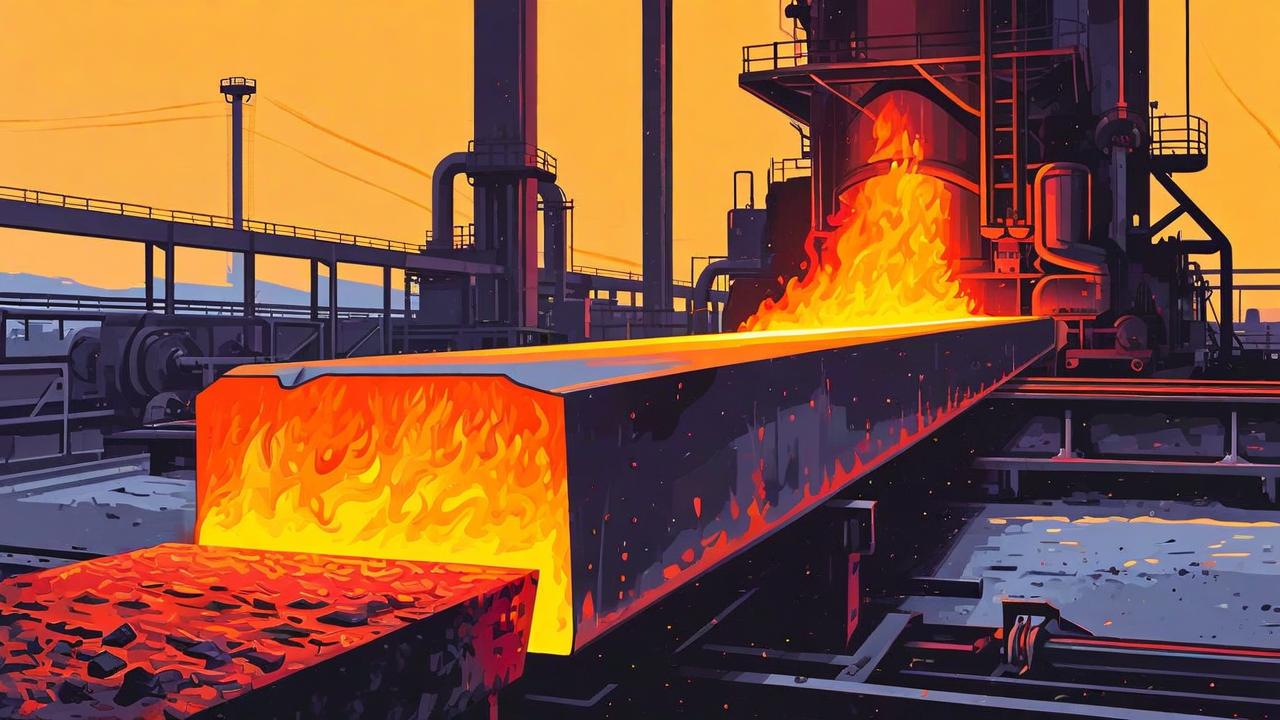

*this image is generated using AI for illustrative purposes only.
Godawari Power & Ispat has filed its Business Responsibility and Sustainability Report (BRSR) for the financial year ending March 31, 2026, with stock exchanges. The filing provides a detailed overview of the company’s environmental, social, and governance performance for FY26.
The report covers standalone operations and includes reasonable assurance from TÜV SÜD South Asia Private Limited on core attributes such as greenhouse gas emissions, water footprint, and energy intensity.
Environmental Metrics
The company reported a total energy consumption of 29,138,418 million kcals for FY26, up from 23,312,282 million kcals in FY25. Renewable sources accounted for 3,871,619 million kcals, while non-renewable sources contributed 25,266,800 million kcals. Energy intensity per rupee of turnover adjusted for Purchasing Power Parity (PPP) stood at 0.0126 in FY26, compared to 0.0103 in the previous year.
Greenhouse gas emissions data reveals:
| Parameter | Unit | FY26 | FY25 |
|---|---|---|---|
| Total Scope 1 emissions | Metric tonnes CO2e | 2,319,604 | 1,553,940 |
| Total Scope 2 emissions | Metric tonnes CO2e | 6,930 | 266,491 |
| Total Scope 1 & 2 | Metric tonnes CO2e | 2,326,534 | 1,820,431 |
Water withdrawal totaled 4,118,011 kilolitres in FY26, an increase from 3,683,124 kilolitres in FY25. The company maintains a Zero Liquid Discharge (ZLD) mechanism, resulting in no water discharge.
Waste Management
Total waste generated rose to 1,327,724 metric tons in FY26 from 1,036,725 metric tons in FY25. Of this, 803,400.90 metric tons were recovered through recycling or reuse. Landfilling decreased significantly to 6,309.67 metric tons from 617,829.11 metric tons in the prior year.
Social and Governance Highlights
The company employed 1,668 permanent employees and 5,330 workers as of March 31, 2026. Female representation among permanent employees was 1.72%. The Lost Time Injury Frequency Rate (LTIFR) was 0.25 for employees and 0.23 for workers.
Four fatalities among employees and two among workers were reported in FY26, compared to none in FY25. The company spends 0.60% of total revenue on employee well-being measures, down from 0.83% in FY25.
What the Numbers Show
A notable divergence exists between the rise in total waste generation and the sharp decline in landfilling. While total waste increased by nearly 30% to 1,327,724 metric tons, landfill disposal dropped by over 99% to just 6,309.67 metric tons. This suggests a significant shift toward recycling and other recovery operations, which accounted for 803,400.90 metric tons of waste recovery in FY26.
Historical Stock Returns for Godawari Power & Ispat
| 1 Day | 5 Days | 1 Month | 6 Months | 1 Year | 5 Years |
|---|---|---|---|---|---|
| +0.41% | -4.27% | -15.97% | -27.47% | -14.45% | +216.67% |

How will the significant increase in Scope 1 emissions and energy intensity impact Godawari Power & Ispat's ability to meet future regulatory carbon pricing or net-zero commitments?
What specific operational changes drove the 99% reduction in landfilling despite a 30% rise in total waste, and is this recycling model scalable for future capacity expansions?
Given the drop in employee well-being spending and the occurrence of fatalities, what corrective governance measures will the company implement to improve safety culture and retain talent?
 16
16







 Access Market Heat-map & Insights
  Create, Save & Share your Screener
  Use 200+ Screening Filters





