Exide Industries delivered its highest-ever quarterly revenue in Q4 FY26, driven by broad-based domestic demand growth, even as sharply rising commodity costs—particularly a dramatic surge in sulfur prices—weighed on gross margins. The company's management, speaking at the Q4 FY26 Earnings Conference Call held on May 06, 2026, outlined a resilient operating performance underpinned by tight cost controls, multiple rounds of price hikes, and continued ramp-up of its lithium-ion cell manufacturing subsidiary.
Q4 FY26 Financial Performance
Exide Industries reported overall revenue growth of 9.4% year-on-year in Q4 FY26, with domestic business sales growing 12.5% year-on-year. For the full year FY26, the company delivered 4.1% year-on-year revenue growth, with domestic business growing approximately 7.5% year-on-year. Nearly 92% of the business grew by 16% in Q4, including the entire domestic business excluding Telecom. The company maintained its EBITDA margin sequentially at 11.7%, expanding it by nearly 50 basis points year-on-year, despite commodity cost pressures.
The following table summarizes the key performance metrics for Q4 FY26:
| Metric: |
Q4 FY26 Details |
| Overall Revenue Growth (YoY): |
9.4% |
| Domestic Business Sales Growth (YoY): |
12.5% |
| Full Year FY26 Revenue Growth (YoY): |
4.1% |
| Full Year Domestic Business Growth (YoY): |
~7.5% |
| EBITDA Margin (Q4 FY26): |
11.7% |
| EBITDA Margin (Q3 FY26): |
11.7% |
| EBITDA Margin Expansion (YoY): |
~50 basis points |
| Gross Margin (Q3 FY26): |
31.60% |
| Gross Margin (Q4 FY26): |
30.10% |
| Commodity Cost Impact (Q4 FY26): |
~Rs. 150 crores (negative) |
MD & CEO Avik Roy noted that the auto OEM business recorded its second consecutive quarter of over 25% year-on-year growth, also hitting its highest-ever quarterly revenue. The Home UPS business recorded its highest-ever Q4 sales, while the Solar vertical returned to double-digit growth, crossing the Rs. 1,000 crore mark for the full year FY26. Two-wheeler and four-wheeler replacement demand maintained mid-teens growth rates. Exports and Telecom/E-Rickshaw segments, which together represent approximately 8% of revenues, continued to decline due to geopolitical tensions and the ongoing shift towards lithium-ion technology. The business mix stands at approximately 50% auto (OEM and aftermarket combined) and 50% non-auto, with a roughly 70:30 split between auto replacement and non-auto.
Commodity Cost Pressures and Price Hike Response
Commodity cost inflation emerged as a significant headwind in Q4 FY26, with a net negative impact of approximately Rs. 150 crores on material costs. The gross margin declined by approximately 90 basis points quarter-on-quarter. The most acute pressure came from sulfur prices, which have surged approximately 5x on a year-on-year basis. Management clarified that it is sulfur prices—not sulfuric acid—that have seen this dramatic rise, driven by lower capacity utilization at petrochemical refinery plants, which has reduced sulfur supply as a byproduct.
The following table details the sulfur price movement:
| Parameter: |
Details |
| Sulfur Price (One Year Ago): |
Rs. 15/kg |
| Sulfur Price (March Exit): |
Rs. 58/kg |
| Sulfur Price (April Exit): |
Rs. 74–75/kg |
| Year-on-Year Increase: |
~5x |
| Sequential Increase (Q4, YoY): |
~40% |
| Sequential Increase (Quarter-on-Quarter): |
~20% |
Beyond sulfur, the company also flagged rising polypropylene (plastics) costs in Q4, and noted that while LME lead prices were softer year-on-year, a roughly 10% rupee depreciation offset those gains. In April, LME lead prices rose again to approximately 1,950. Key bill of material components—lead, acid, and plastics—collectively account for approximately 95%–96% of material costs.
In response, Exide Industries implemented multiple rounds of price increases across its aftermarket and trade channels: on January 1, March 1, March 20, and April 1, amounting to approximately 5%–6% across businesses. The April 1 round specifically involved an approximately 3% price hike. The company is also in active negotiations with major OEMs for price corrections, with OEM escalation typically reflecting with a lag of approximately one quarter. Management indicated further price hikes may be announced in May and June if commodity inflation persists.
Lithium-Ion Cell Manufacturing: Progress and Investment
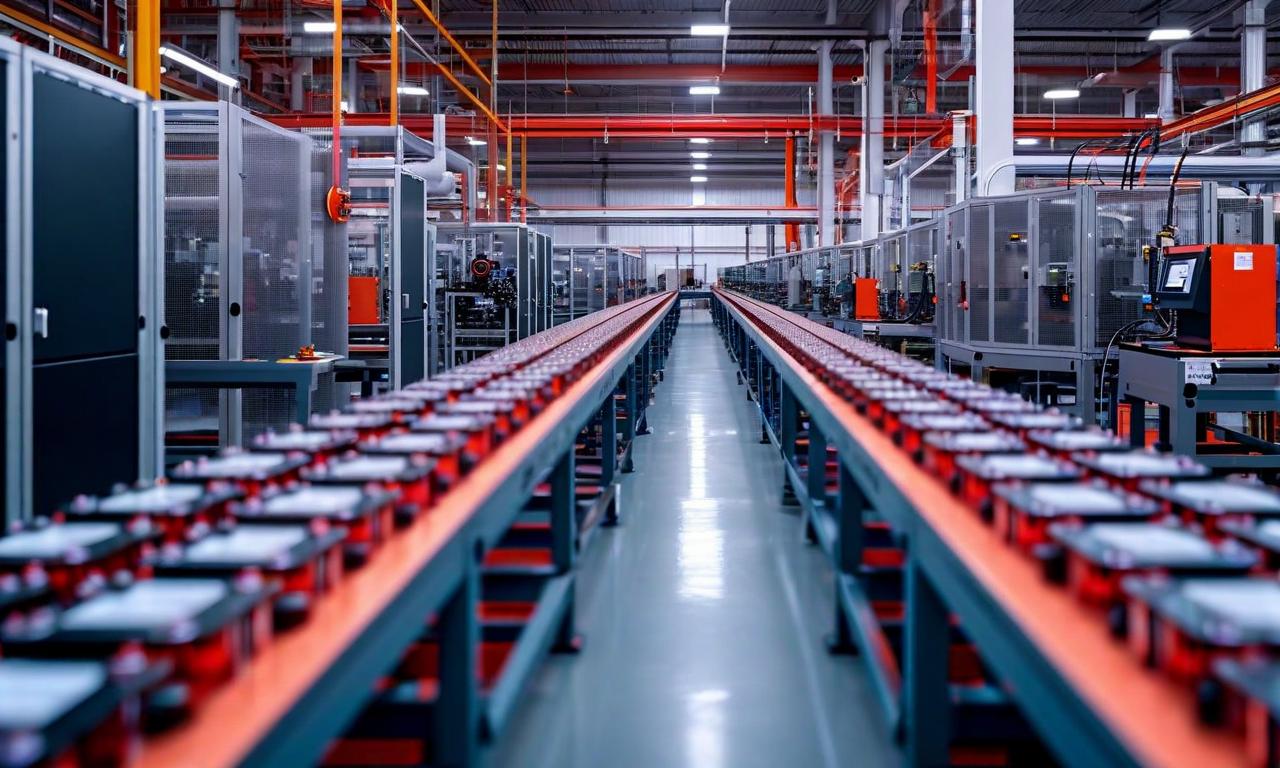
Exide Energy Solutions, the company's lithium-ion cell manufacturing subsidiary, continued its ramp-up during Q4 FY26. The company invested Rs. 600 crores in Q4 and approximately Rs. 1,500 crores in FY26 in Exide Energy. The total equity investment in Exide Energy to date stands at Rs. 4,802 crores, with a Board-approved investment of Rs. 1,400 crores planned for FY27, covering both capital expenditure and working capital requirements.
The following table summarizes the lithium-ion project status and capacity details:
| Parameter: |
Details |
| Total Equity Investment (Till Date): |
Rs. 4,802 crores |
| Investment in Q4 FY26: |
Rs. 600 crores |
| Investment in FY26: |
~Rs. 1,500 crores |
| Planned Investment in FY27: |
Rs. 1,400 crores |
| Total Phase-I Capacity: |
6 GWh |
| Cylindrical (NMC) Capacity: |
3 GWh |
| Prismatic (LFP) Capacity: |
3 GWh |
| Cylindrical Line – Customer Sample Delivery: |
Around May 2026 onwards |
| Prismatic Line – Customer Samples Target: |
June–July 2026 |
| Target Plant Utilization: |
>85% |
| Target Yield: |
90% |
MD & CEO of Exide Energy Solutions, Pravin Saraf, noted that internal validations for cylindrical cells have been completed, with customer sample deliveries expected to begin around May 2026. Prismatic cell trials are underway, with customer samples targeted for June–July 2026. Revenue from prismatic (LFP) lines is expected to commence sooner than cylindrical lines, as LFP products for three-wheelers and stationary applications do not require the same level of OEM homologation. Customer validation for cylindrical cells is expected to take approximately two to three months depending on the customer.
The 6 GWh Phase-I capacity is separate from a co-investment arrangement with Hyundai Kia, which represents incremental capacity beyond the 6 GWh and has not yet been publicly detailed. The company's existing pack and module business, conducted through imported cells, has been generating approximately Rs. 100–200 crores in revenue. Management emphasized that achieving 85% utilization and 90% yield will be the key milestones before providing detailed return metrics for the cell manufacturing business. On pricing competitiveness, Pravin Saraf noted that changes to VAT structure in China will result in a 3% increase on imported cells currently, with an additional 6% by January next year, bringing the total increase to 9%—a development that supports the economics of domestic cell manufacturing.
Business Outlook and Strategic Direction
Management expressed cautious optimism for the lead-acid business, noting that the outlook across most verticals remains positive. The five-year CAGR for the core business has been 11%, and management indicated no reason for the next five-year CAGR to differ materially. For FY27, the core business is expected to deliver high single-digit to early double-digit growth. The UPS segment revenue for FY26 stood at approximately Rs. 2,300 crores, while Telecom now represents approximately 2%–3% of revenues. Exports, which declined to approximately 5% of revenues from approximately 8% a couple of years ago, are expected to recover as geopolitical tensions ease, with management noting a substantial upside potential.
On the macro environment, Avik Roy highlighted that favorable domestic conditions—including low inflation, low interest rates, and GST 2.0 reforms—boosted end-consumer affordability, particularly in the second half of FY26, while rural India experienced a strong broad-based revival. The company's 'One-Exide' operating model, transitioned from a strategic business unit-led model in FY25, has enabled greater agility and customer focus, contributing to overall performance improvements in FY26. Management also noted that the HDFC Life shareholding, held as a non-current investment, saw a mark-to-market decline of approximately Rs. 850 crores as of March 31, 2026, routed through Other Comprehensive Income (OCI) with no impact on the profit and loss account, and that no shares have been sold.




 18
18





 Create Custom Screeners
  Access 200+ Pre-built Filters
  Use 50+ Readymade Screener





