
 NewsEternal Limited FY26 Annual Report: Consolidated Revenue Surges 169% YoY to INR 54,364 Crore
Eternal Limited FY26 Annual Report: Consolidated Revenue Surges 169% YoY to INR 54,364 Crore


Eternal Limited (formerly Zomato Limited) reported a transformative FY26 with consolidated revenue surging 169% YoY to INR 54,364 crore, driven by a shift to the inventory-led quick commerce model. Consolidated PAT declined to INR 366 crore from INR 527 crore, while Adjusted EBITDA improved to INR 1,189 crore. Key leadership changes included Albinder Singh Dhindsa becoming CEO and Deepinder Goyal transitioning to Vice Chairman. The 16th AGM is scheduled for August 26, 2026.


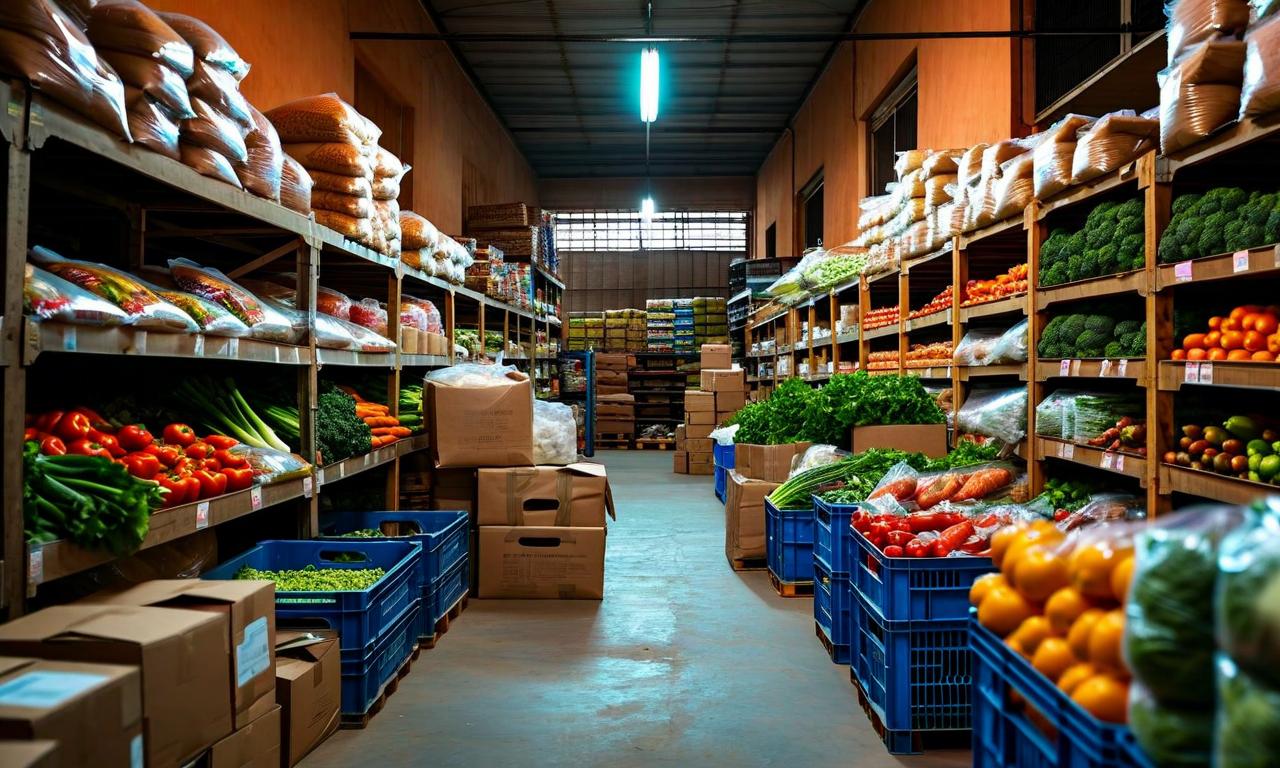
*this image is generated using AI for illustrative purposes only.
Eternal Limited (formerly known as Zomato Limited) has published its Annual Report for the financial year ended March 31, 2026, and issued a notice convening its 16th Annual General Meeting (AGM) to be held on Wednesday, August 26, 2026 at 12:00 P.M. (IST) through video conferencing. The report reveals a transformative year for the company, marked by a significant shift in its quick commerce business model and substantial growth across most segments.
Financial Performance: Consolidated Highlights
Consolidated revenue from operations grew 169% year-on-year to INR 54,364 crore in FY26 from INR 20,243 crore in FY25, primarily driven by the transition to an inventory model in quick commerce. Under this model, revenue now includes the full monetary value of goods sold rather than only the marketplace commission. The following table summarises the key consolidated and standalone financial metrics for FY26 and FY25:
| Metric: | Consolidated FY26 | Consolidated FY25 | Standalone FY26 | Standalone FY25 |
|---|---|---|---|---|
| Total Income (INR crore): | 55,760 | 21,320 | 12,702 | 9,877 |
| Total Expenses (INR crore): | 55,145 | 20,623 | 9,736 | 7,676 |
| Profit Before Tax (INR crore): | 615 | 697 | 2,966 | 2,190 |
| Tax Expenses (INR crore): | 249 | 170 | 311 | 230 |
| Profit for the Year (INR crore): | 366 | 527 | 2,655 | 1,960 |
| Total Comprehensive Income/(Loss) (INR crore): | (166) | 655 | 2,112 | 2,091 |
| Basic EPS (INR): | 0.40 | 0.60 | 2.91 | 2.22 |
| Diluted EPS (INR): | 0.39 | 0.58 | 2.86 | 2.15 |
Consolidated PAT declined to INR 366 crore in FY26 from INR 527 crore in FY25, largely due to an increase in depreciation and amortisation expense in the quick commerce business. Consolidated Adjusted EBITDA improved to INR 1,189 crore in FY26 from INR 1,079 crore in FY25, while consolidated EBITDA for the full fiscal year was positive at INR 1,208 crore.
Segment-Wise Revenue Performance
The company operates across four key business segments: food delivery, quick commerce, going-out, and B2B supplies (Hyperpure). The segment-wise revenue performance for FY26 is detailed below:
| Segment: | FY26 Revenue (INR crore) | FY25 Revenue (INR crore) | YoY Change |
|---|---|---|---|
| Food Delivery: | 10,159 | 8,080 | +26% |
| Quick Commerce: | 37,779 | 5,206 | +626% |
| Going-Out: | 973 | 737 | +32% |
| Hyperpure Supplies (B2B): | 5,366 | 6,196 | -13% |
| All Other Segments: | 87 | 24 | — |
| Total: | 54,364 | 20,243 | +169% |
Food delivery revenue grew 26% YoY to INR 10,159 crore, driven by higher order volumes and increased revenue per order. Quick commerce revenue surged 626% YoY to INR 37,779 crore, reflecting the shift to the inventory-led model. Going-out revenue grew 32% YoY to INR 973 crore, with FY26 being the first full financial year post-acquisition of the entertainment ticketing business. B2B supplies revenue declined 13% YoY to INR 5,366 crore, driven by scale-down of the non-restaurant business following the quick commerce model transition, though the core restaurant supplies business continued to grow.
Corporate Developments and Governance
During FY26, Deepinder Goyal resigned as Managing Director and Chief Executive Officer effective February 1, 2026, and was subsequently appointed as Vice Chairman and Non-Executive Director effective March 13, 2026. Albinder Singh Dhindsa was appointed as Chief Executive Officer effective February 1, 2026. The Board met 8 times during the financial year, and no dividend was recommended for FY26. Additionally, the following independent directors were re-appointed for a second term of 5 consecutive years: Kaushik Dutta (March 1, 2026 to February 28, 2031), Namita Gupta (March 1, 2026 to February 28, 2031), Sutapa Banerjee (April 12, 2026 to April 11, 2031), and Aparna Popat Ved (April 19, 2026 to April 18, 2031).
As at March 31, 2026, the company had 16 direct subsidiaries and 4 step-down subsidiaries, with no associate companies or joint ventures. Key subsidiary changes during the year included the incorporation of Blinkit Foods Limited (August 18, 2025) and Eternal General Service Foundation (December 18, 2025), and the dissolution of Zomato Malaysia Sdn. Bhd., Zomato Internet Hizmetleri Ticaret Anonim Sirketi, and Zomato Netherlands B.V. The statutory auditors, M/s. Deloitte Haskins & Sells, issued an unmodified opinion on both standalone and consolidated financial statements for FY26. The secretarial audit report by M/s. Chandrasekaran Associates also contained no qualifications or adverse remarks.
QIP Utilisation and Capital Structure
The company's utilisation of Qualified Institutions Placement (QIP) proceeds as on March 31, 2026 is summarised below:
| Item Head: | Amount Proposed (INR crore) | Utilised at End of Period (INR crore) | Unutilised (INR crore) |
|---|---|---|---|
| Dark Stores and Warehouses: | 2,137.00 | 2,137.00 | 0.00 |
| Advertising, Marketing and Branding: | 2,492.00 | 1,432.53 | 1,059.47 |
| Technology Infrastructure: | 1,769.00 | 697.46 | 1,071.54 |
| General Corporate Purposes: | 2,038.12 | 1,332.09 | 706.03 |
| Total: | 8,436.12 | 5,599.08 | 2,837.04 |
The issued, subscribed and paid-up share capital of the Company as on March 31, 2026 stood at INR 9,65,03,50,647/-, with no change in capital structure during the year. As on March 31, 2026, the permanent employee count was 6,750 on a standalone basis and 21,995 on a consolidated basis. The overall median remuneration of employees increased by 27.25% (on standalone basis) and 25.83% (on consolidated basis) as on March 31, 2026.
AGM Details
The 16th AGM will be held on August 26, 2026 at 12:00 P.M. (IST) through VC/OAVM. The cut-off date for e-voting eligibility is August 19, 2026, with remote e-voting open from August 22, 2026 at 9:00 A.M. (IST) to August 25, 2026 at 5:00 P.M. (IST). The sole ordinary business item, apart from adoption of financial statements, is the re-appointment of Sanjeev Bikhchandani (DIN: 00065640) as Non-Executive Nominee Director, who retires by rotation.
Source: https://lodr-files.dhan.co/lodr-inputs/Company/INE758T01015/6bfcf1f7a4214bd1.pdf
Historical Stock Returns for Eternal
| 1 Day | 5 Days | 1 Month | 6 Months | 1 Year | 5 Years |
|---|---|---|---|---|---|
| -1.57% | -1.00% | +1.01% | +26.71% | -7.95% | 0.0% |

How will the transition to an inventory-led model in quick commerce impact Zomato's gross margins and cash flow dynamics in FY27 compared to the previous marketplace model?
What is the strategic roadmap for Albinder Singh Dhindsa as the new CEO, and how might his leadership style differ from Deepinder Goyal's in driving future growth?
Given the 13% decline in Hyperpure revenue, what specific initiatives is management planning to reverse this trend and regain market share in the B2B restaurant supplies segment?
 18
18






 Access Market Heat-map & Insights
  Create, Save & Share your Screener
  Use 200+ Screening Filters





