

Elroy Air adds three unattended delivery modes to Chaparral drone


Elroy Air has introduced three unattended delivery modes for its Chaparral drone under a U.S. Army contract, including hover and forward-flight airdrops demonstrated with 68-pound and 70-pound payloads. The capabilities enable logistics in contested environments without ground personnel. Kratos Defense & Security Solutions will manufacture the production aircraft in Sacramento, California.

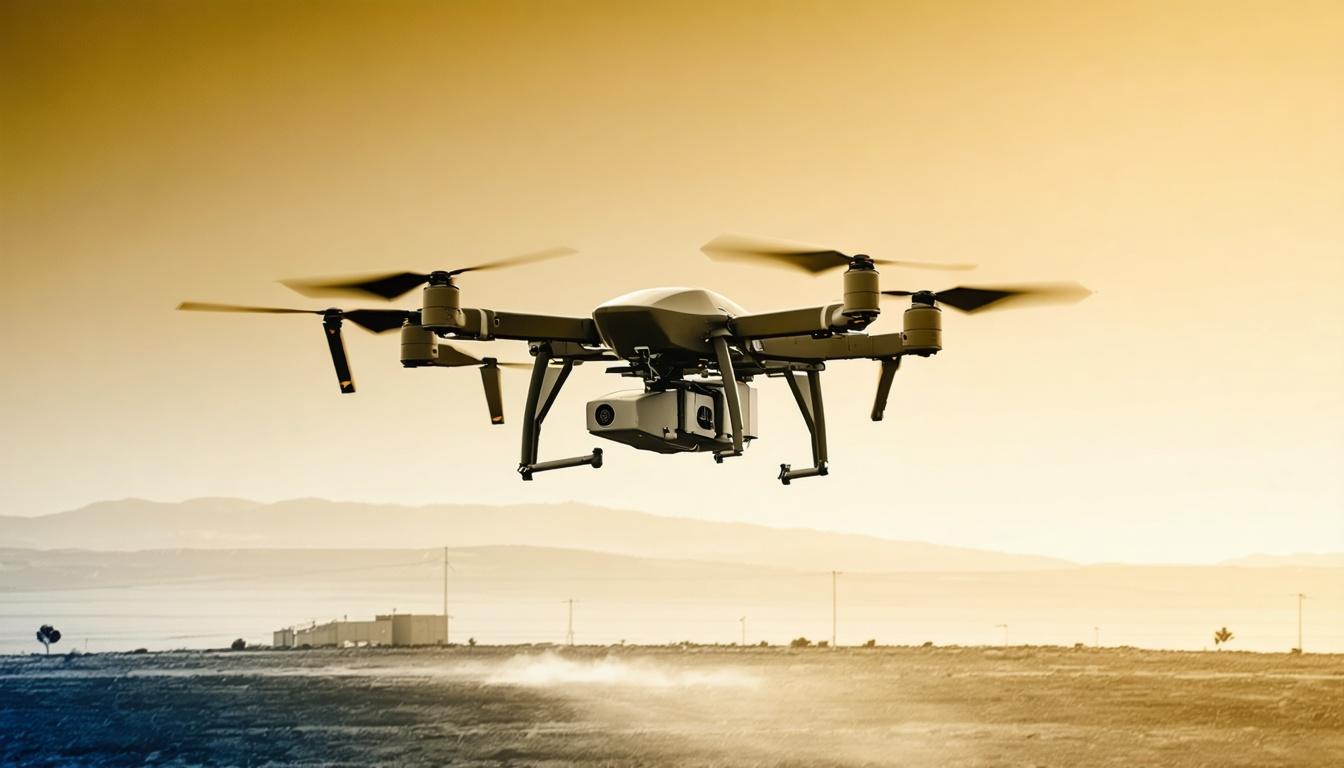

*this image is generated using AI for illustrative purposes only.
Elroy Air has developed three new unattended delivery modes for its Chaparral autonomous heavy-cargo drone, expanding the aircraft’s utility for military logistics in contested environments and locations with limited infrastructure. Developed under contract with the U.S. Army, the new capabilities allow Chaparral to deliver payloads via precision airdrop from a hover, precision airdrop in forward flight, and ground delivery, each executed without personnel or ground infrastructure at the receiving site. This advancement addresses critical logistics challenges by enabling runway-independent vertical-takeoff-and-landing (VTOL) resupply without risking aircrews or requiring ground teams.
The company demonstrated these capabilities on July 15, 2026, at its Byron, California headquarters. During the demonstration, Chaparral completed two payload releases in a single flight: a 68-pound payload drop from a close-in hover and a 70-pound payload release from 65 feet in forward flight. Both deliveries were software-commanded from pre-programmed coordinates with no operator input during execution, meeting requirements for communications-denied environments. Elroy Air also separately demonstrated ground delivery, where the aircraft released its payload after landing without attending personnel.
Delivery Capabilities and Operational Flexibility
The new modes enhance multi-mission flexibility through swappable cargo pods, allowing a single aircraft to support different missions without airframe reconfiguration. The specific delivery methods are designed for distinct operational scenarios:
| Delivery Mode | Operational Context | Key Feature |
|---|---|---|
| Precision Airdrop (Hover) | Close-in placement | Payload released from stationary hover |
| Precision Airdrop (Forward Flight) | Speed/altitude maintenance | Payload released while maintaining flight path |
| Ground Delivery | Permissive conditions | Payload released after landing |
These capabilities support missions where landing is not possible or would reveal a position, including contested environments, disaster response, maritime operations, and austere terrain. Andrew Clare, CEO of Elroy Air, stated that the company developed these capabilities on time and on budget in a single autonomous aircraft, noting that they carry over to commercial customers as well. The company plans to begin field testing alongside the U.S. Army in exercises designed to rapidly deploy these capabilities.
Manufacturing and Strategic Context
Production Chaparral aircraft will be manufactured by Kratos Defense & Security Solutions (NASDAQ: KTOS) under a U.S. manufacturing partnership between Kratos and Elroy Air. On July 20, 2026, Kratos announced it will manufacture the Chaparral autonomous cargo aircraft in its expanding Sacramento, California production facility. This partnership supports the Army’s growing investment in autonomous and contested logistics, aiming to sustain distributed operations without putting aircrews at risk.
Mark Rodrigo, who leads Federal Business Development at Elroy Air, described contested logistics as one of the hardest problems facing the joint force. He noted that one Chaparral can now resupply multiple positions in a single sortie with no pilot at risk and no personnel required at the drop point, acting as a force multiplier for units operating at the tactical edge. Elroy Air is also pursuing a business combination with Columbus Circle Capital Corp II (NASDAQ: CMII), which will be renamed Inflection Point Acquisition Corp VII (NASDAQ: IPXG), to become a publicly traded company.

How might the successful field testing of Chaparral's autonomous delivery modes influence the U.S. Army's future procurement budgets for unmanned logistics systems?
What are the potential regulatory hurdles for Elroy Air in transitioning these military-grade autonomous capabilities to the commercial drone delivery market?
How will the manufacturing partnership with Kratos Defense impact KTOS's revenue projections and production capacity in the Sacramento facility over the next fiscal year?
 20
20






 Access Market Heat-map & Insights
  Create, Save & Share your Screener
  Use 200+ Screening Filters





