

Coromandel International files BRSR for FY26


Coromandel International Limited filed its Business Responsibility and Sustainability Report for FY26, disclosing a turnover of ₹30,531 Crores and net worth of ₹12,474 Crores. The report detailed environmental metrics including total energy consumption of 2,658,877 GJ and Scope 1 and 2 emissions of 278,564 MT CO2e, alongside social data showing a workforce of 21,464 individuals.



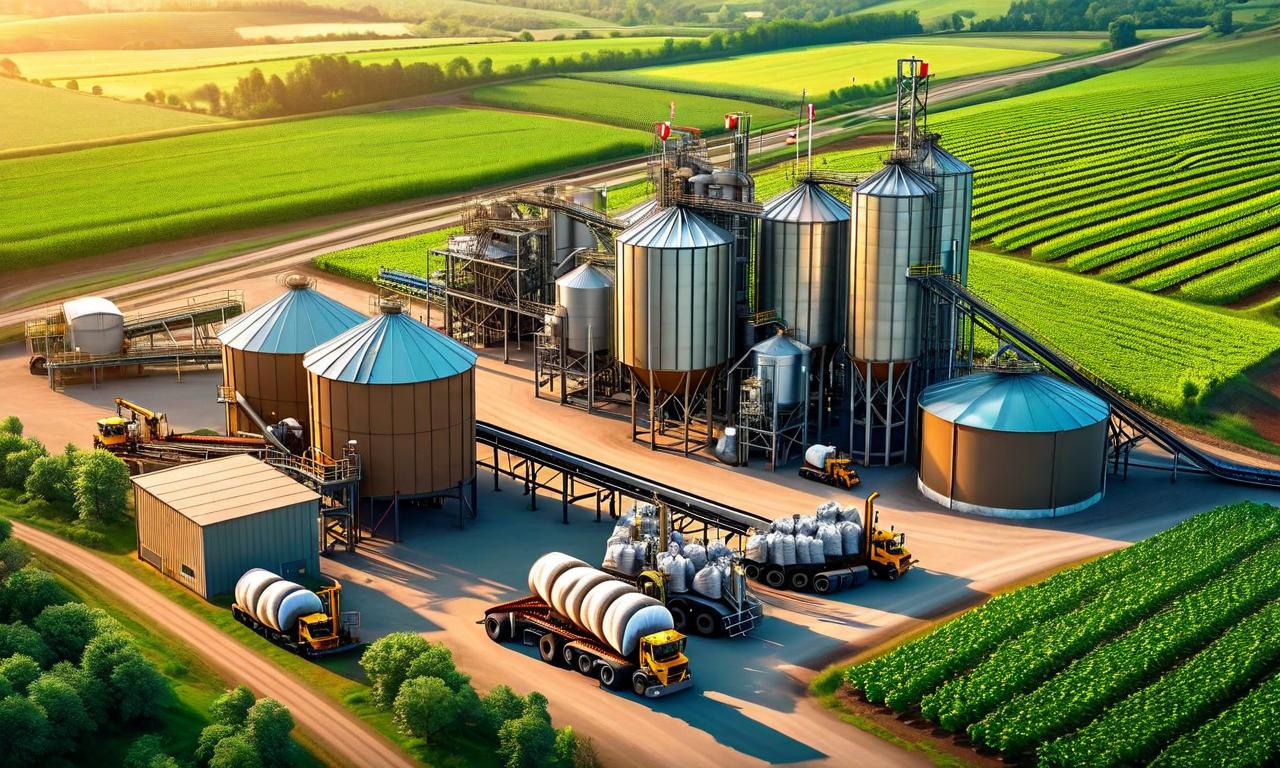
*this image is generated using AI for illustrative purposes only.
Coromandel International Limited has filed its Business Responsibility and Sustainability Report for the financial year 2025-26 with the National Stock Exchange of India Limited and BSE Limited. The report details the company's adherence to the National Guidelines on Responsible Business Conduct and its environmental, social, and governance performance. The company identified sustainable agriculture and soil health as key opportunities, while water stewardship, biodiversity management, and GHG emissions were flagged as material risks requiring mitigation strategies.
Governance and Assurance
The Corporate Social Responsibility & Sustainability Committee, chaired by Executive Chairman Mr. Arun Alagappan, oversees the company's sustainability roadmap. Sridharan & Sridharan Associates, Company Secretaries, certified compliance with corporate governance conditions for the financial year ended March 31, 2026. Additionally, TUV India provided reasonable assurance for the BRSR reporting. The company reported that it had not paid any fines, penalties, or compounding fees during the financial year.
Environmental Performance
Coromandel reported a total energy consumption of 2,658,877 GJ for FY 2025-26, with energy intensity per rupee of turnover recorded at 0.00000870 GJ. The company’s total Scope 1 and Scope 2 emissions stood at 278,564 metric tons of CO2 equivalent. Water withdrawal totalled 8,632,487 kilolitres, with consumption at 7,859,251 kilolitres. The company has implemented Zero Liquid Discharge (ZLD) systems across significant operations, including all SSP plants and the Kakinada fertiliser plant. To mitigate environmental impact, the company recycled 18,433 MT of plastic waste under the Extended Producer Responsibility framework.
Social and Stakeholder Engagement
The company employed 5,085 permanent employees and 16,379 workers as of March 31, 2026. Women constituted 6% of the permanent workforce and 2% of the total workforce. The board of directors included one female member, representing 10% of the board. Regarding grievance redressal, the company received 130 shareholder complaints and 274 customer complaints during the year, all of which were resolved. Six complaints were reported by employees under the whistle blower mechanism, with two pending resolution at year-end.
Financial and Operational Metrics
The company reported a turnover of ₹30,531 Crores and a net worth of ₹12,474 Crores. It operated 18 manufacturing plants and 8 offices nationally, serving 19 states and union territories in India and 46 countries internationally. The contribution of exports to total turnover was 4.36%. The report highlighted that 100% of raw materials were sourced sustainably, and the company spent 0.08% of its total revenue on employee well-being measures.
| Parameter | FY 2025-26 | FY 2024-25 |
|---|---|---|
| Energy Consumption (GJ) | 2,658,877 | 2,542,730 |
| Water Withdrawal (kL) | 8,632,487 | 7,319,074 |
| Total Waste Generated (MT) | 105,532.31 | 95,159.69 |
| Scope 1 & 2 Emissions (MT CO2e) | 278,564 | 247,612 |
| Plastic Waste Recycled (MT) | 18,433 | 18,093 |
Source: https://lodr-files.dhan.co/lodr-inputs/Company/INE169A01031/2303b79bfa6049dc.pdf
Historical Stock Returns for Coromandel International
| 1 Day | 5 Days | 1 Month | 6 Months | 1 Year | 5 Years |
|---|---|---|---|---|---|
| +1.77% | -3.41% | -12.70% | -19.50% | -24.04% | +98.27% |

How will Coromandel International address the 12.5% year-over-year increase in Scope 1 and 2 emissions to meet its long-term climate goals?
What specific capital investments are planned to curb the rising water withdrawal, which increased by over 1.3 million kilolitres compared to the previous year?
Will the company set specific targets to improve gender diversity, given that women currently represent only 6% of the permanent workforce?
 15
15













 Access Market Heat-map & Insights
  Create, Save & Share your Screener
  Use 200+ Screening Filters





