

Chemtrade Q2 Results: Revenue up 16.5%, Adjusted EBITDA down 7.8%


Chemtrade Logistics Income Fund reported Q2 2026 revenue of $578.7 million, up 16.5% YoY, driven by the Polytec acquisition and higher ASP segment prices. Adjusted EBITDA fell 7.8% to $127.3 million due to lower chlor-alkali netbacks and maintenance costs. The company redeemed all convertible debentures and reiterated 2026 Adjusted EBITDA guidance of $485-$525 million.



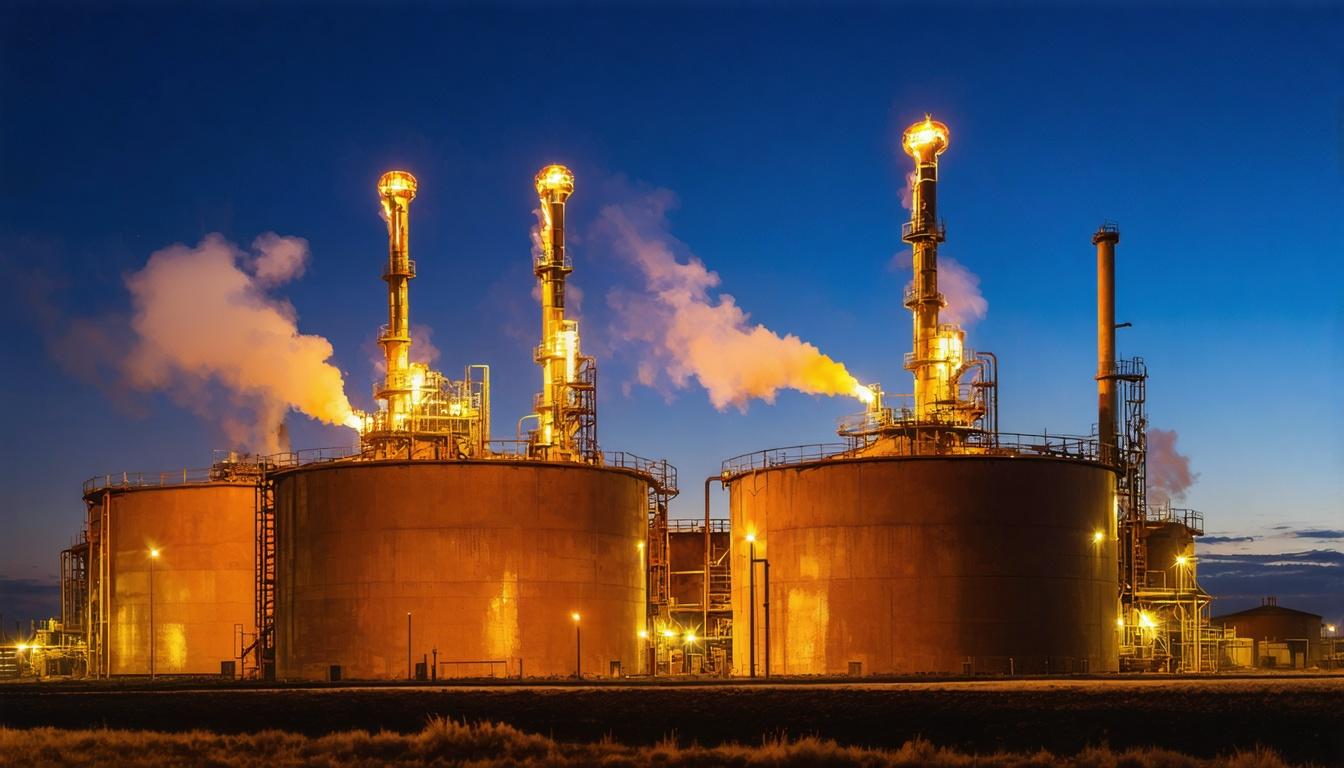
*this image is generated using AI for illustrative purposes only.
Chemtrade Logistics Income Fund (TSX: CHE) delivered a 16.5% year-over-year revenue increase in the second quarter of 2026, reaching $578.7 million. The top-line growth was primarily fueled by the inclusion of the Polytec acquisition in the Water Solutions segment and higher selling prices for merchant acid, sulphur products, and Regen acid within the Acid and Sulphur Products (ASP) segment.
Despite strong revenue performance, Adjusted EBITDA declined 7.8% to $127.3 million, down from $138.0 million in the same period last year. The margin contraction was driven by lower MECU netbacks for chlor-alkali products, reduced volumes and selling prices for sodium chlorate in the Electrochemicals (EC) segment, and a $7.0 million impact from a biennial maintenance turnaround at the North Vancouver facility. Excluding the turnaround, Adjusted EBITDA was only $3.7 million lower than the prior year.
Segment Performance
The company’s three reporting segments showed divergent results:
- Acid and Sulphur Products (ASP): Revenue rose to $216.4 million from $163.4 million, while Adjusted EBITDA increased to $53.2 million from $43.5 million. Higher selling prices for merchant and Regen acid more than offset elevated sulphur costs.
- Water Solutions (WS): Revenue climbed to $181.9 million from $139.1 million, largely due to the Polytec acquisition. Adjusted EBITDA grew to $37.0 million from $32.7 million, though margins for water solutions products were pressured as higher input costs were not fully recovered through selling price increases.
- Electrochemicals (EC): Revenue fell to $180.4 million from $194.2 million due to lower chlor-alkali netbacks and sodium chlorate volumes. Adjusted EBITDA dropped significantly to $61.2 million from $92.1 million. Excluding the North Vancouver turnaround, EC Adjusted EBITDA was $23.9 million lower year-over-year.
What the Numbers Show
A key divergence in Q2 2026 is the disconnect between revenue growth and profitability drivers. While ASP contributed positively to both top-line and bottom-line growth, the EC segment saw a sharp decline in Adjusted EBITDA despite only a modest revenue dip. This indicates that the decline in MECU netbacks—down approximately $350 year-over-year, with 80% attributable to hydrochloric acid and chlorine—had a disproportionate impact on margins compared to volume changes. Additionally, corporate costs decreased by $6.2 million to $24.1 million, providing a partial offset to operational headwinds.
Balance Sheet and Capital Allocation
Chemtrade strengthened its balance sheet by redeeming all outstanding 7.00% Convertible Debentures due June 30, 2028, removing dilutive instruments from its capital structure. Net debt stood at $1.3 billion, resulting in a Net Debt to LTM Adjusted EBITDA ratio of 2.55x. The company maintained ample liquidity with approximately $410 million undrawn on credit facilities and $44.5 million in cash on hand.
Distributable cash after maintenance capital expenditures fell 40.7% to $42.4 million ($0.38 per unit), reflecting higher maintenance spending and lower Adjusted EBITDA. The payout ratio for the quarter was 47%, compared to 45% for the last twelve months. Chemtrade also purchased approximately 0.9 million units under its normal course issuer bid.
Outlook and Guidance
Amid geopolitical volatility affecting product prices, Chemtrade reiterated its 2026 Adjusted EBITDA guidance of $485.0 to $525.0 million. Management expects to end the year with a Net Debt to Adjusted EBITDA ratio close to 2.5x and an implied payout ratio of approximately 40%. The company continues to advance organic growth initiatives, including ultrapure acid commercialization and water treatment chemical projects, with growth capital expenditures guided at $40.0 to $60.0 million for the year.

How might the persistent decline in chlor-alkali netbacks impact Chemtrade's ability to meet the lower end of its 2026 Adjusted EBITDA guidance if geopolitical volatility continues?
What specific strategies is management pursuing to recover margin pressure in the Water Solutions segment where input costs are outpacing selling price increases?
Will the redemption of the convertible debentures and ongoing share repurchases signal a shift in capital allocation priority away from aggressive M&A toward debt reduction and shareholder returns?
 16
16



 Access 50+ Readymade Screeners
  Use 200+ Custom Filters
  Get Full Market Insights





