

Century Aluminum Q2FY26 Results: Adjusted EBITDA rises to $327 million


- Net sales rose $103 million sequentially to $752 million, driven by higher LME prices and premiums
- Adjusted EBITDA increased $96 million to $327 million, supported by a 6% rise in shipments
- All production assets, including Mount Holly and Grundartangi, are now operating at full capacity
- Net debt reduced to $98 million, with cash exceeding total debt as of July
- Q3 adjusted EBITDA guided between $325 million and $345 million

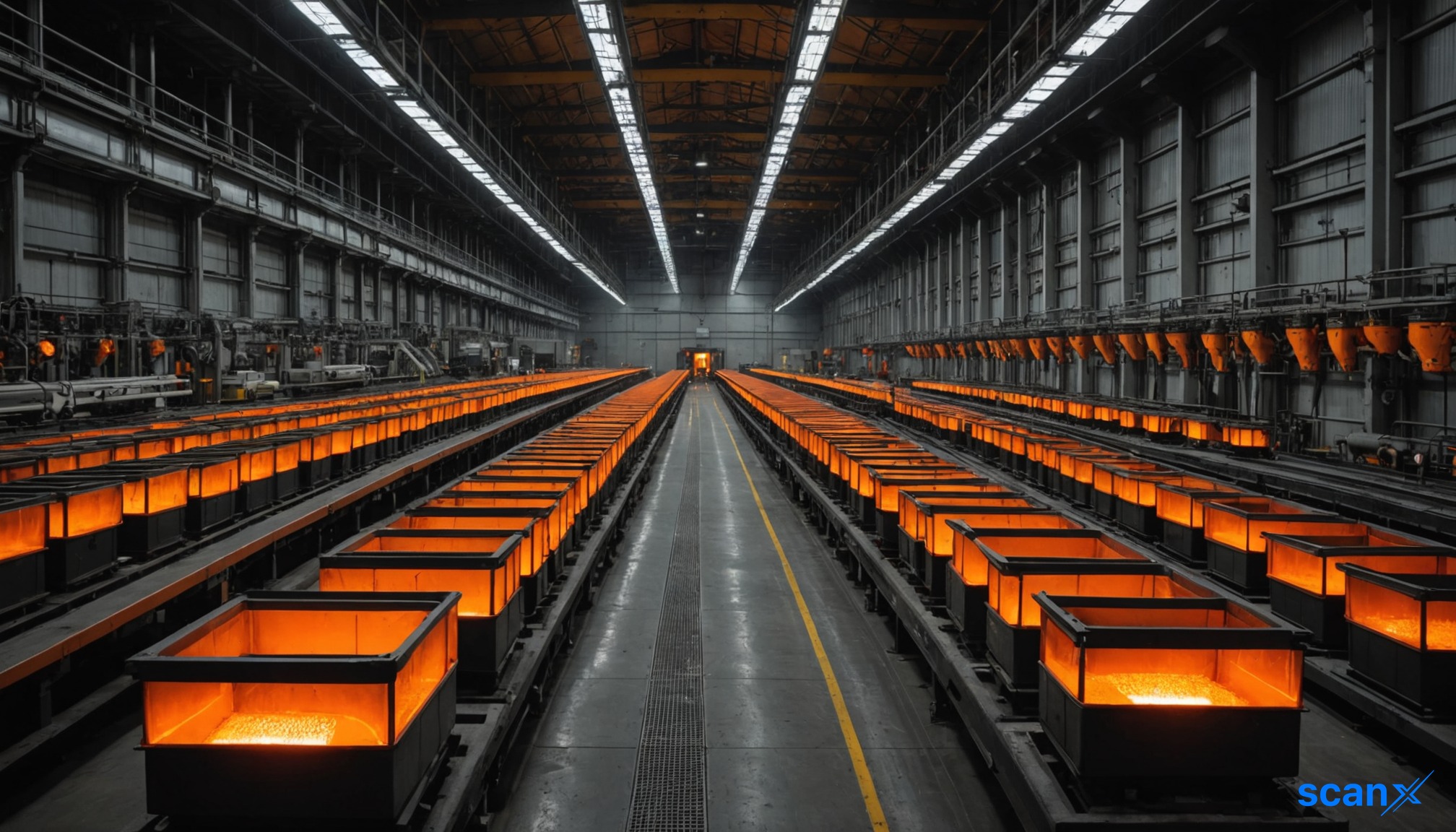

*this image is generated using AI for illustrative purposes only.
Century Aluminum reported second-quarter net sales of $752 million, a sequential increase of $103 million, driven by higher realized prices and increased shipment volumes.
The company’s adjusted EBITDA reached $327 million, up $96 million from the prior quarter. Net income stood at $249 million, or $2.39 per share. Shipments totaled approximately 131,000 tons, reflecting a 6% increase sequentially due to the completion of the Mount Holly expansion and the restart of Potline 2 at Grundartangi.
Operational Highlights and Capacity Restoration
Century Aluminum confirmed that all assets are now operating at full capacity for the first time in over a decade. The Mount Holly expansion in South Carolina was completed on time and on budget, adding over 150 full-time jobs and increasing total U.S. primary aluminum production by nearly 10%. At Grundartangi in Iceland, the restart of Line 2 concluded six months ahead of schedule, though the plant is currently running at slightly reduced amperage pending new transformer installations in the fourth quarter.
At Jamalco, the new TG4 power generation turbine came online in August, enabling self-generated energy and eliminating reliance on the Jamaican grid. Management noted that while bauxite quality issues persist at Jamalco, a revised mining plan is in place to address these headwinds over the coming quarters.
Market Conditions and Pricing Dynamics
The company highlighted strong market conditions, with LME prices returning to pre-conflict levels of approximately $3,250 per ton. The U.S. Midwest premium stood at $1.11 per pound, while the European duty-paid premium was around $500 per ton. Century Aluminum expects a global deficit of approximately 1 million tons this year, with inventories approaching all-time lows.
| Metric | Q2 Value | Change vs Prior Quarter |
|---|---|---|
| Net Sales | $752 million | +$103 million |
| Adjusted EBITDA | $327 million | +$96 million |
| Realized LME | $3,250 per ton | +$350 per ton |
| US Midwest Premium | $2,480 per ton | +$280 per ton |
| European Premium | $450 per ton | +$140 per ton |
Balance Sheet and Cash Flow
Century Aluminum strengthened its balance sheet significantly during the quarter. Cash balance ended at $388 million, and net debt was reduced to $98 million following $66 million in debt repayments. By the end of July, the company’s cash position exceeded its total debt. The company received $94 million in 45X tax credits and $19 million in insurance recoveries post-quarter, further boosting liquidity.
What the Numbers Show
A divergence between reported shipments and production capacity highlights a timing effect in the financial results. While Mount Holly reached full capacity by late June, the incremental nature of the restart meant Q2 reflected only a partial quarter of the expanded run rate. Additionally, shipment cutoff timing resulted in a sequential increase in finished goods inventory. This indicates that the full revenue benefit of the expanded capacity will materialize in Q3, as management expects these inventory levels to convert into cash and sales in the next quarter.
Outlook and Strategic Projects
For Q3, Century Aluminum guided adjusted EBITDA to a range of $325 million to $345 million. This forecast assumes lagged LME prices of $3,325 per ton and includes expected energy headwinds of $10 million to $15 million due to seasonal factors. Volume and sales mix are projected to improve by $15 million to $25 million as Mount Holly ships at full capacity.
The company also detailed progress on the new Oklahoma smelter project, a joint venture with Emirates Global Aluminum. Management expects final investment decision (FID) and groundbreaking by year-end, with first hot metal targeted for the end of 2029. A recent executive order incentivizing domestic aluminum production allows Century to import up to 300,000 metric tons annually at a reduced tariff rate starting in 2027, which is intended to help fund the Oklahoma project.

How might the anticipated $10-15 million seasonal energy headwinds in Q3 impact Century Aluminum's ability to maintain the upper end of its EBITDA guidance?
What are the potential risks to the Oklahoma smelter project's timeline if the final investment decision is delayed beyond year-end, given the 2029 target for first hot metal?
To what extent will the 300,000 metric ton annual tariff reduction starting in 2027 be sufficient to offset capital expenditure needs for the new Oklahoma facility?







 Access 50+ Readymade Screeners
  Use 200+ Custom Filters
  Get Full Market Insights





